.png) 1 month ago
41
1 month ago
41

Upgrade to High-Speed Internet for only ₱1499/month!
Enjoy up to 100 Mbps fiber broadband, perfect for browsing, streaming, and gaming.
Visit Suniway.ph to learn
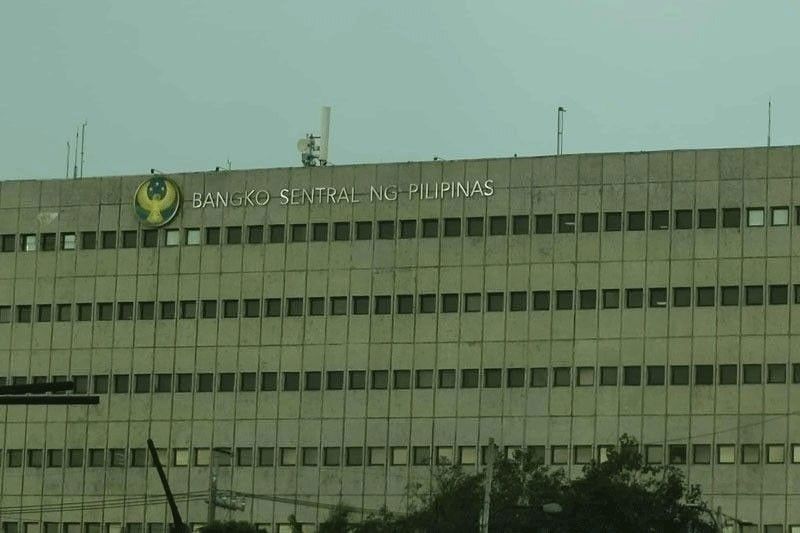
The BSP has recently published two books of national consequence. One is about our current account and how it impacts our economic development. The other is about the resiliency of our financial system through the many crises it has faced over the years.
The two books look formidable, not for easy reading, especially for non-economists. It is also obvious that they spent a lot of time and money that only the BSP can lavish on an undertaking of this kind. The books are part history and a lot of recommendations on what we should learn from the past.
Some of the history has been covered by economist Gerry Sicat in his thick biography of former Prime Minister Cesar Virata and in the autobiography of the late Cesar Buenaventura who was a member of the Monetary Board. Apparently, the “doctored” international reserves figure of the old Central Bank was not just $600 million but $1.1 billion according to this BSP book on the financial system.
The book on the financial system examines the events leading up to major crises and what followed in their aftermath. Drawing on experiences since the 1970s, it provides perspective on how risks accumulated. It also chronicles key episodes, including La Década Perdida (the Lost Decade) of the 1980s, the Dewey Dee default (1981), the Asian Financial Crisis (1997-1998), the Global Financial Crisis (2007-2009) and the COVID-19 pandemic (2020-2023). We have been through a lot.
On the other hand, the book on the current account ended with a lot of recommendations on how to fix the country’s economy. We have heard most of them before. Most are addressed to the political leadership. Reminded me of how the current BSP Governor pleaded with the BBM administration to do what it should to control runaway inflation (like breaking the cartel of rice traders) because the BSP’s monetary tool kit can only do so much.
The question arises: are the books worth the expensive heavy paper used in its printing? Who should be the audience?
According to Monetary Board Member Romy Bernardo in a BusinessWorld article, “The natural audience is policymakers and regulators, but the book has broader value than that. Educators will find case studies, rich with institutional detail and grounded in a developing-country context.
“Students of economics and finance will see that real-world crises are shaped as much by political economy, institutional history and human error as by the models they study in class.
“Finance professionals working in the Philippine system will better understand why the rules they operate under exist — because every major regulation traces back to a crisis that exposed a gap. Too, the book is for the next generation, who have no memory of financial crises and may be inclined to assume, ‘this time is different.’”
To me, the most important audience are the people who have been damaging the country’s economy for decades. These are the politicians in Congress and the country’s rent-seeking economic elite.
The problem is, at least for the politicians, most are economic illiterates. They will not understand or care about what the technocrats wrote and explained in the two books.
My friend Romy B asked if we can “distill what we have learned into frameworks and tools that regulators can reach for before the next shock, rather than reconstruct them after it arrives?
“This points to the next stage work of building the operational architecture that would let the BSP and the FSCC turn these historical lessons into standing protocols and crisis simulations.”
To accomplish what Romy has in mind needs legislation that, as Romy pointed out, “gives regulators the authority and flexibility to act quickly when systemic risks emerge outside traditional banking.”
The concluding chapter of the book on the current account written by its editor, Mario Lamberte, is to me even more important for legislators to understand. The chapter covers a “to-do” list that we can no longer ignore because the consequences of inaction for the economy are already dire.
BSP Governor Eli Remolona Jr., at the book launch, pointed out that they wrote the books because people must be properly informed.
“Markets, after all, are made of people. And people do not respond to economic data alone. They respond to what they hear from friends, what they read in the news, and increasingly, what they see on social media.”
Gov. Eli emphasized the importance of learning from the past crises we have experienced.
“The characters change. The details change. But deep down, the stories are the same. They teach an enduring lesson. Buffers must be built before a crisis, not during one. Capital must be strong before losses emerge. Supervision must be credible before confidence is tested.
“By understanding how these past crises unfolded, we become better equipped to question optimistic narratives, detect risks earlier and respond more effectively when the next shock comes. The numbers will always matter. But so will the stories we tell about them.”
The most important audience are our political leaders. Unless our senators and congressmen are educated and convinced to take the right path to economic development, these books will have become mere ego trips of technocrats hungry for affirmation.
Indeed, the next publication project of the BSP should be a book written in very simple language addressed to members of Congress. The book should explain what has gone horribly wrong with our economy over the last 80 years and what we should be doing now to save the future of our grandchildren.
Extra efforts must be made to reach and convince everyone in Congress. That’s the next challenge our economic managers, not just at the BSP, must meet.
In the meantime, it would help if the technocrats in government educate their bosses, stand on their principles and not capitulate because the power and perks of public office are too good to lose.
Boo Chanco’s email address is [email protected]. Follow him on X @boochanco