 3 weeks ago
12
3 weeks ago
12

Upgrade to High-Speed Internet for only ₱1499/month!
Enjoy up to 100 Mbps fiber broadband, perfect for browsing, streaming, and gaming.
Visit Suniway.ph to learn
Senator Robin Padilla speaks during the Senate plenary session on May 13, 2026.
STAR / Ryan Baldemor
MANILA, Philippines — Sen. Robin Padilla questioned whether wars in the Middle East, the Philippines' potential involvement in the China-Taiwan conflict, and La Niña can be considered "force majeure."

Sen. Robin Padilla questioned whether wars in the Middle East, the Philippines' potential involvement in the China-Taiwan conflict, and La Niña can be considered "force majeure" in two separate Facebook posts on May 27.
In a Facebook post on Wednesday night, May 27, Padilla raised a question of whether the Middle East conflict and the looming possibility of the Philippines getting involved in the China-Taiwan conflict could be considered "force majeure" in two Facebook posts on Wednesday, May 27,
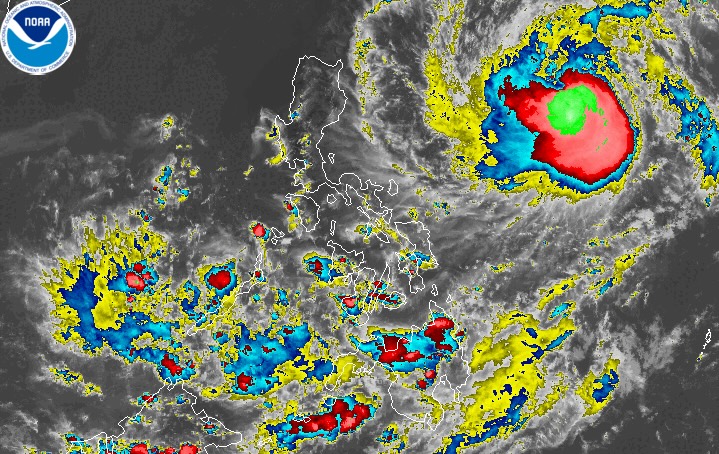
Minutes later, Padilla shared his explanation of the term and asserted that storms, floods, earthquakes, wars, terrorism, and the anticipated La Niña "clearly" fall within its scope.
Rating: This is misleading.
Facts
Under Rule XIV, Section 41 of the Senate rules, the Senate president is allowed to convene and hold a session through "teleconference, video conference, or other reliable forms of remote or electronic means" due to "force majeure or the occurrence of a national emergency."
Article 1174 of the Civil Code of the Philippines describes force majeure as events “which could not be foreseen, or which, though foreseen, were inevitable.”
Except in cases expressly specified by the law, or when it is otherwise declared by stipulation, or when the nature of the obligation requires the assumption of risk, no person shall be responsible for those events which could not be foreseen, or which, though foreseen, were inevitable.
In the 1986 Supreme Court ruling in Nakpil & Sons v. Court of Appeals, the court said "force majeure" applies when an event is beyond a person’s control, unavoidable or unforeseeable, and makes it impossible to fulfill obligations in a normal manner.
To exempt the obligor from liability under Article 1174 of the Civil Code, for a breach of an obligation due to an "act of God," the following must concur: (a) the cause of the breach of the obligation must be independent of the will of the debtor; (b) the event must be either unforeseeable or unavoidable; (c) the event must be such as to render it impossible for the debtor to fulfill his obligation in a normal manner; and (d) the debtor must be free from any participation in, or aggravation of the injury to the creditor.
Based on the Senate’s roll call report covering July 28, 2025 to March 18, 2026, majority senators Padilla, Jinggoy Estrada, Bong Go, Rodante Marcoleta, Imee Marcos, and Joel Villanueva had no recorded absences following the escalation of tensions in the Middle East on Feb. 28, despite Padilla later citing the conflict in his “force majeure” argument.

Senators who achieved a perfect attendance in the Senate's first regular session from July 28, 2025 to March 18, 2026 almost reached the halfway mark.
Other factors mentioned by Padilla in his posts, such as the potential involvement of the Philippines in the China-Taiwan conflict, La Niña, and other natural disasters, have yet to "render it impossible" for the Senate to convene or senators to physically attend sessions.
Why we fact-checked this
Since posting, Padilla's statements have earned more than 74,000 likes and 13,000 comments.
Majority senators aligned with Sen. Bato dela Rosa pushed on Tuesday, May 26, to amend Senate rules allowing senators to remotely attend sessions for “justifiable reason” in addition to “force majeure,” which was put in place during the COVID-19 pandemic.
The 11-member minority bloc later walked out of the Senate plenary hall after this attempt to “railroad” the amendment.
Dela Rosa has been in hiding from law enforcement authorities since May 14 after slipping out of the Senate premises in Padilla's vehicle to evade the warrant of arrest from the International Criminal Court.