 3 months ago
44
3 months ago
44

Upgrade to High-Speed Internet for only ₱1499/month!
Enjoy up to 100 Mbps fiber broadband, perfect for browsing, streaming, and gaming.
Visit Suniway.ph to learn
Ranier Allan Ronda - The Philippine Star
February 19, 2026 | 12:00am
MANILA, Philippines — The Department of Information and Communications Technology (DICT) will forge a partnership with Meta, the parent firm of social media giants Facebook and Instagram, for a more targeted system in detecting and deleting inappropriate content.
In a statement yesterday, DICT said Meta pledged to improve its mechanisms for detecting, reporting and taking down disinformation and inappropriate content specifically on Facebook, which is the top social media platform used by Filipino netizens.
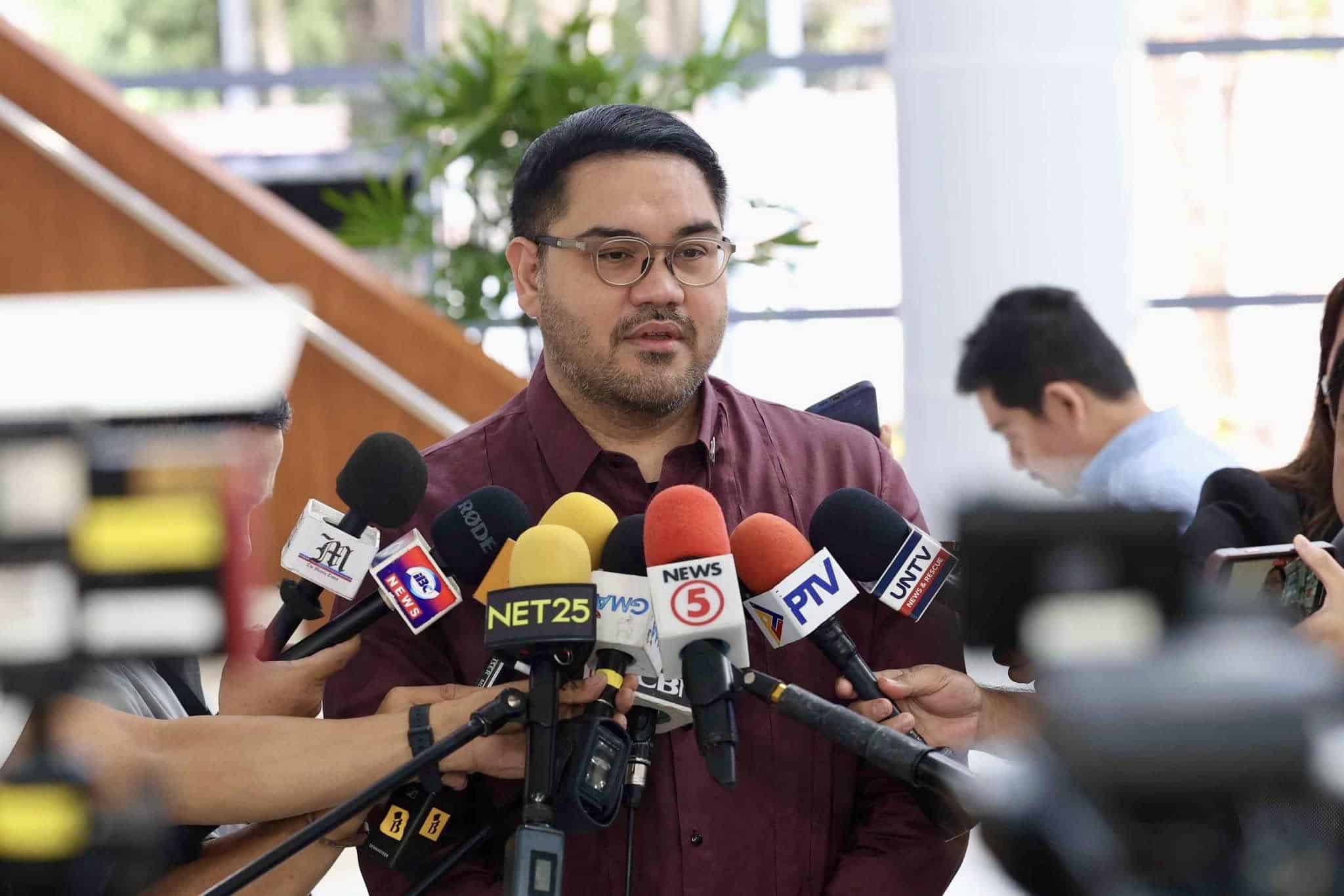
“We’re pushing for (the signing of the agreement) next week,” ICT Secretary Henry Rhoel Aguda told The STAR.
The agreement will cover phishing operations, digital fraud and deepfakes deployed to tarnish the reputations of public servants, business leaders and private individuals.
Financial scams, including fake investment schemes that have proliferated on Facebook through deepfakes of public officials, prominent business leaders and celebrities, will also be monitored and removed from the platform, the DICT said.
“Your kids, your money and your reputation are now better protected on Facebook,” the DICT said. “There will be no compromise on the online safety of Filipinos. Period.”
Tighter entry rules
The DICT has also tightened the entry rules for government suppliers of vulnerability assessment as part of measures to protect critical information infrastructure (CII).
Under the DICT’s Department Circular HRA-001, the agency revoked the accreditation process of DICT Trusted Assessment Providers (DTAPs) to replace it with a new one.
The circular requires DTAPs to comply with eight requirements before they get an accreditation to provide vulnerability assessment and penetration testing (VAPT) for the government.
The requirements cover legal and organizational qualifications; financial health stability; service delivery team and knowledge and professional competence.
Further, DTAPs will be checked for service and assessment quality; entity-level certification and standards; adherence to recognized frameworks and other additional requirements as deemed necessary.
The DICT will also ask DTAPs to show performance evaluation from clients over the past three years.
Once requirements are complete, the DICT will examine the application and render a decision in seven days.
The DICT will issue an accreditation certificate to the DTAP, and this will be valid for one year from the date of release, subject to quarterly audits.
The DICT said it would publish a registry of DTAPs that state agencies can tap to conduct VAPT on their own systems as a way to improve cybersecurity readiness.
The agency outlined a new accreditation process for DTAPs to formalize the procedure for VAPT suppliers. This way, the DICT hopes to guarantee the quality and reliability of services extended to state agencies, particularly those managing CIIs.
CIIs refer to information and communications technology systems that are necessary in operating some of the most vital services like banking, energy, telecoms and transport. A large-scale failure in CIIs could cause a national breakdown.
Prior to the issuance of the circular, there was no formal framework guiding the accreditation of DTAPs, and permitting was only done by the DICT’s Cybersecurity Bureau. – Elijah Felice Rosales