.png) 6 months ago
64
6 months ago
64

Upgrade to High-Speed Internet for only ₱1499/month!
Enjoy up to 100 Mbps fiber broadband, perfect for browsing, streaming, and gaming.
Visit Suniway.ph to learn
I can only scratch my head after reading that PNOC wants to buy a million barrels of diesel within a week to ensure supply. I take this as merely a press release to give the appearance of a government that is doing something. But good luck!
PNOC has no recent experience in the oil trade. And it does not have the logistical facilities to handle a million barrels.
The chances of our small oil market players “easily” buying from their usual sources are also extremely low if the Strait of Hormuz remains closed. Qatar’s energy minister, Saad al-Kaabi, said that Gulf oil-and-gas exporters would be forced to “call force majeure” on energy shipments within “days.”
Roughly half of China’s seaborne crude imports pass through the Strait of Hormuz, forcing it to compete for more expensive, non-Gulf supplies. Indeed, China has ordered a stop on all exports of diesel and other petroleum products to protect its own domestic supply security. South Korea is likely to follow. China and South Korea are our major diesel suppliers.
The blockage of the Strait of Hormuz was our recurring nightmare in the 70s and 80s when I was with the Ministry of Energy and PNOC. That’s why we did several things to mitigate the impact of a shortage like what we are having now.
First, we kept our refinery storage tanks full. Petron’s refinery now has about 40 days’ worth. It was over 60 days in our time but our consumption now is about double what we had then.
We also chartered tankers including very large crude carriers or VLCCs that can carry two million barrels of crude to serve as floating storage. Of course, this was expensive but it allowed us and the rest of the country to sleep well at night.
I am not sure today’s PNOC has petroleum logistics experts to get the best deal from oil traders. They should seek the advice of former Energy Secretary Mario Tiaoqui, an Esso-trained oil marketing professional who understands the ins and outs of the business.
Having the government buy oil and charter a vessel, given the rise of corruption scandals, opens us up to corruption risk. We addressed this risk by negotiating government-to-government deals that assure us the right prices and priority supply in an emergency. This is something to consider after the current crisis blows over.
The emergency supply agreement with ASEAN countries was our best assurance of continued supply. In all the deals, the favor we got was assurance of supply. It was understood that the price is always what is prevailing in the market.
Most of our processed fuel (gasoline, diesel) comes from Asian neighbors like South Korea (34 percent) and China (25 percent). But these nations also source their crude from the Persian Gulf, also impacted by the closure of Hormuz.
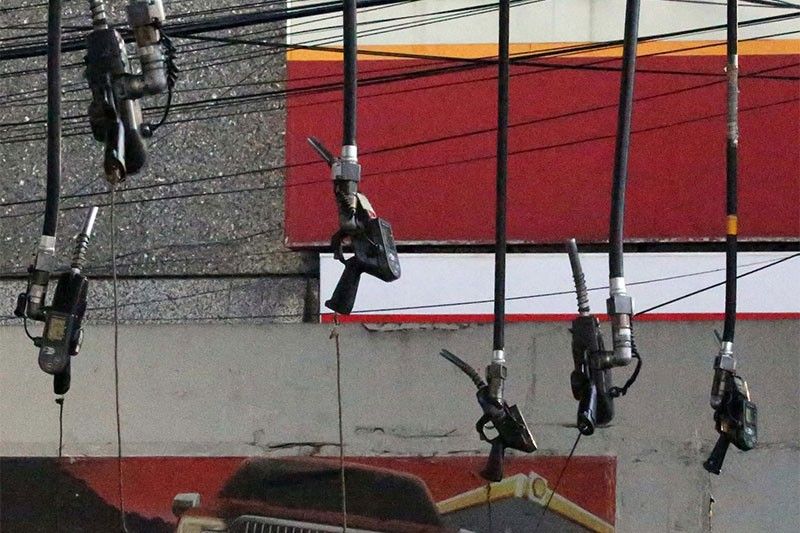
The DOE has warned that gasoline and diesel could spike to P90 per liter or higher. Other than the price of diesel or gasoline, there have been massive increases in insurance premiums due to war risks, which are passed directly to local pump prices.
The only items in the price build-up at the pump under our control are the taxes and duties. BBM needs that special authority to suspend those levies to soften the impact on domestic inflation.
Our small oil marketing companies live hand-to-mouth from week to week. They do not have the additional capital needed to buy supplies if prices get too high. That’s why the staggered pump price increases will not be affordable for them beyond a week or two. If forced, they may fold up.
Energy Secretary Sharon Garin said as much when she told radio dzMM that “this is a voluntary thing that they do because oil companies incur losses with these staggered hikes.”
The shifting regional supply dynamics make our emergency supply prospects dire. That’s the reality.
DOE is now talking of diversifying sources to include the US, Canada and Africa. That’s a good thing to do but it’s too late to help us now. Besides, the rest of the world will also be competing for whatever oil these non-traditional oil exporters can supply.
Speaking of prices, non-oil power sources such as Malampaya will not shield us much from the oil price increases. The contracts covering coal and geothermal and Malampaya are indexed on oil prices.
The big positive difference between the 70s and now is that today, we do not have problems with the supply and pricing of fuel for electricity production. Only some off-grid areas are still dependent on diesel for power generation.
It is transportation that is still largely dependent on gasoline and diesel. EVs are just starting to gain market acceptance. The train-based mass transport system that will start operating soon will reduce dependence on diesel and gasoline, but not yet.
We have no idea how long this US-Israel war with Iran will last. But if it goes on beyond a month or two, we will start feeling much more pain.
That’s why even now, a massive energy conservation program is needed. Work from home, a desired mode of the BPO workers, should be encouraged to save fuel wasted in our horrendous traffic jams. Curtailment of some private car use (two days of coding? limit purchases to 20 liters?) may be called for to avoid a more serious fuel crisis.
DOE should dust off the folders prepared by the Emergency Petroleum Operations Board containing the operations manual for a fuel rationing program. They should at least be familiar with what it would take to implement a national program involving local governments and the PNP.
We have been here before and we don’t have to reinvent our responses. Our government should tell the people the real score and not sound hopeful when hope can be misleading. We should hope for the best but be prepared for the worst-case scenario.
Boo Chanco’s email address is [email protected]. Follow him on X @boochanco