.png) 7 months ago
110
7 months ago
110

Upgrade to High-Speed Internet for only ₱1499/month!
Enjoy up to 100 Mbps fiber broadband, perfect for browsing, streaming, and gaming.
Visit Suniway.ph to learn
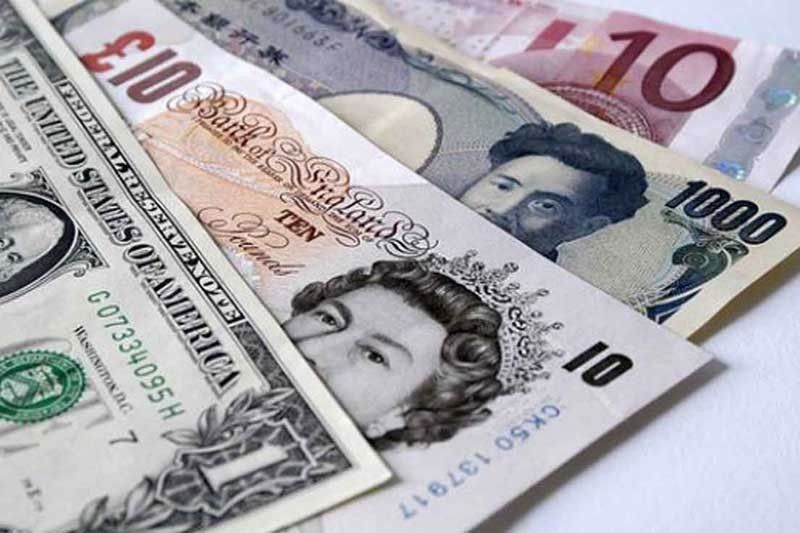
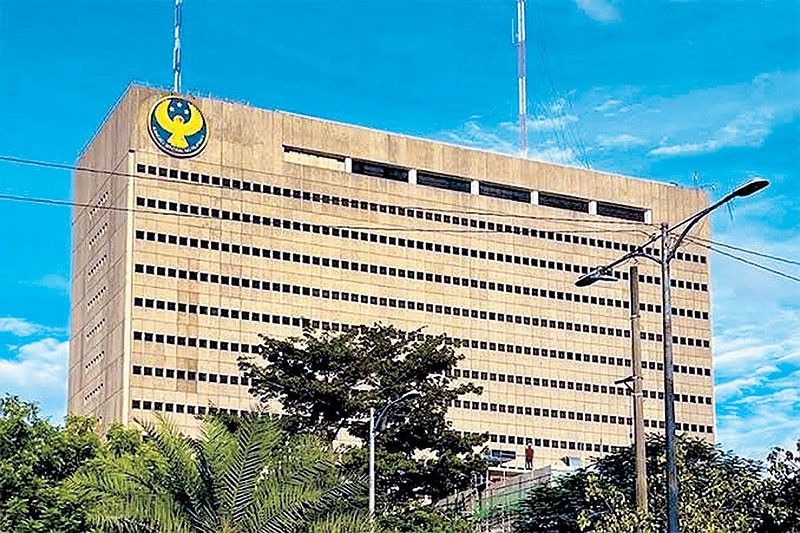
“The economics doesn’t warrant defending the peso,” BSP Governor Eli Remolona Jr. said last Thursday. But he also stressed that a weaker currency is neither inherently beneficial nor harmful for the country.
The Governor said efforts to deliberately weaken the currency to boost exports were unlikely to yield meaningful gains. He noted that some economies pursued that strategy years ago to build their market share with export-led growth. But, he said, “that ship has sailed.”
The BSP, the Governor suggested, is willing to absorb some currency weakness at this point.
A weaker peso raises the peso value of OFW remittances and will boost consumer demand in our consumer driven economy. But it also pushes up import costs for some basics like food and petroleum, which we heavily import, contributing to a rise in inflation.
A weaker peso also increases the peso value of foreign-currency debt held by the government and private firms.
Economist Toti Chikiamco said a manpower exporter told him we are losing competitiveness in the global labor market to, among other countries, India.
Chikiamco noted that the Indian rupee and the Philippine peso were exactly at the level of 45 pesos and 45 rupees to the US dollar in 2010. Now the rupee is 88 while we are at the 59 level.
This brings us to a continuation of the questions posed by Joey Salceda to the BSP Governor.
Question: “The BSP maintained a 75-basis-point spread over the Fed Funds rate, yet the peso depreciated 1.4 percent quarter-on-quarter and 0.6 percent year-to-date. The traditional interest rate parity relationship appears broken. Is the peso now more sensitive to governance and growth concerns than to interest rate differentials? And if so, does that change how you think about the exchange rate channel of monetary policy?”
Joey’s insights: “Nominal depreciation isn’t translating to competitiveness loss because our inflation is so low. This might argue for tolerating more peso weakness since it could support export growth without importing inflation.
“BSP shouldn’t defend a nominal exchange rate at the cost of growth when the real exchange rate is doing what we want. The market is telling us something about growth expectations.”
The BSP seems to understand the concerns of Chikiamco and Salceda. But there is always strong pressure for a strong peso from politicians who mistakenly think a strong peso shows a strong economy. Sectors of the economic elite who thrive on imports also want a strong peso.
Thumbs up for an independent BSP that is ignoring the “tremendous” pressure to defend the peso. As the Governor said, the present economic realities do not warrant a forceful intervention.
The BSP is not alarmed by the prospect of the currency weakening to the 60-per-dollar level, though the Governor made it clear that the BSP would step in to smooth excessive volatility that could stoke inflation.
Next question from Joey: “Our GIR stands at $110.9 billion, impressive by any measure, covering 7.4 months of imports and 4x short-term debt.
“But net FDI inflows fell 27.7 percent, portfolio investment inflows dropped 76.3 percent and we’re increasingly dependent on OFW remittances, which grew only 3.3 percent, to finance our current account.
“How sustainable is our external position if FDI remains deterred by governance (corruption) concerns and remittances mature as a growth driver?”
Joey’s insights: “Financial account swung from $11 billion inflows in Q3 2024 to $3.9 billion in Q3 2025, a $7 billion deterioration in one year. We managed a small BOP surplus only because the current account deficit narrowed, not because capital flows remain confident.
“External buffers are adequate today, but the trajectory is what concerns me. Remittances at 3.3 percent growth cannot forever compensate for FDI at minus 27.7 percent.”
Question: “Governor, your October inflation projections show inflation remaining within target through 2026. But you also note upside risks from electricity rate adjustments and rice tariffs.
“Given the growth headwinds of trade policy uncertainty, infrastructure spending delays and weakening employment, how should markets interpret BSP’s forward guidance? Should we expect the easing cycle to accelerate if Q4 GDP disappoints?”
Joey’s insights: “The original DBCC target of 5.5-6.5 percent growth for 2025 was effectively unreachable. DBCC lowered the target to 4.8 to 5.0 percent. We’re at 5.0 percent through three quarters and Q4 faces significant headwinds.
“Fiscal authority is constrained (everyone in government is afraid to spend); BSP is the last macroeconomic stabilizer with live ammunition. Front-loading rate cuts make more sense than responding to deterioration after the fact. Markets reward decisiveness, and the inflation data gives you room to act.”
Question: “Governor, digital bank deposits grew 36.8 percent year-on-year, and your report credits them with driving deposit growth through innovative services and better deposit returns.
“But digital bank NPLs have been volatile, spiking from 8.46 percent in Q3 2023 to 25.33 percent in Q1 2024 before moderating to 7.32 percent.
“I’m also concerned about a pattern I’m seeing: rather than applying for digital bank licenses under BSP’s framework, players are buying rural banks, building an app on top and effectively operating as virtual banks. Is the BSP seeing the same thing? And does this create prudential gaps?”
Joey’s insights: “I authored the Virtual Banking Act precisely to create a fit-for-purpose regulatory regime for digital-first institutions. What’s happening now is regulatory arbitrage: acquire a rural bank license, slap an app on it and you’re a virtual bank without the prudential requirements we designed for digital banks.
“Rural banks have different capital requirements, different risk management expectations and different supervisory intensity. A 25 percent NPL ratio, even temporarily, suggests underwriting standards that wouldn’t survive scrutiny under the digital bank framework.
“If the market is routing around the intended regulatory architecture, BSP needs to close that gap. Either tighten standards for rural bank digital transformations, or make the digital bank licensing pathway more attractive.”
Interesting times. Tough decisions must be made. The BSP officials will earn their pay this year.
Boo Chanco’s email address is [email protected]. Follow him on X @boochanco