.png) 4 months ago
39
4 months ago
39

Upgrade to High-Speed Internet for only ₱1499/month!
Enjoy up to 100 Mbps fiber broadband, perfect for browsing, streaming, and gaming.
Visit Suniway.ph to learn
Six East Asian countries have reported their March inflation so far, and the initial impact of the Iran war has been embedded. I compare their inflation from March 2025 to March 2026 in percent: Laos 11.2 to 9.7; Vietnam 3.1 to 4.6; Philippines 1.8 to 4.1; Indonesia 1.0 to 3.5; South Korea 2.1 to 2.2 and Thailand 0.8 to -0.1.
So of the six countries, Laos and Vietnam have the highest inflation but the Philippines has the largest jump in inflation in one year, more than double, and it is not good.
Yesterday the Philippine Statistics Authority also released the labor data for February 2026. A piece of good news: Phl unemployment has declined from 5.8 percent in January to 5.1 percent in February, although this is higher than the February 2025 level of 3.8 percent.
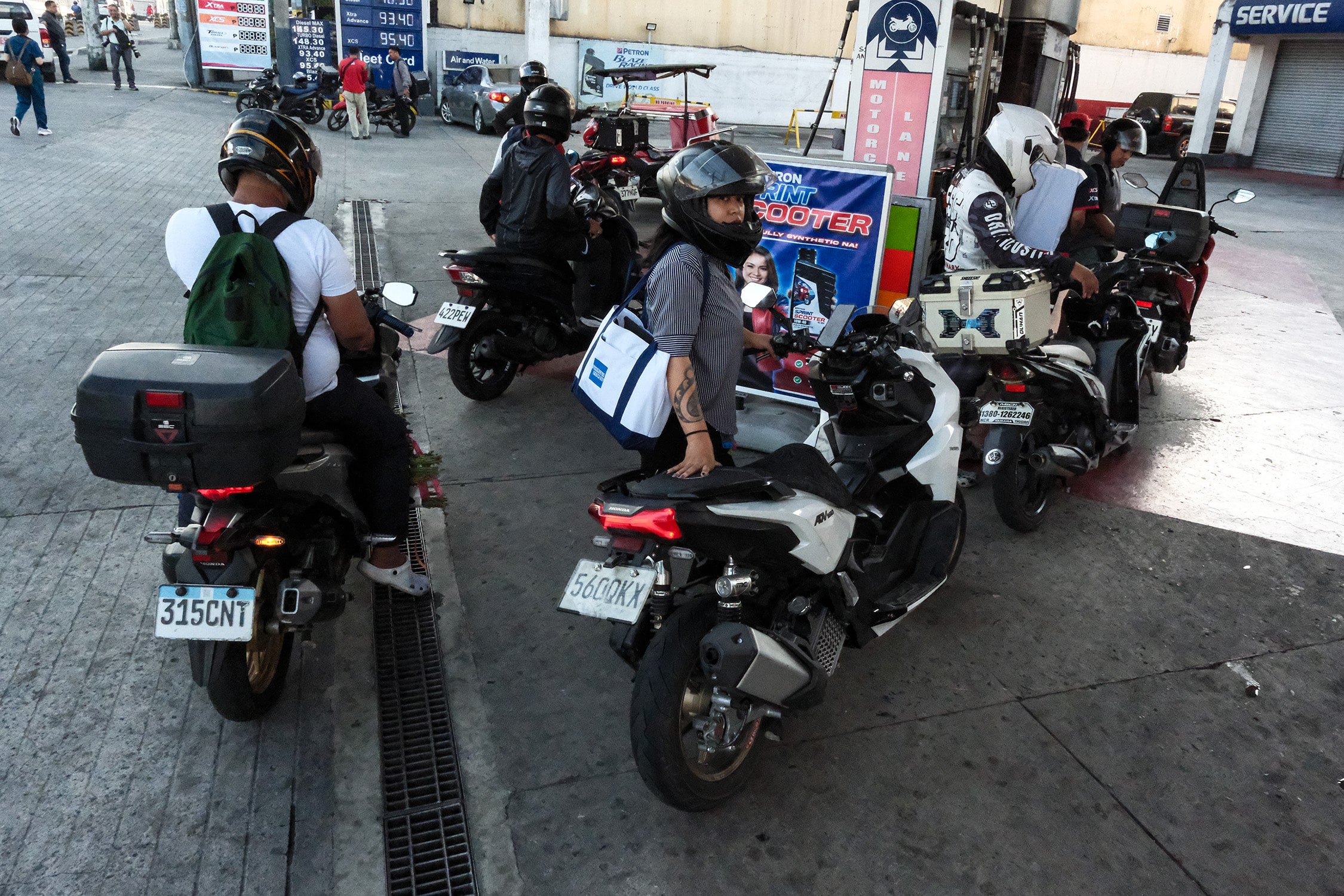
The tourism sector is among the worst affected by high oil prices as there are fewer visitors and vacationers. Unlike industry, manufacturing and agriculture, tourism is very labor intensive.
A number of hotels, resorts and restos have downsized employment in an otherwise tourism peak season of March to May. Fewer people are going out for vacation, especially to far away places like Ilocos, Cagayan Valley, Bicol, Mimaropa, Visayas and Mindanao.
As a consolation for the Philippines, many countries in the West are in a worse situation. Their February 2026 unemployment in percent is as follows: US 4.4; Brazil 5.8; Canada 6.7; Italy 5.3; Poland 6.1; Germany 6.3; Belgium 6.4; Austria 8.3; Turkey 8.5 and Sweden 8.8.
The high inflation in many countries is a result of the ongoing Trump war against Iran and Iran fighting back against US military bases and facilities in the Gulf. Hence, this should be considered as “Trumpflation.”
The Philippine government is responsibly acting on many fronts to mitigate the various energy and economic problems.
The Executive Secretary (ES), on behalf of the President, is regularly meeting various sectors. On April 6, ES Ralph Recto, along with Energy Secretary Sharon Garin, Economy Secretary Arsenio Balisacan, PCO Secretary Dave Gomez and other officials, met with business groups and assured them that the country maintains sufficient fuel supply, controls rising logistics costs, manages port congestion, accelerates trade facilitation reforms and expands opportunities in digital and remote work.
The business groups included the Philippine Chamber of Commerce and Industry, Federation of Filipino-Chinese Chambers of Commerce and Industry Inc., Semiconductor and Electronics Industries in the Philippines Foundation Inc., Management Association of the Philippines, IT and Business Process Association of the Philippines, Makati Business Club and Ease of Doing Business Foundation Inc.
The government and business officials also met with top officials of the 14 domestic oil companies that day. ES Recto said that “With or without this conflict, we should be removing friction costs across the supply chain. Kasama na dyan yung mga hindi kinakailangang checkpoint, lalo na sa mga biyahero ng mga pagkaing mabilis mabulok.”
These are good moves by the Office of the President through the ES. There is natural panic in the public, so this helps calm the markets and assure them that foreign and energy diplomacy are working and that domestic ease of doing business is continuing.
Other policy measures that the President may consider are the following.
One. A policy signal that the Philippines will further develop our domestic oil, gas and coal resources, and that we embrace fossil fuels rather than demonize them.
Two, expand energy cooperation with China and other neighbors to jointly develop more offshore oil and gas.
Three, continue energy diplomacy, with more oil and gas supply from more countries. Fertilizers, in particular, are crucial, especially as the rice planting season may start by May or early June.
Four, suspend or reduce the oil excise tax: diesel from P6/liter back to zero, gasoline from P10/liter to P4, if not zero and LPG back to zero. Windfall revenue from higher VAT collection per liter can partly compensate for reduced excise tax collections.
Those taxes were invented by previous administrations based on fictional problems like oil-gas-coal “cause unprecedented global warming/climate change.” Climate change of the warming-cooling cycle has been happening for the past 4.6 billion years of Earth’s existence.
Five, avoid new subsidies on top of existing subsidies funded by borrowings. Discontinue or limit subsidy to public transport if the government cannot subsidize also the tractors, harvesters, trucks, irrigation pumps and fishing boats that use diesel.
Six, do not cave in to lobbies to suspend the VAT for oil and electricity. Consider a VAT cut from 12 percent to 10 percent, even eight percent, with zero exemptions to any sector except raw agri-fishery products.
Seven, continue energy conservation, and limit, if not cancel, government officials’ foreign and domestic trips and meetings related to anti-fossil fuel and climate narratives. We need more fossil fuels, not less.
Eight, ask the DILG and MMDA, Metro Manila and provincial cities like Baguio, to suspend number coding with penalties. High gasoline and diesel prices are enough reason for people to leave their cars for non-important trips, thus immediately reducing traffic congestion.
I mention this because last Holy Week I was in Baguio with my family for an overnight stay. On Maundy Thursday, we were about to leave the city when the Baguio PNP flagged me near Burnham Park for a “coding violation” and slapped me with a P500 penalty. The place was not congested, there were many open parking spaces on the roadside.
Baguio City had few visitors last Holy Week, unlike in previous years. The Baguio city government should be grateful for the few visitors that come to their city and spend money in their hotels, restaurants and public markets. Baguio should not get more money via the lousy “crime” of driving in their city on a coding day, in a supposedly forgiving Holy week.
As often said, the purpose of the bureaucracy is to expand the bureaucracy. That is the Baguio City government’s style.