 1 hour ago
3
1 hour ago
3

Upgrade to High-Speed Internet for only ₱1499/month!
Enjoy up to 100 Mbps fiber broadband, perfect for browsing, streaming, and gaming.
Visit Suniway.ph to learn
Already have Rappler+?
to listen to groundbreaking journalism.
This is AI generated summarization, which may have errors. For context, always refer to the full article.
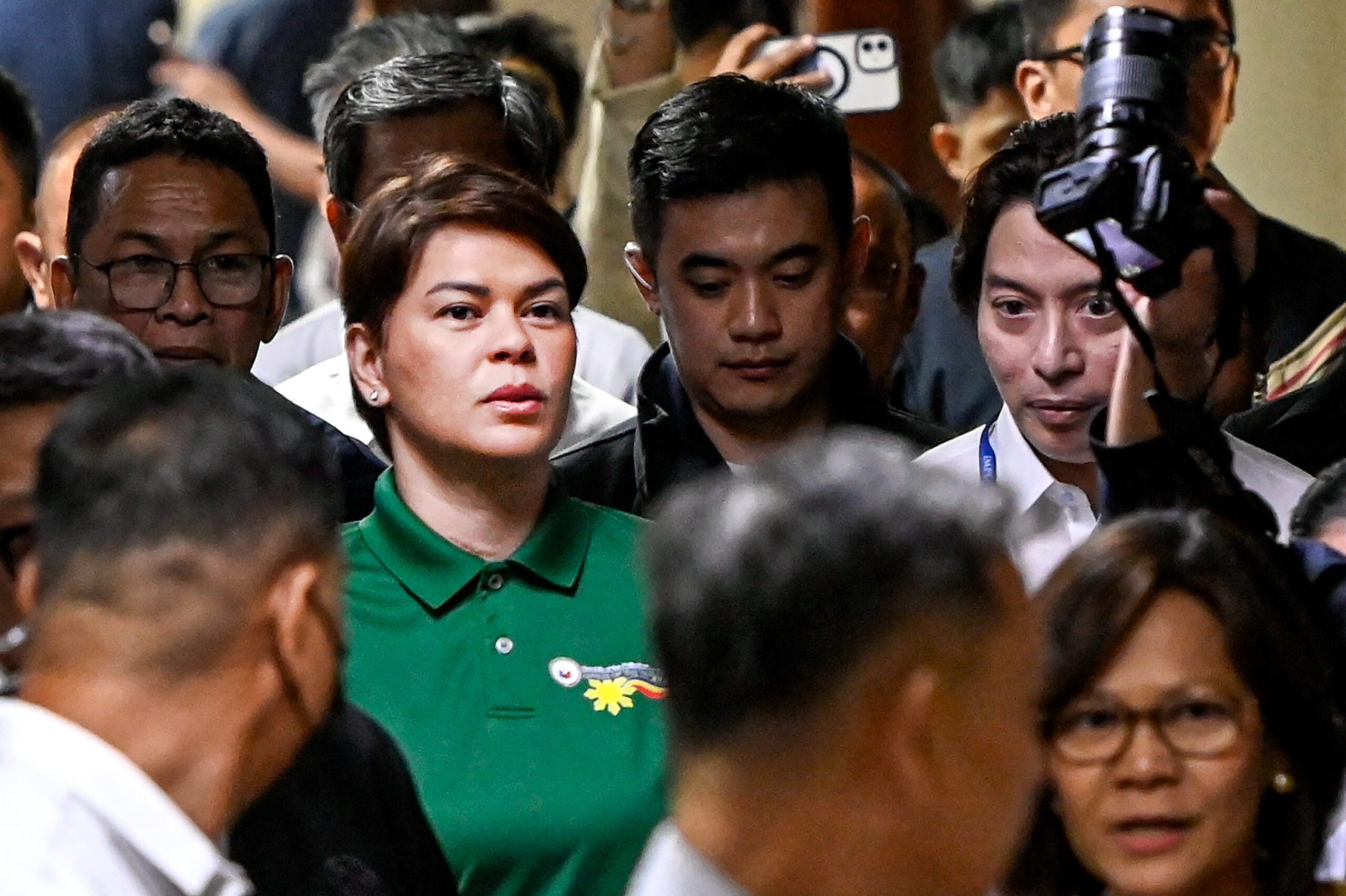
VP. Sara Duterte arrives at the Senate on July 7, 2026, to meet with her lawyers but does not attend the impeachment trial.
Angie de Silva/Rappler
It’s a single historical reference carrying two opposing messages: first, a warning to political rivals and second, a claim of victimhood for the Dutertes themselves
The Romanov dynasty, which ruled Russia for more than three centuries before its collapse in 1917 and execution a year later, has taken on a curious afterlife in Philippine political discourse, repeatedly invoked by members of the Duterte family to serve different purposes.
It’s a single historical reference carrying two opposing messages: first, a warning to political rivals and second, a claim of victimhood for the Dutertes themselves.
The irony is difficult to miss. One moment, the Romanovs are a cautionary tale and historical lesson about the fate of rulers who lose their grip on power. In another telling, Russia’s lost monarchy becomes the label attached to an alleged plot against the very people invoking them.
One prominent reference came in January 2024, when Davao City Mayor Baste Duterte invoked the Romanovs while criticizing President Ferdinand Marcos Jr. at a candlelight prayer rally held after the Hakbang ng Maisug gathering in Davao City.

In a speech calling on Marcos to reconsider his political course, Baste said the President should reflect on the fall of the Romanovs and the families of two dictators.
“Just a simple message (to our President): from now on, before you go to bed, think of the Romanovs, think of Benito Mussolini and his wife, think of what happened to you in 1986. Maybe you will reconsider the direction that you are taking,” he said, suggesting that leaders who lose public support can meet a similar fate.
About two years later, the Romanovs returned to the political stage, this time not as a warning about the fate of rulers, but as the name attached to an alleged conspiracy during the third day of Vice President Sara Duterte’s impeachment trial.
Duterte defense lawyer Mark Vinluan asserted on Wednesday, July 8, that his client’s November 23, 2024 online remarks against the Marcoses were an “unconventional response” to an alleged threat against her and her family.
During the Zoom meeting with reporters and social media influencers, a furious Vice President Duterte tongue-lashed and cursed at the Marcos family and said she had instructed a hitman to assassinate Marcos Jr., First Lady Liza Araneta-Marcos and then-House speaker Martin Romualdez if she were killed.
The shocking incident later became the basis for one of the impeachment charges filed against her.
Vinluan told the impeachment court, “She and her family were threatened and while her response was unconventional, it was justified. What triggered her response was a question about ‘Operation Romanov,’ which is the plot to eliminate VP Sara and her entire family.”
The defense has yet to produce evidence that such an operation existed, and public prosecutor Bel Zamora quickly dismissed the claim, saying the alleged plot existed only in the imagination of those advancing it.

Who were the Romanovs?
The dynasty began in the early 17th century when Mikhail Romanov became czar after a period of famine, foreign invasion, and political turmoil in Russia. His rise marked the start of a dynasty that would rule for over three centuries, expanding Russia into a vast empire under an autocratic monarchy.
When Nicholas II became the last Romanov czar in 1894, Russia remained a major power but faced growing unrest. He was seen as a weak leader, and poverty, inequality, demands for political refor m and military setbacks — including defeat in the Russo-Japanese War and heavy losses during World War I —weakened the monarchy and fueled public anger.
In 1917, protests, strikes and the collapse of military support forced Nicholas II to step down, ending the 300-year Romanov dynasty. After the Bolsheviks seized power later that year, Nicholas, his wife Alexandra, their five children and servants were held, moved from one place to another, and executed on July 17, 1918, in Yekaterinburg. – Rappler.com
How does this make you feel?
Loading