 2 months ago
60
2 months ago
60

Upgrade to High-Speed Internet for only ₱1499/month!
Enjoy up to 100 Mbps fiber broadband, perfect for browsing, streaming, and gaming.
Visit Suniway.ph to learn
(Second of two parts)
Part 1: An Indonesian billionaire wants EDC: The $5-B offer raising the stakes in the Lopez feud
The news this July that an Indonesian billionaire has offered US$5 billion for Energy Development Corporation (EDC) lands differently once the company’s history is laid out in full. EDC is not simply a large power producer that happens to be caught in the Lopez family’s governance war. It is an over 50-year experiment in what a country does about energy insecurity, an experiment that has passed through state ownership, a contested privatization, a debt crisis that cost the Lopezes their oldest utility, and a corporate rebuilding that turned it into one of the largest geothermal companies on Earth.
This piece traces that arc, because every question now being asked about the Barito offer, who decides, who benefits, what the country stands to lose, has an answer rooted somewhere in this history.
A child of the 1973 oil shock
The story begins with a war on the other side of the world. In October 1973, after the outbreak of the Yom Kippur War between Israel and its Arab neighbors, the Arab members of the Organization of Petroleum Exporting Countries (OPEC) imposed an oil embargo on nations seen as supporting Israel, and within months the price of crude roughly quadrupled. For the Philippines, which imported about 95% of its energy requirements as oil, the shock was existential. Gasoline was rationed, brownouts spread, and the import bill blew a hole in the balance of payments. A second shock in 1979, when the Iranian Revolution slashed Iran’s output, confirmed the lesson: a country that produces none of its own fuel is a hostage to other people’s wars.
The response of the first Marcos government was institutional. In November 1973 it created the Philippine National Oil Company (PNOC), the state’s vehicle for securing oil and, soon after, for developing energy sources that no Arab or OPEC embargo could touch. On March 5, 1976, Presidential Decree 927 established the Energy Development Corporation (EDC) as PNOC’s geothermal exploration and development arm.
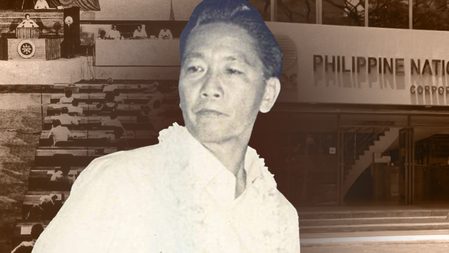
Geothermal was one front in a wider indigenous-energy campaign that also pushed hydropower dams through the National Power Corporation (Napocor), opened offshore oil exploration in Palawan, developed the Semirara coal mines, and committed the country to the Bataan nuclear plant. What set geothermal apart was geology and luck: the Philippine archipelago sits on the Pacific Ring of Fire, and beneath its volcanic belts in Leyte, Negros, Bicol, and Mindanao lay reservoirs of superheated water and steam, rainwater that had seeped into fractured rock, cooked by magma, waiting to be tapped by wells drilled one to three kilometers down. Presidential proclamations in 1975 reserved the Tongonan, Palinpinon, and Bacon-Manito areas for geothermal development, and a 1978 decree created the service-contract framework the industry still recognizes.
The early division of labor is a detail that matters enormously later, and it is easiest to picture geothermal as two businesses joined at the pipe. The first business gets the steam out of the ground: it drills deep wells into the mountainside, much the way a town drills for water, except that what rushes up is scalding steam from the hot rock below, and it lays the pipelines that carry that steam to where it can be used. The second business is the power plant at the end of those pipes, where the pressure of the steam spins a large machine, and the spinning is what produces electricity, the same way a bicycle dynamo lights a lamp when the wheel turns.
Under Marcos-era arrangements, PNOC-EDC ran the first business, the wells and the pipes, while Napocor owned and operated most of the power plants at the other end. The state, in effect, kept the steam and the machines in separate hands. When the company was eventually privatized, its new owners discovered they had bought the steam but not all of the machines it powered, and reuniting the two halves would drive some of the most consequential Lopez decisions of the following decade.
Building the backbone
The first commercial breakthroughs came in 1983, when the 112.5-megawatt Tongonan-1 plant in Leyte and the 112.5-megawatt Palinpinon-1 plant in Negros Oriental entered service, both born of the post-oil-crisis push. Through the late 1980s and 1990s the company added the Bacon-Manito plants in Bicol and the Mt. Apo complex in Mindanao, entered power generation directly through build-operate-transfer schemes, and by 1997 was claiming Tongonan as the world’s biggest wet steam field.
The plants were built where the resource is: in remote volcanic uplands above Ormoc and Kananga, above Dumaguete and Valencia, on the slopes of Mt. Apo in Kidapawan, reached by mountain roads and served by transmission lines carved through difficult terrain, because steam, unlike coal or gas, cannot be shipped to a convenient site. What the difficulty bought was the rarest thing in renewable energy: baseload power, electricity produced around the clock from heat that does not set with the sun or die with the wind, holding up the floor of the country’s demand through the power crises of the early 1990s and beyond.
The biggest – and most controversial – privatization
By the mid-2000s the government wanted out of EDC to cut the yawning national debt and plug budget gaps. But the manner of its exit remains one of the more instructive fights in Philippine privatization history.
The Joint Congressional Power Commission (JCPC), the bicameral body overseeing the power sector’s restructuring, had blocked the original exit plan in 2005 and in 2006 endorsed a different one: sell each government-owned geothermal power plant together with a long-term contract for PNOC-EDC’s steam, so that whoever bought the turbines also locked in the fuel coming out of the ground. It was an attempt to reunite what the Marcos-era setup had split — steamfields in one state company, power plants in another. The conditions for that bundle were never met on time, so the government abandoned the scheme and instead put up for sale its 60% equity stake in PNOC-EDC itself.
The fight that followed was about more than timing and price. Lawyers and nationalist economists also questioned who was being allowed to buy. Under Philippine law, only a “Philippine national” can own control of a company that taps natural resources, and regulators had long relied on the “control test”: if at least 60% of a bidder’s shares were held by Filipino corporations or individuals, the whole bidder was treated as Filipino. Red Vulcan cleared that test because 60% of it was owned by Lopez-controlled First Gen Corporation, with the remaining 40% held by joint venture partner Spalmare, a Dutch vehicle for two Icelandic geothermal firms, Reykjavik Energy Invest and Geysir Green Energy.
Critics argued that the grandfather rule should have been used on top of the control test, tracing ownership through each corporate layer to see the true Filipino-versus-foreign split behind the bidders. They warned that if you “grandfathered” structures like Red Vulcan and its rivals, foreign capital might in substance end up with more than the Constitution allows, and on that basis branded the sale “illegal” or unconstitutional. Then-senator Joker Arroyo filed a resolution to put the auction on hold, and then-senator Miriam Defensor Santiago, the JCPC co-chair, railed against selling what she called the state’s most profitable venture just to plug a one-year deficit, noting that EDC earned P5.4 billion in the first 10 months of 2007 alone.
Courts were never asked to strike the transaction down, and no ruling has voided the privatization; the bidding went ahead on November 21, 2007, and Red Vulcan won with a P58.5-billion offer, the biggest privatization price tag the country had seen.
What endured was the question the deal left behind, and which the Barito interest now mirrors from the other side: if EDC was built and once held in the name of energy security, should it simply be priced and traded like any other asset?
The Lopez bet, and the debts that came with it
Within the Lopez group the move by First Gen carried a clear generational signature. Among the brothers of the second generation, Eugenio “Geny” Lopez Jr. was identified with the media empire built around ABS-CBN, Manuel “Manolo” Lopez ran the family’s power distribution business at Meralco, and Oscar Lopez, father of the current First Gen chairman Federico “Piki” Lopez, led the energy and industrial side through First Philippine Holdings, the group’s holding firm for power generation, distribution, real estate, construction, and utilities. (Related articles on these below.)
- Debt, discipline, and daring: Inside the Lopez Group’s high-risk bets
- The Lopezes, presidents, and the cost of dissent
- Lopez vs Lopez: The secrecy fight behind the Razon power deals
Before EDC, the Lopez generation portfolio rested on natural gas: the 1,000-megawatt Santa Rita and 500-megawatt San Lorenzo gas plants in Batangas that anchored the Malampaya field, plus a foothold in hydro. EDC was Oscar’s bet that the group’s future was renewable, indigenous, and baseload.
The bet grew heavier almost immediately, from two directions at once. The first came from Iceland. Within weeks of the auction, the Icelandic partners wanted out, because the banks back home that funded them were failing in what would become one of the most spectacular national collapses of the 2008 crisis. First Gen bought their share, and since it did not have that kind of cash on hand, it borrowed. A purchase the family had planned to split with partners, it now carried alone, on debt.
The second came from Meralco itself. In 2007, First Philippine Holdings had borrowed P19 billion more to buy the 9% Meralco stake of the Spanish firm Union Fenosa, and the purchase was defensive: Winston Garcia, then chief of the state pension fund GSIS, was waging a bitter and personal campaign to wrest control of Meralco from the family, and every share the Lopezes could gather was a share Garcia could not. (See story below.)

Then the world’s banks stopped lending. The 2008 global financial crisis began with American families failing to pay their home loans, spread through the banks that had packaged and traded those loans as investments, and ended with credit drying up everywhere, including for a Philippine conglomerate that needed new loans to pay maturing old ones. The Lopezes had seen this movie before. The 1997 Asian financial crisis, which began when Thailand’s currency collapsed, had taught the region’s business families how dangerous it is to build slow-maturing businesses on borrowed dollars that lenders can demand back quickly, and the Lopezes, who had piled into broadcasting, power, cable, telecommunications, toll roads, and water in the same decade, spent the years that followed selling assets and restructuring loans to survive it. The lesson of that decade was brutal and simple. Assets, however beloved, must sometimes be sold to save the whole.
Why Meralco was the asset that went
The selling began at the edges. In 2008, FPH sold its toll-road business, operator of the North Luzon Expressway, to the Pangilinan-led Metro Pacific for P12 billion, with the proceeds going to debt. But it was not enough. On March 13, 2009, the FPH board approved the decision that ended an era: the sale of 20% of the family’s almost 35% stake in Meralco to the PLDT group of Manuel Pangilinan for P20.07 billion, cutting the Lopez holding in the utility they had controlled for a generation to about 13%.
What the family said publicly at the time was rare then and remains rare now: an admission of pain. In his statement, Oscar Lopez called the sale a “necessary business decision” reached after months of discussion among senior family members and key advisers, weighing not only Meralco but the debt load of First Holdings, the newly acquired EDC, and an increasingly embattled ABS-CBN. “Eventually, we realized that it was a necessary business decision no matter how painful and difficult it was,” he told us, reporters covering the unfolding of the Meralco-Lopez saga, back then.
He acknowledged the cost inside the family: “Given how Meralco’s history has long been intertwined with our family, acceptance of this sale was not easy, most especially by my brother Manolo, who has invested more than 30 years of his life with the company.” The rift between the brothers, Oscar at the holding company that sold and Manolo at the utility being sold, had been the subject of coffee talk and broadsheet columns for months, and the statement was as close as the family came to confirming it.
The math behind this rift was laid out in public two months later, at FPH’s annual stockholders’ meeting in May 2009. Then-company president Elpidio Ibañez told reporters that half of the P20.07 billion in Meralco proceeds went to trimming borrowings, cutting FPH’s debts roughly in half toward a target of $150 million to $200 million, obligations traced particularly to the EDC acquisition. Oscar Lopez framed the retreat as optionality rather than surrender: “If other opportunities arise that are significantly more attractive than Meralco, then we also have the option to sell down or sell out at significantly higher values than would have been possible if we had opted to engage in a battle of attrition,” he said.
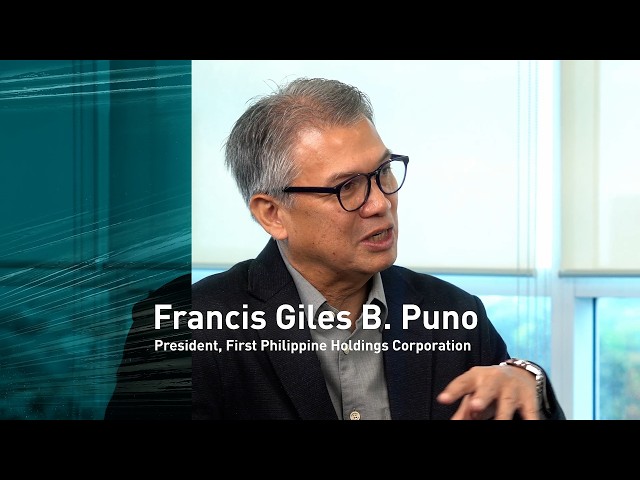
And then came the detail that gives the whole episode its shape, easy to miss in 2009 and impossible to miss now. At the same meeting, FPH executives said the deleveraging would position the group to join the government’s coming auctions of state-owned geothermal plants, including the very Tongonan and Palinpinon facilities that EDC’s steamfields had been feeding since 1983 but had never owned, a legacy of the state’s original decision to split steam from turbines. The chief finance officer who articulated that target was Francis Giles Puno. EDC won those auctions in 2009 and 2010, buying the Tongonan and Palinpinon plants for $220 million and the Bacon-Manito plants for about P1.28 billion, and in doing so became what it advertises today: the world’s largest vertically integrated geothermal company, owner of both the steam and the machines it turns.

Read in sequence, the record says something starker than a debt-management story. The Lopezes sold the electric utility they had been identified with for half a century in order to keep, and to complete, the geothermal bet. And the finance officer who did that arithmetic in 2009 is the First Gen president now who will be among those fielding questions about whether the completed platform should be sold to an Indonesian billionaire.
What the bet became
The rebuilt EDC settled, over the following decade, into the hands of just two owners. First Gen tightened its grip through the 2010s, sold a large minority position in 2017 to a consortium of Australia’s Macquarie and GIC, the investment arm of the Singapore government, for about $1.3 billion, and in 2018 took the company off the stock exchange entirely so it could plan decades ahead without the pressure of a daily share price and quarterly earnings reports.
EDC was created in 1976 because a Middle East war had closed off the world’s oil. The offer for it arrives in 2026 while another Middle East war has closed the Strait of Hormuz, oil prices are volatile, the peso is at record lows, and indigenous baseload power is once again a matter of national security rather than corporate strategy.”
The arrangement between the two owners is unusual and worth spelling out, because votes and money are split differently. First Gen is the boss: it controls 65 of every 100 votes in EDC’s boardroom, mainly through a special class of shares that carry voting power but only a small claim on profits. The Macquarie-GIC side holds just under 35 of every 100 votes, but it is entitled to the larger share of the money: of every P100 of EDC’s value, about P46 belongs to First Gen and about P54 to the foreign funds, according to First Gen’s own disclosures. Put simply, the Lopez side decides, while the foreigners own slightly more of what is being decided about.
Under that ownership, the company grew into a giant. Rebranded First Gen Renewables in March 2026, on its 50th anniversary, it runs 16 geothermal stations with about 1,300 megawatts of installed capacity, roughly 6 of every 10 geothermal megawatts in the country, plus the 150-megawatt Burgos wind farm in Ilocos Norte, the 132.8-megawatt Pantabangan-Masiway hydro complex in Nueva Ecija, and a small solar fleet. Its flagship, Tongonan in Leyte, produces 637.2 megawatts, which already places it among the largest geothermal complexes anywhere on Earth. Only a handful compare, led by The Geysers in California at about 1,517 megawatts and Italy’s Larderello, the world’s oldest, at roughly 770.
A P100-billion upgrade now under environmental review would lift Tongonan to 967.2 megawatts, and a separate P25-billion program will drill up to 43 replacement wells at the 43-year-old Southern Negros field. This is not a company winding down an old asset. A geothermal field, cared for properly, can keep producing long after the people who drilled the first wells have retired, which is why First Gen keeps spending on fields that are already 4 decades old, and why its management told shareholders this May that more than P200 billion has gone into the geothermal portfolio over the years. In the words of Puno, “geothermal is not for the faint of heart.”
 First Gen power assets as of December 31, 2024. Screenshot from First Gen website
That is the company for which Barito has now floated $5 billion, or more than P300 billion at the peso’s crisis-weakened level of about P61.70, more than 3 times the roughly P100 billion worth the whole company was worth when the government sold and privatized it in 2007.
EDC was created in 1976 because a Middle East war had closed off the world’s oil. The offer for it arrives in 2026 while another Middle East war has closed the Strait of Hormuz, oil prices are volatile, the peso is at record lows, and indigenous baseload power is once again a matter of national security rather than corporate strategy.
The asset the state built to answer an oil crisis, the asset the Lopezes traded Meralco to keep, is being priced in the middle of the very kind of emergency it was built for. Whatever the family, its foreign partners, and the Indonesian bidder decide, each of them will justify the choice by pointing to a chapter of this same history.
Those who resist a sale will invoke the company’s birth as a national answer to an oil crisis, and the price the family already paid, in Meralco, to keep it. Those who favor one will invoke the older Lopez lesson, that even beloved assets are sometimes sold to save the whole. The record supports both arguments, which is exactly why it is worth knowing in full. – Rappler.com
Sources:
- Presidential Decree 927 (1976) and the PNOC record
- Senate of the Philippines records on the PNOC-EDC privatization and the Joint Congressional Power Commission (2005-2008): https://legacy.senate.gov.ph/press_release/2007/1213_santiago1.asp and https://www.gmanetwork.com/news/money/content/69808/pnoc-edc-goes-to-first-gen/story/. Also search legacy.senate.gov.ph’s press release archive for November 2007 through February 2008, and pull P.S. Res. No. 203 (14th Congress, First Regular Session)
- “[2009] Lopez family: Sale of Meralco stake ‘a business decision'” and related 2008-2009 Meralco coverage by me
- ThinkGeoEnergy, May 25, 2009 (Ibañez debt figures, Puno on geothermal plant auctions); https://www.thinkgeoenergy.com/lopez-led-first-philippine-holdings-preparing-to-join-privatization-of-geothermal-plants/
- GMA News, May 25, 2009 (Oscar Lopez ASM remarks)
- Lopez book: “The audacity DNA: Powering FPH into the new millennium” by Raul Rodrigo (Union Fenosa purchase)
- First Gen Definitive Information Statement, April 30, 2026 (EDC ownership and economic interests)
- Lopez Holdings Form 17-A for 2025 (PREHC tender, delisting, ownership)
- First Gen 2026 ASM transcript, May 28, 2026
- Forbes, January 13, June 5 and July 15, 2026 – https://www.forbes.com/sites/iansayson/2026/06/05/philippine-tycoon-federico-lopez-led-first-gen-to-invest-407-million-in-geothermal-project/ and https://www.forbes.com/sites/iansayson/2026/06/05/philippine-tycoon-federico-lopez-led-first-gen-to-invest-407-million-in-geothermal-project/ and https://www.forbes.com/sites/iansayson/2026/07/15/indonesian-billionaire-pangestu-prajogo-offers-5-billion-to-buy-philippine-geothermal-company/
- First Gen clarification to the PSE, May 29, 2026.
Lala Rimando wrote about Philippine business, and managed newsrooms, including Newsbreak, ABS-CBN, Rappler, and Forbes, for over 25 years. She’s now based in La Union, taking care of her mom with dementia, and working on the multimedia biography of the late John Gokongwei.
![[ANALYSIS] What PSE’s First Gen sanctions say about Lopez family feud and market rules](https://www.rappler.com/tachyon/2026/07/PSE-lopez-july-10-2026.jpg?fit=449%2C449)