
 2 months ago
46
2 months ago
46

Upgrade to High-Speed Internet for only ₱1499/month!
Enjoy up to 100 Mbps fiber broadband, perfect for browsing, streaming, and gaming.
Visit Suniway.ph to learn
Already have Rappler+?
to listen to groundbreaking journalism.
This is AI generated summarization, which may have errors. For context, always refer to the full article.
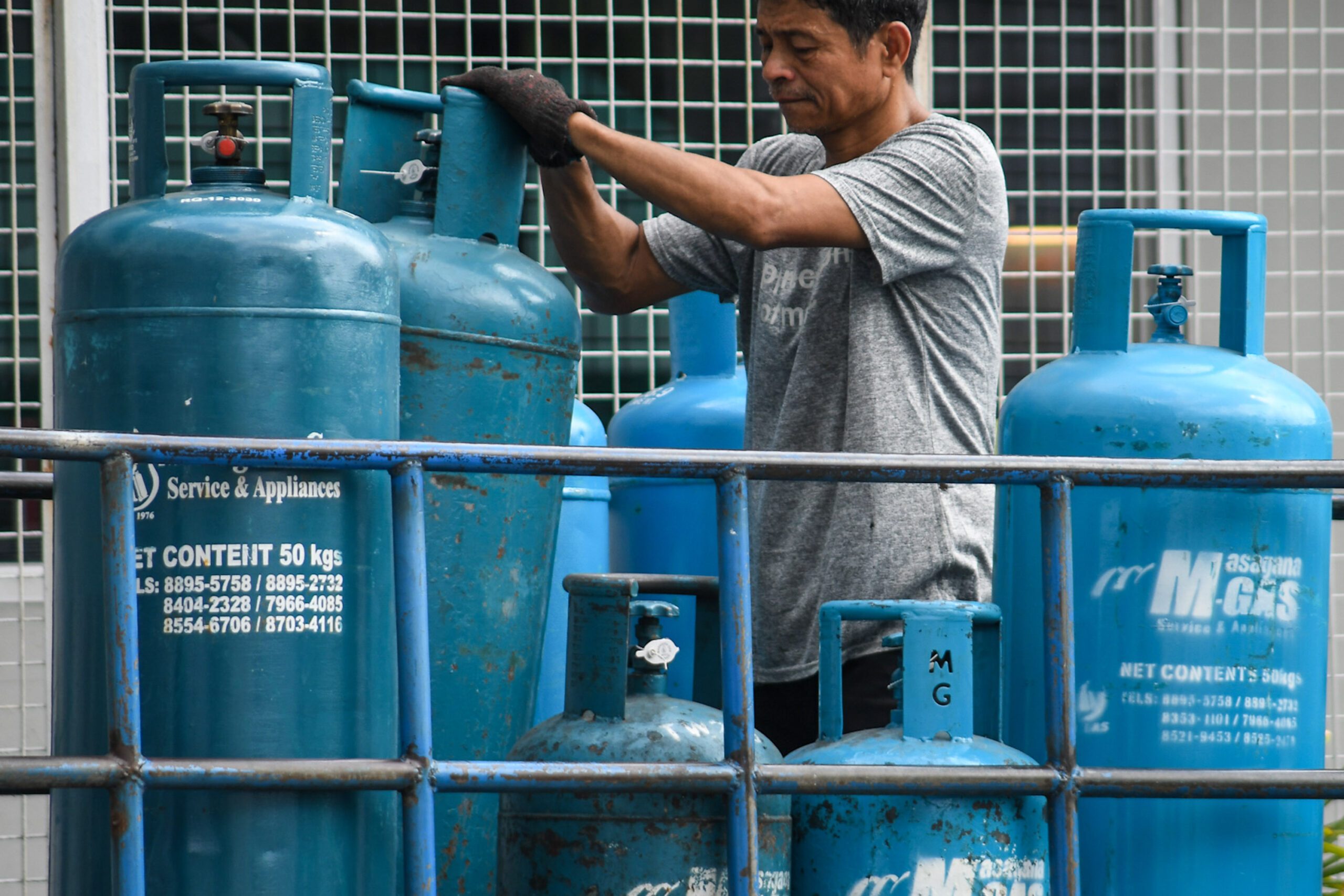
LPG. A worker unloads liquefied petroleum gas (LPG) tanks for delivery at a hotel in Manila on April 8, 2026.
Rappler
For consumers, the excise tax suspension had meant direct savings of around P5.65 per liter of kerosene and almost P37 for an LPG tank
MANILA, Philippines – The temporary tax break on kerosene and liquefied petroleum gas (LPG) is ending after Dubai crude prices fell below the government’s $80 per barrel trigger level.
Could this make prices go up for consumers? The resumption of excise tax could put upward pressure on kerosene and LPG prices.
The Bureau of Internal Revenue (BIR) said excise tax rates on kerosene and LPG would revert to the rates prescribed under the National Internal Revenue Code beginning July 8. This came after the Department of Energy (DOE) certified that the one-month average Dubai crude oil price from June 1 to 30 stood at $79.45 per barrel, just below the $80-per-barrel threshold set under Executive Order No. 114.
President Ferdinand Marcos Jr. had ordered a temporary suspension of excise taxes on kerosene and LPG for up to three months. The measure was meant to shield consumers from surging oil prices triggered by the Middle East war.
The same order also provided that the tax suspension would automatically end earlier if the one-month average Dubai crude price fell below $80 per barrel.
While kerosene and LPG account for a smaller share of tax revenue than diesel and gasoline, their excise taxes are still a meaningful revenue source. The Department of Finance estimated that suspending them for the maximum three-month period would cost the government around P4.1 billion in foregone revenues.
That made the suspension a painful hit to the government’s coffers, but it also provided direct relief to consumers. When the suspension was announced, the Palace said the removal of the tax was equivalent to around P5.65 per liter of kerosene and almost P37 for an LPG tank.
With the tax restored, that cushion disappears.
But pump prices and LPG prices don’t move based on taxes alone. Oil firms also factor in international prices, the peso-dollar exchange rate, shipping and import costs, and when their existing fuel stocks were purchased. This means consumers may not necessarily see the full tax impact all at once.
The good news is that the tax break is ending because Dubai crude, a key regional benchmark for unrefined oil, has become cheaper. That should eventually ease pressure on fuel prices. But rollbacks may take time to reach consumers, especially in the Philippines.
DOE Undersecretary Alessandro Sales earlier explained that while Dubai crude had already fallen below the $80 marker, local pump prices are more closely tied to regional prices of finished petroleum products, such as gasoline, diesel, and kerosene.
Sales said that while Dubai crude had returned to pre-war levels, MOPS diesel remained elevated. Before the fighting involving Iran and US-Israeli forces began on February 28, MOPS diesel was at $92.37 per barrel. Last Friday, it closed at $114.73 per barrel.
The DOE earlier said fuel prices may normalize within one to two months if there are no further disruptions in global supply routes.
The delay is because the Philippines doesn’t usually make use of crude oil. Most oil firms in the Philippines import finished petroleum products such as gasoline and diesel rather than importing crude oil directly and refining it.
For the week of July 7 to 13, oil firms were still allowed to raise pump prices. Diesel prices were set to increase by P1.57 to P3.57 per liter, while kerosene prices were set to rise by P1.70 to P3.70 per liter. Gasoline adjustments ranged from a rollback of P1.75 per liter to an increase of up to 25 centavos per liter.
DOE monitoring showed common Metro Manila retail prices from June 30 to July 6 at P70 per liter for gasoline RON95, P69 for gasoline RON91, P69.90 for diesel, and P98.50 for kerosene. – Rappler.com
How does this make you feel?
Loading