 2 months ago
56
2 months ago
56

Upgrade to High-Speed Internet for only ₱1499/month!
Enjoy up to 100 Mbps fiber broadband, perfect for browsing, streaming, and gaming.
Visit Suniway.ph to learn
Already have Rappler+?
to listen to groundbreaking journalism.
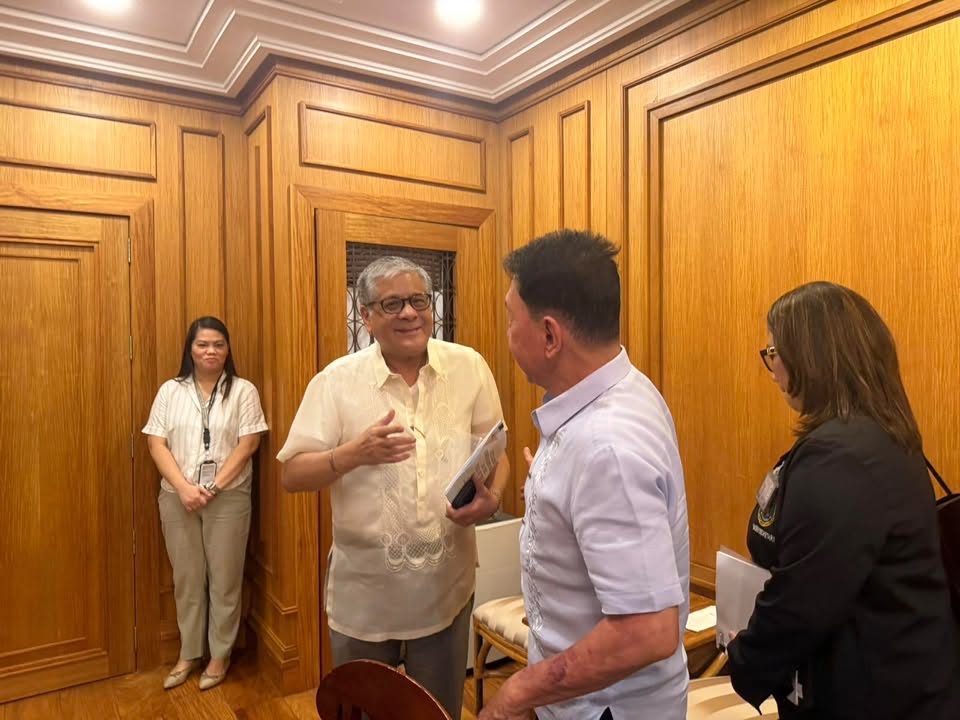
Special Assistant to the President MEETING. Anton Lagdameo Jr. meets with Sulu Vice Governor Abdusakur Tan in Malacañang on Thursday, July 16.
courtesy of Abdusakur Tan
The biggest challenge is no longer political but ensuring the transition does not disrupt public services in Sulu
ZAMBOANGA CITY, Philippines – For about a million people in Sulu, the province’s transfer to the Zamboanga Peninsula from the Bangsamoro region is more than a change on the map. It will determine whether students stay in school, patients receive medicines and local governments keep essential services running.
As Sulu formally shifts from the Bangsamoro Autonomous Region in Muslim Mindanao (BARMM) to the Zamboanga Peninsula (Region IX), the biggest challenge is no longer political but ensuring the transition does not disrupt public services.
Provincial officials say the goal is a seamless handover that residents barely notice.
Sulu’s move to the Zamboanga Peninsula came after the Supreme Court in 2024 ruled that the province should not be included in BARMM following the 2019 rejection by Sulu voters, during a plebiscite, of the Bangsamoro Organic Law (BOL) that established the autonomous region. The province had previously been part of the Autonomous Region in Muslim Mindanao (ARMM), which was replaced by BARMM.
President Ferdinand Marcos Jr. subsequently ordered Sulu’s transfer to the Zamboanga Peninsula region, aiming to maintain continuity in government operations and public services through a regional administrative structure.
As part of the transition, Sulu officials sat down with senior national government officials in Malacañang on Thursday, July 16, to discuss the logistical, fiscal and administrative aspects of the realignment.
The meeting, presided over by Special Assistant to the President Anton Lagdameo Jr., sought to establish a framework for transferring the province to its new administrative region.
Sulu Vice Governor Abdusakur Tan said the province’s main concern is avoiding “bureaucratic gaps” during the transition.
“Our priority is to make the transition as seamless as possible,” Tan said after the meeting, acknowledging public concerns.
Officials said the transition period carries the greatest risk, including delays in funding, disruptions to supply chains and uncertainty over agency responsibilities.
The transition will be overseen by a newly created Technical Working Group (TWG), whose immediate priorities are ensuring uninterrupted health services, education and government funding.
Department of Health Undersecretary Mary Ann Palermo-Maestral said they were working to keep hospitals operating normally and maintain medical supply deliveries throughout the transition.
Coordination with local school divisions is also underway to keep the academic calendar on track and protect teachers’ welfare in Sulu, according to Department of Education Director Ariz Delson Acay Cawilan.
Acting Budget Secretary Kim Robert De Leon and BARMM Finance and Budget Minister Ubaida Pacasaem said they were also coordinating budget releases to ensure local governments Sulu continue receiving funds needed to maintain services.
Officials said the restructuring is intended to be seamless, although large-scale government reorganizations often face administrative hurdles.
For Sulu residents, they said, the success of the transfer would ultimately be judged by whether schools remain open, hospitals stay supplied and government services continue without interruption. – Rappler.com
How does this make you feel?
Loading