.png) 4 months ago
48
4 months ago
48

Upgrade to High-Speed Internet for only ₱1499/month!
Enjoy up to 100 Mbps fiber broadband, perfect for browsing, streaming, and gaming.
Visit Suniway.ph to learn
It doesn’t look like the Strait of Hormuz will be opened to regular traffic any time soon. President Donald Trump has ordered the US Navy to stop vessels going in and out of the Strait, specially Iranian tankers. That’s to cut the last source of significant financial support for Iran which Trump believes will make it surrender.
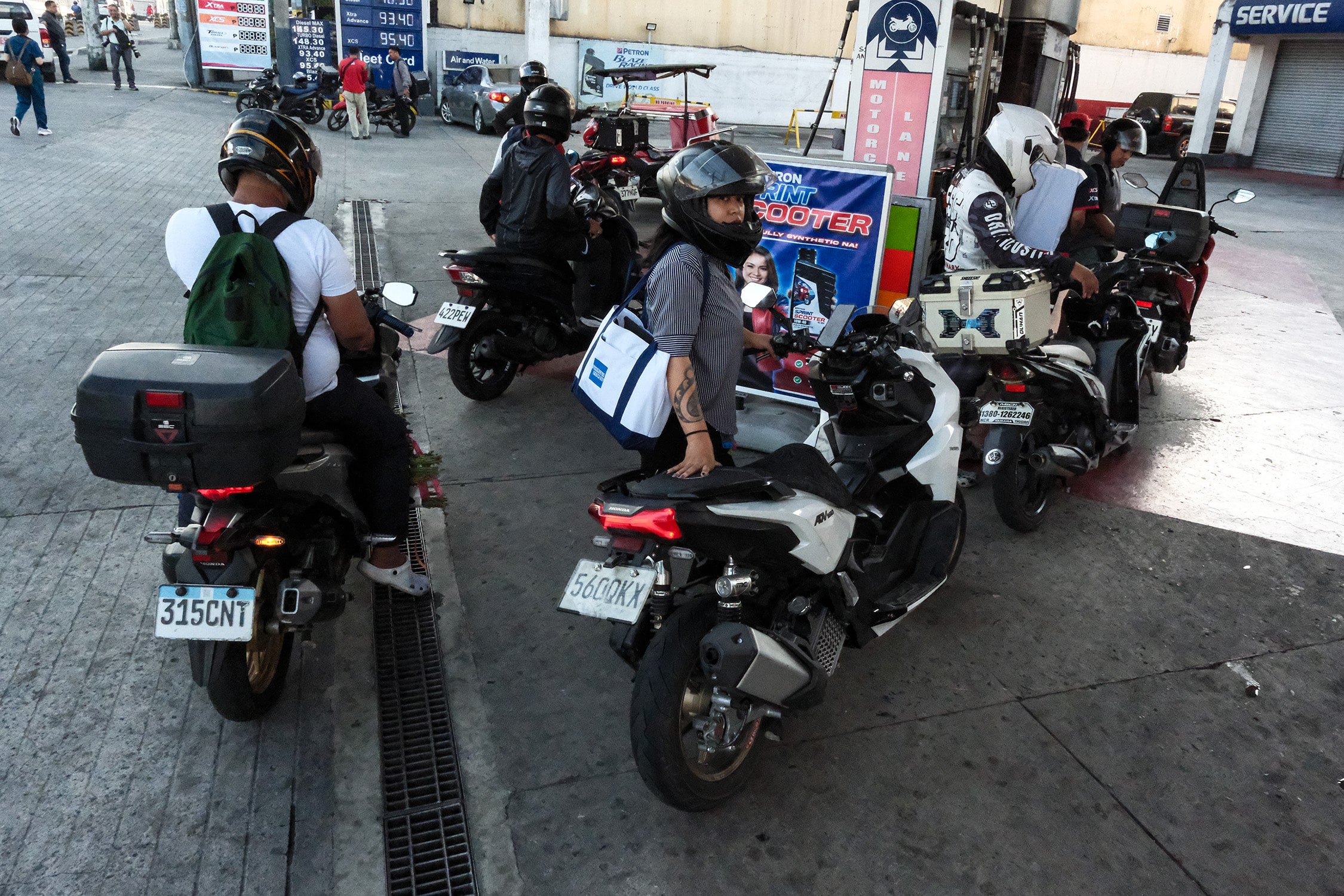
The continuing blockage is bad news for countries particularly in our part of the world that are very dependent on crude oil from the Middle East. The resulting scarcity of supply will continually raise oil prices to as much as $200/barrel, according to some estimates.
So, we are really screwed with rising oil prices, a weakening peso and a tight fiscal space further strained by subsidies, tax cuts and corruption. What can we do to keep life bearable other than borrowing heavily like we did during COVID?
A tight fiscal space basically means limited room to spend without worsening debt or deficits. We have large fixed obligations (debt service, salaries, pensions) which means a big portion of the budget is already committed.
With 57 percent of spending already mandatory, the only flexible portion must be aggressively reprioritized. We must spend smartly and improve efficiency to cushion the shock that this world crisis brings to our economy.
That’s a tall order. If we could realistically spend smartly, we should have done it a long time ago.
But here’s the thing… We must pay the salaries of teachers, soldiers, police officers and civil servants. There are mandated pay increases and there’s the overblown pension obligation for the uniformed services.
There’s debt service for foreign and domestic borrowings. There is no running away from paying debts that fall due and paying interest for the rest. There are also the LGU transfers.
Contrary to some impressions, foreign debt is not the biggest problem. It is the government payroll, LGU transfers and pensions.
The only room for maneuvering the tight fiscal space is infrastructure spending, subsidies and agency budgets. No more flood control projects, ghost or real. Targeted assistance will be needed as we did during COVID but may not be enough to make a big difference.
How do we bridge the gap between what is in the Treasury and what we need if push comes to shove?
During the 1997-1998 Asian Financial Crisis, South Koreans offered personal gold jewelry to the government to help repay a $58 billion bailout loan from the International Monetary Fund (IMF). Approximately 3.5 million people – roughly one-quarter of the country’s population at the time – donated their jewelry.
Some 227 tons of gold, including wedding rings and heirlooms, valued at over $2 billion, were donated for the good of the motherland. The collected gold was melted into ingots, exported, and converted into US dollars to boost foreign exchange reserves.
Although the total value covered only about 10 percent of the IMF loan, the selfless gesture of the South Koreans showed the world a national resolve to pay down the national debt. It eventually helped South Korea mount a rapid economic recovery.
According to DEPDev Secretary Arsenio Balisacan, the government needs up to P429 billion to fund support and relief measures if the Middle East conflict drags on until December. That’s probably on the conservative side.
If the Hormuz disruption lasts beyond three to four months, the Philippines must begin to aggressively reallocate (cut, delay, redirect) and target support narrowly (not universal subsidies).
Then, we must spend smarter. We must use our limited resources to protect the essentials (fuel, food, transport), compress everything else, and avoid permanent fiscal commitments.
We must also remember that once the shock dies down, the real danger isn’t just continuing high oil prices—it’s being stuck with higher debt (as in COVID), structurally larger deficits, and less room for future crises.
Inevitably, our private sector must weigh in beyond press releases and token CSR programs.
With our total private wealth estimated at P55 trillion, the top one percent owns nearly one-third (32.5 percent) of the country’s total net worth. The top 10 percent of Filipinos hold approximately P40 trillion.
Since most of our people are poor with nothing more to give, will our elite voluntarily contribute as generously as the Koreans to a fund that will help us navigate the next few months of the Trump-driven crisis?
The fund could be managed by the private sector, a consortium of banks perhaps, if there is little trust in the government managing large sums of money. The fund can be used for subsidizing fuel prices used by the poor, from diesel to LPG and other forms of targeted assistance.
The private sector must aggressively contribute to the national effort to help us survive this crisis. For example, feeding programs not just for children but for whole communities in impoverished areas. Help distressed public utility drivers and farmers with alternative jobs or livelihoods.
Government must project a sense of crisis with officials leading by example.
While we may not be able to save a trillion pesos by abolishing Congress as is claimed in social media, it would help if members of Congress voluntarily give up salaries and allowances for the duration of the crisis.
National officials must show the nation they are ready to share the pain and that they are in office to render public service even without pay in a time of emergency.
The President, Vice President and other officials should also give up salaries and confidential funds.
No one knows when this crisis will end. The war could last indefinitely like in Ukraine. But the stranglehold on the world economy through Hormuz that this war caused is suffered by all.
We must also pray for divine intervention so that the leaders of the US, Israel and Iran will come to their senses and realize that their war is causing too much suffering and it must simply stop.
Boo Chanco’s email address is [email protected]. Follow him on X @boochanco.