 2 months ago
37
2 months ago
37

Upgrade to High-Speed Internet for only ₱1499/month!
Enjoy up to 100 Mbps fiber broadband, perfect for browsing, streaming, and gaming.
Visit Suniway.ph to learn
Marc Jayson Cayabyab - The Philippine Star
April 12, 2026 | 12:00am
Senator Win Gatchalian on March 6, 2026.
STAR / Ryan Baldemor
MANILA, Philippines — A Senate committee formed exclusively to help thresh out ways for the country to weather through the raging oil crisis is set to open to an investigation into possible collusion among oil players to jack up prices right at the onset of the Middle East war.
Sen. Sherwin Gatchalian, chairman of the ad hoc PROTECT committee, said he welcomed the move of Department of Energy (DOE) Secretary Sharon Garin to seek the Philippine Competition Commission’s help in investigating possible “cartelization” and profiteering by oil players.
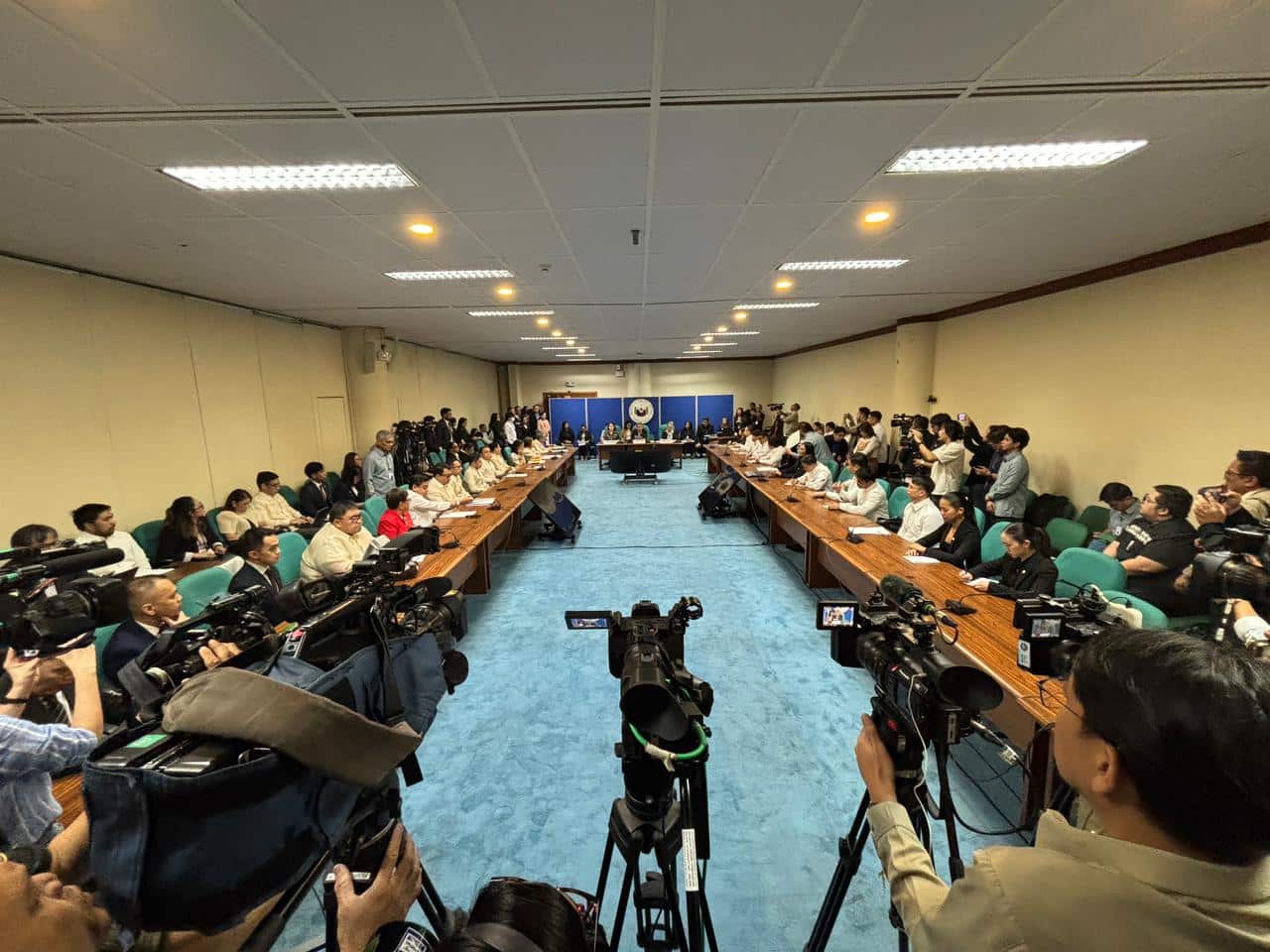
The PROTECT committee, which stands for Proactive Response and Oversight for Timely and Effective Crisis Strategy, will hold its next hearing tomorrow.
“It’s good that there is formal declaration that there is cartel-like behavior or possible collusion,” Gatchalian said in Filipino.
An indicator of cartel behavior is simultaneous increases in oil prices, and at almost the same level, Gatchalian said.
Gatchalian said he will ask for updates from government agencies on the country’s supply deals with other countries outside the Middle East, as well as moves to crack down on profiteering.
He thumbed down the practice of oil companies of selling their old stocks at escalated levels, supposedly to cover “replacement cost.”
He said oil companies should sell their old stock at the old prices, not at the crisis-level costs.
On criticisms that the country only has up to 60 days storage capacity despite steady supply, Gatchalian said what’s important is there is firm commitment that supply will continue.
Meanwhile, Sen. JV Ejercito urged the Marcos administration to invoke its emergency powers to temporarily take over the operations of oil companies and impose price caps to protect consumers from alleged cartel-like pricing behavior and from soaring inflation.
Noting public observations that oil firms are quick to implement big-time price hikes but slow to roll back prices even when global market costs drop, Ejercito pointed to a specific provision in the law that allows immediate state intervention.
“You know, section 14(e) of the Oil Deregulation Law authorizes the DOE to temporarily take over direct operations of oil companies during a declared national emergency,” Ejercito told radio dwIZ.
“This should be imposed so that at least price hikes can be controlled by the government because there is national emergency,” he said.
He stressed that while the private sector is free to dictate market prices during normal times, the government must step in during a crisis to set caps and ease the financial burden on the public.
Asked about a pending DOE investigation on possible cartelization among local oil players, Ejercito admitted that the current law severely restricts the government, limiting its role to mere price monitoring. Because of this, he said it may be time to review or amend the Oil Deregulation Law.
“Well, that’s the law. It’s just monitoring for the DOE, that’s why we have to revisit this section in the law so that the government can easily step in during energy crisis,” he added.
“Or we may have to review or fine tune oil deregulation because it’s the ordinary citizens who are suffering. Inflation’s going up, everyone’s affected,” he added.
He also expressed openness to elevating the current energy emergency to a full-blown “state of national emergency” to give the executive branch broader authority to address the crisis.
“As I said, in these times of crisis, we have to act with urgency on what we have to do. There should be no dilly dallying,” he said. — Neil Jayson Servallos