.png) 4 days ago
2
4 days ago
2

Upgrade to High-Speed Internet for only ₱1499/month!
Enjoy up to 100 Mbps fiber broadband, perfect for browsing, streaming, and gaming.
Visit Suniway.ph to learn
As the Philippine equities market tries to hang on to the 6,000 level even as negotiations for an end to the US-Iran conflict continue, local market players are trying to look for signals to help them decide if they should stay in the market.
According to a recent market briefing held by First Metro Securities for Monday Circle, their view of the current Middle East conflict is that of macro transmission story rather than a geopolitical trading story, with the primary risk being the possible duration of the conflict.
As such, FirstMetroSec points out that “short shocks hit sentiment, while prolonged shocks hit fundamentals. “It acknowledges that the Middle East situation is at a critical stage and that if talks falter, the market will revert to risk-off mode.”
On the other hand, the Metrobank-owned brokerage firm believes that if a durable ceasefire holds, Philippine equities will enter a phased relief cycle. As such, they note that with negotiations still fragile, a balanced approach is appropriate.
For now, FirstMetroSec analysts say, with negotiations still fragile, a balanced approach is appropriate.
As the Middle East became a full-scale regional conflict, the immediate global market consequences was on direct trade, and particularly for the Philippines –the country runs a structural deficit with the region as energy imports, comprising about 96 percent, are dominated by crude oil and about 10 percent of our fertilizer imports.
In terms of indirect trade, the brokerage firm points out, there is a cost pass-through risk for manufacturers, consumers and construction supply chains.
Additionally, the Philippines is also affected in terms of remittances from Filipinos employed in the region. The Middle East hosts the largest concentration of overseas Filipino workers, accounting for more than 1.1 million out of the estimated total 2.2 million OFWs. Historically, the analysts noted, remittances act as a counter-cyclical buffer, but resilience depends on continued employment.
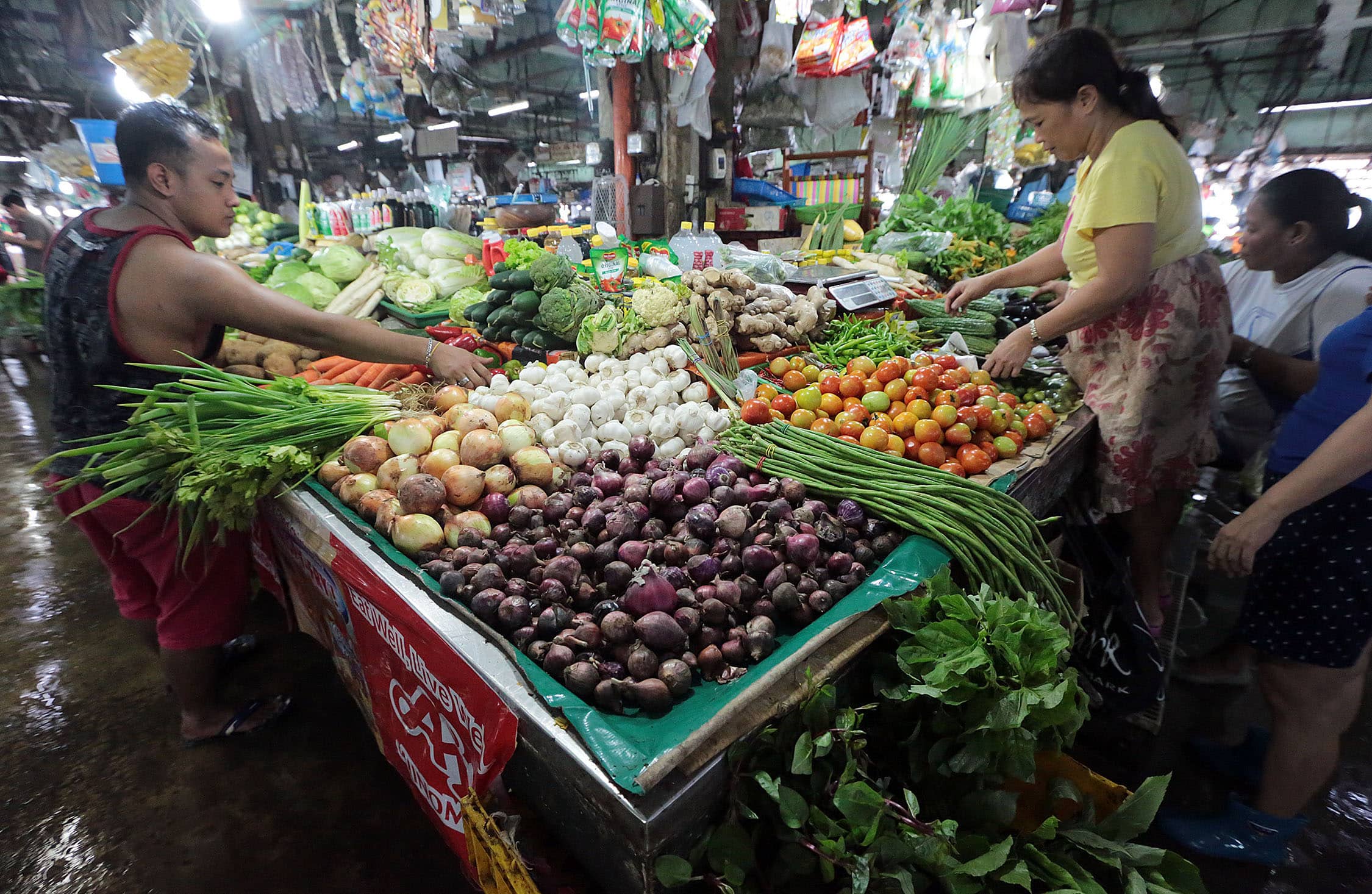
Another consequence of the Middle East conflict is on inflation, particularly on food, transport and utilities, which has driven inflation beyond the BSP target range. As of March, inflation has substantially risen to 4.1 percent from only 2.4 percent in February before the conflict started.
With inflation as the key transmission channel, the analysts warn that “the longer the energy shock lasts, the broader and more persistent inflation becomes.”
On top of those, the immediate market consequence for the Philippines is on overall growth. The Middle East conflict places a drag on GDP (gross domestic product) due to an energy import bill shock, with higher oil and LNG (liquefied natural gas) prices acting like a tax on the economy.
The conflict also worsens net exports and drains purchasing power of Filipinos, with a cost-push pressure on firms due to higher fuel, power and logistics costs that compress margins. It also affects capital expenditure decisions, as firms weigh their options amid the global uncertainty , resulting in delayed capex decisions.
Also affected are household real income, which are squeezed as inflation erodes consumption, especially for energy and food-heavy baskets.
Likewise, the consequence of the conflict is also channeled through the financial system as persistent inflation would delays rate cuts, thus leading to tighter financial conditions.
Before the Middle East conflict, the Bangko Sentral ng Pilipinas was comfortably on its way to reducing policy rates with a benign inflation outlook for the economy. But following the escalation of the conflict between the US and Iran, inflation rocketed to 4.1 percent.
The Middle East conflict, which is now on its second month has resulted in a rise in oil prices – Brent crude oil rising by around 55 percent since air strikes began. Foreign fund flows, after a strong start early this year of around $454 million, reversed in March to an outflow of $63 million, according to figures gathered by FirstMetroSec.
All of these reversals resulted in the PSE index dropping from 6,611.24 on Feb 27 to an intra-day low of 5,816.62 on March 23.
With the agreement on a two-week conditional ceasefire that involves the US suspending strikes if the Strait of Hormuz reopens and Iran commits to safe marine passage, and both sides negotiating through intermediaries in the next two weeks, the immediate tail-risk was removed and global equities rallied and oil prices dropped.
Two scenarios are now at play, with Scenario 1 as an undesirable development of ceasefire violations and re-escalation. This first scenario could see oil prices spiking back above $100 per billion barrel to as high as $150/bbl, which would lock in persistent inflationary pressures and the shock harder to unwind. The Philippine economy would then risk deeper scarring.
Likewise, the analysts see the BSP facing a sequencing problem and fiscal pressure intensifying and government buffers eroding. Duration risks, they warn, “will force trade-offs between immediate relief and long-term sustainability.”
According to First MetroSec, “if talks falter, markets must absorb another wave of energy-driven inflation, margin compression, and policy complexity.” Their market advice would then be for a “defensive, resilience-first positioning, favoring names with stable cash flows, pricing power, and low sensitivity to fuel and foreign costs. The priority is balance sheet strength, margin stability, and exposure to sectors that can withstand prolonged uncertainty.
A desirable Scenario 2 would be for a durable ceasefire. This scenario would see oil pricing normalizing, although they still do not see Brent crude oil prices immediately dropping to pre-conflict levels of $80 to $90/bbl. They are optimistic though that “if a durable ceasefire holds, the market moves into a constructive repricing cycle, with risk-premium compression, macro-data confirmation, and policy re-anchoring as the energy shock unwinds.”
Their market advice would then be to rebuild exposure on Philippine equities and implement a ceasefire repricing playbook that involves reducing defensives and choosing stocks more aggressively.