.png) 1 hour ago
5
1 hour ago
5

Upgrade to High-Speed Internet for only ₱1499/month!
Enjoy up to 100 Mbps fiber broadband, perfect for browsing, streaming, and gaming.
Visit Suniway.ph to learn
Brix Lelis - The Philippine Star
October 2, 2026 | 12:00am
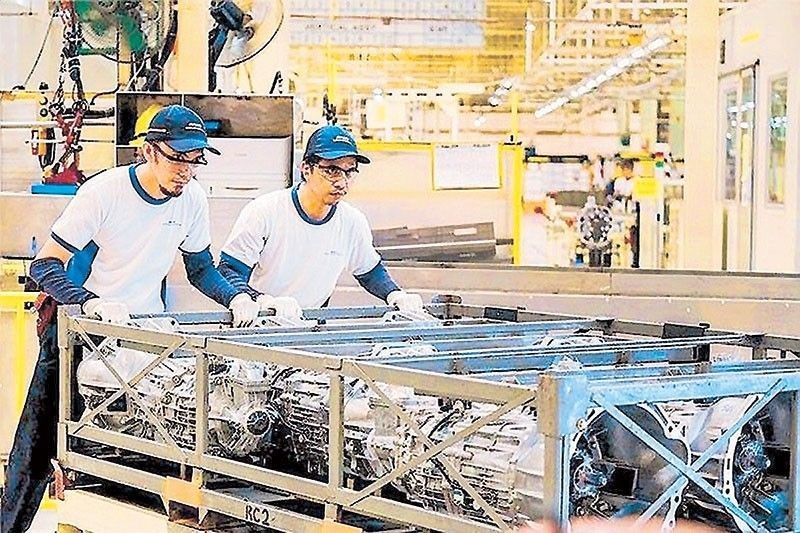
MANILA, Philippines — Even as Filipino businesses become more operationally efficient, the country’s carbon emissions continue to rise, according to the Climate Change Commission.
CCC vice chairman and executive director Robert Borje said individual actions alone cannot bend the country’s emissions curve; instead, decisions made jointly by the government and the private sector will shape it.
“At the national level, the absolute emissions trajectory still moves, however, in the opposite direction,” Borje told corporate executives during the Philippine Net Zero Conference.
He said the country’s fossil carbon dioxide emissions have increased by 25 percent since 2021, noting that national emissions intensity “did not fall at all.”
“It grew. And over the last decade, our grid appears to show carbon intensity rising,” Borje said.
Emissions intensity measures how much greenhouse gas (GHG) is produced for each unit of economic output, energy use or activity.
Under its nationally determined contribution, the Philippines has committed to cutting its GHG emissions by 75 percent through 2035.
Of that target, seven percent is unconditional, while 68 percent is conditional.
The unconditional component covers measures the country can undertake using its own resources, without relying on external funding.
The conditional component, meanwhile, depends on international climate finance, technology transfer, capacity building and public-private investment.
“The private sector is indispensable to achieving these goals, but it cannot be expected to carry the financial burden alone,” Borje said.
He stressed that the CCC is ready to work closely with the private sector, including the Net Zero Carbon Alliance, to help create supportive policy frameworks.
“I am inviting this alliance to work with the government on green concrete work streams, again, critical carbon market architecture, comparable emissions information and spectral pathways grounded in real assets and real investment decisions,” Borje said.