.png) 4 months ago
48
4 months ago
48

Upgrade to High-Speed Internet for only ₱1499/month!
Enjoy up to 100 Mbps fiber broadband, perfect for browsing, streaming, and gaming.
Visit Suniway.ph to learn
Louella Desiderio - The Philippine Star
February 8, 2026 | 12:00am
Fair weather is seen at the Ortigas Business Center in Pasig City on November 5, 2025.
STAR / Michael Varcas
MANILA, Philippines — The Philippine economy is expected to expand at a faster pace of 5.2 percent this year after slowing down last year as investments recover and consumption picks up, according to research and analysis firm BMI.
“We maintain our forecast that the Philippines will grow by 5.2 percent in 2026, although the lower 2025 base makes this a more pessimistic outlook,” the Fitch Solutions unit said in a report.
The economy grew by 4.4 percent in 2025, slower than the 5.7-percent expansion in 2024.
Last year also marked the third straight year that the economy missed the government’s growth target with the gross domestic product (GDP) print falling below the 5.5 to 6.5 percent growth goal.
Growth slowed as corruption issues in flood control projects undermined investor and consumer confidence and weather-related disruptions hit economic activity.
“We expect investment, both public and private, to rebound in 2026,” BMI said.
While there is no indication of when the corruption probe will conclude or when delayed infrastructure projects will be restarted, it said the government is likely to ramp up infrastructure spending.
“A quick recovery in infrastructure spending is necessary to hit the government’s five to six percent growth target for 2026. Our best guess for now is that the government will make up for the underspending of the capital budget in H2 2026, with the low base flattering GDP growth in H2,” BMI said.
It said private investment is also expected to get a boost from the lagged effects of the cumulative 200 basis points in policy rate cuts since August 2024.
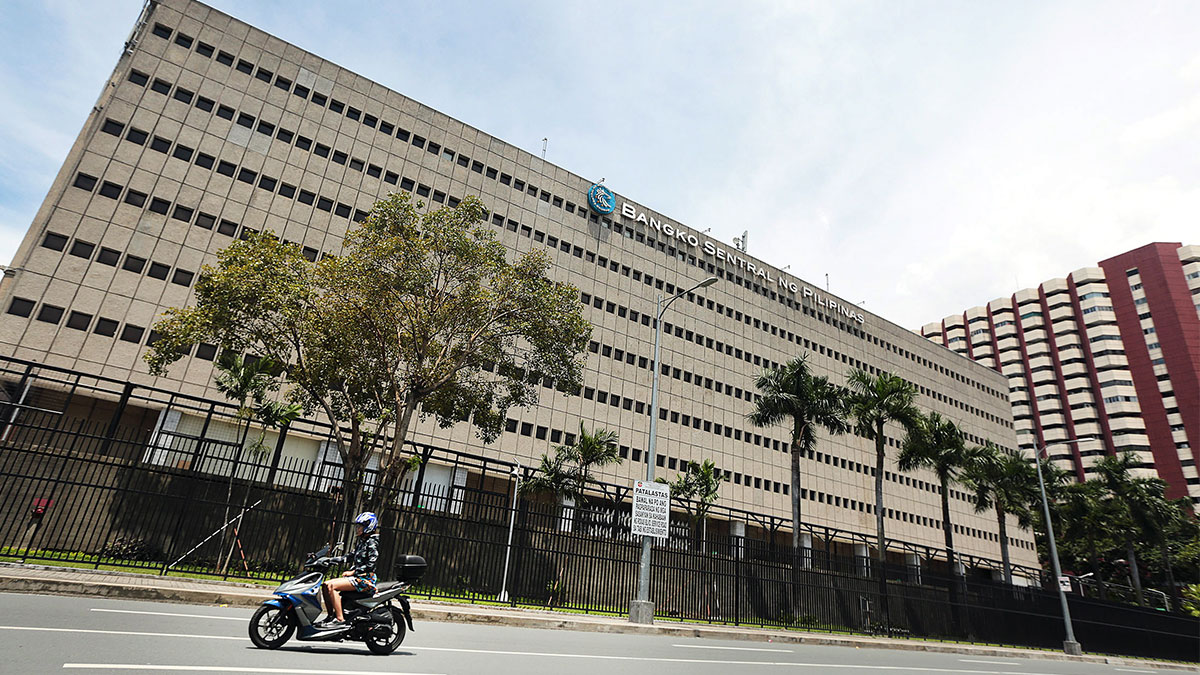
BMI expects the Bangko Sentral ng Pilipinas (BSP) to slash interest rates by another 50 basis points this year.
In December last year, the BSP reduced the key interest rate by 25 basis points to 4.50 percent.
It said inflation could rise at a faster pace than expected if geopolitical risks push up oil prices, limiting the BSP’s room for rate cuts.
BMI also expects private consumption to pick up this year as the Philippines recovers from the spate of severe storms in the second half of 2025.
It said a weaker peso would drive up remittances, which should also provide a boost to domestic consumption.
BMI expects the peso to weaken by 1.8 percent year-on-year to average around 58.50:$1 in 2026.
Meanwhile, BMI expects the country’s export growth to moderate this year, noting that last year’s high base would be hard to sustain.
Preliminary data from the Philippine Statistics Authority showed that total merchandise exports reached $84.41 billion last year, the highest level seen since the series began in 1991.
Last year’s merchandise exports value was also up by 15.2 percent from $73.27 billion in 2024, driven by the frontloading of shipments and strong demand for electronic products due to the artificial intelligence (AI) boom.
“The global semiconductor upcycle appears to have peaked, as firms reassess the returns on AI-driven investments,” BMI said, noting this would affect electronic exports, which account for 54 percent of Philippine exports.
Risks to BMI’s outlook are skewed downwards with the 2026 growth forecast based on the expectation that government spending will pick up in the second half.
“Should there be continued delays to infrastructure spending, household spending and exports will not be enough to offset weaker public spending, posing downside risks to our forecast,” BMI said.