 4 months ago
66
4 months ago
66

Upgrade to High-Speed Internet for only ₱1499/month!
Enjoy up to 100 Mbps fiber broadband, perfect for browsing, streaming, and gaming.
Visit Suniway.ph to learn
Since the Cayetano-led Senate leadership goaded its members to extend 'protective custody' to the fugitive senator, it is legally responsible for that person
There’s a vision of what a democracy should look like that’s taught in every school. None of that was on display this week.
A senator earned international ridicule for turning the halls of the Senate into an obstacle course. After spending months hiding, he chose to attend a session that coincided with a vote to change the chamber’s leadership. The new Senate majority then promptly placed the Senate on lockdown and extended “protective custody” to stop a warrant issued by the International Criminal Court (ICC).
The next day, the senator’s emergency petition was heard by the Supreme Court, but it did not issue a temporary restraining order (TRO) that he had asked for. By evening, gunshots were heard in the Senate and the Senate President went live on social media claiming that, “the Senate is under attack.” In the chaos, Senator Ronald “Bato” dela Rosa slipped out of the building. The Senate President is yet to update the public where the fugitive senator is. All this in just four days.
There will be investigations.
However, what happened in the Senate is secondary to what was done to it. Consider the fallout: A Reuters’ headline said, “Philippine Senate goes on lockdown to protect former ‘drug war’ enforcer.” The New York Times reported, “Chaos in the Philippines Senate as Duterte Ally Flees Arrest.” A political science professor cites a poll that now ranks the House of Representatives higher than the Senate.
None of this was necessary. All of it was self-inflicted. Senator dela Rosa was the proud enforcer of Duterte’s Oplan Tokhang. The ICC has issued a warrant against him. Unlike former senators Juan Ponce Enrile, Leila de Lima and Sonny Trillanes, Senator dela Rosa chose to defy it.

His allies could’ve encouraged him to face the law, especially since he used to head the national police. But they chose to harbor him. By the second day, when the Supreme Court did not issue a TRO, the wise path would’ve been to de-escalate. They took a different one.
What protective custody?
There are some who claim it was all staged. Perhaps. But what really matters were the choices made by those in charge of the Senate that night. Someone ordered Senate security to bring out heavy firearms in a building filled with civilians and journalists. Someone authorized them to use those guns knowing full well that the only potential “intruders” would be law enforcement officers carrying out a lawful duty.
So much risk. So much potential for tragedy. What was it all for? Certainly not the Rule of Law.
Because there is no such thing as “protective custody” for a senator as pointed out by former Senate President Franklin Drilon. Law deans and experts confirm that the Constitution doesn’t grant immunity to a senator for major crimes. The Senate President claims, “there’s no warrant.”
With respect, that is not for him to decide. As pointed out by Ombudsman Boying Remulla, there’s the presumption of regularity of functions. Besides, not even senators can choose which warrants to honor and which warrants to ignore — especially since several of these senators signed the very law that authorizes this arrest to happen (RA 9851).
So what impelled the leadership to risk its reputation and the lives of its own employees? The Senate’s Facebook page posted a piece entitled, “Defending the Sanctity of the Senate.” Sanctity. What a curious proposition in this context. The Senate building is not a church. There is no historical or biblical precedent that consecrates its halls, much less its occupants.
Sanctity. What evil needs to be defeated by telling its security to brandish rifles and fire 27 “warning shots”? Senators have been arrested before. What makes this senator’s case so special? More importantly, what sanctity is served by putting innocents in danger just to defeat one warrant?
If the Senate majority felt that coddling a colleague is important enough to risk their own lives, perhaps it would’ve been best to ask the Senate staff first if they wanted to do the same.
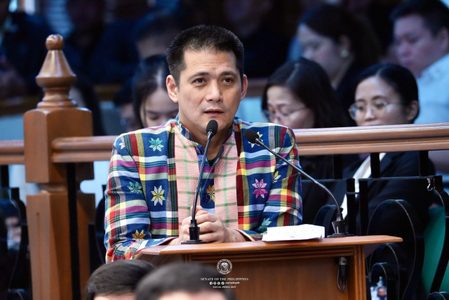
Now that Dela Rosa has slipped away, the Senate leadership needs to be held to account. Since it goaded its members to extend “protective custody” to the fugitive senator, it is legally responsible for that person. Obstruction is a separate crime under our laws and under the Rome Statute (Article 70). The other senators may not have been properly advised that obstructing this arrest — as well as enabling his subsequent escape — came with the risk of getting their own warrants, local and abroad.
These and other consequences color the choices made by the Senate leadership as politically and legally fraught. The flight of Sen. Dela Rosa has damaged his colleagues. It diminishes the new Senate majority’s political capital within the chamber. With the Ombudsman’s announcements, several senators who were already facing charges before this standoff now have new ones to worry about.
Again, whose interests were served by all this? And was it all worth it?
As for Dela Rosa himself, he is now left worse off. Millions heard him tell Ted Failon in an interview, “Sino namang tanga ang magpapahuli?” The senator seemed blissfully unaware that the entire world was listening, including the very tribunal he is asking for help from. For his sacrifice, the least that could’ve been done was advise him against statements that could compromise his cases. Maybe that was too much to ask.
There is an ideal of what a functioning democracy should look like that’s taught in every school: those who make the law must be the first to obey it. They should claim no special privilege, and they should not take offense when asked to account.
This country elects public servants, not monarchs. Thus, when we speak of “defending the sanctity of the Senate,” we should be aware that the gravest harm to institutions is caused by those who run them. – Rappler.com
John Molo teaches Constitutional Law. He is a former president of the Harvard Law School Association of the Philippines and the former chairman of the Board of Editors of the IBP Law Journal.