 2 months ago
49
2 months ago
49

Upgrade to High-Speed Internet for only ₱1499/month!
Enjoy up to 100 Mbps fiber broadband, perfect for browsing, streaming, and gaming.
Visit Suniway.ph to learn
BULACAN, Philippines – What began six months ago as a modest gallery for the works of 53-year-old visual artist Jonathan “Jonet” Carpio has become one of the newest gathering places for artists and diners in Bulakan town, Bulacan province.
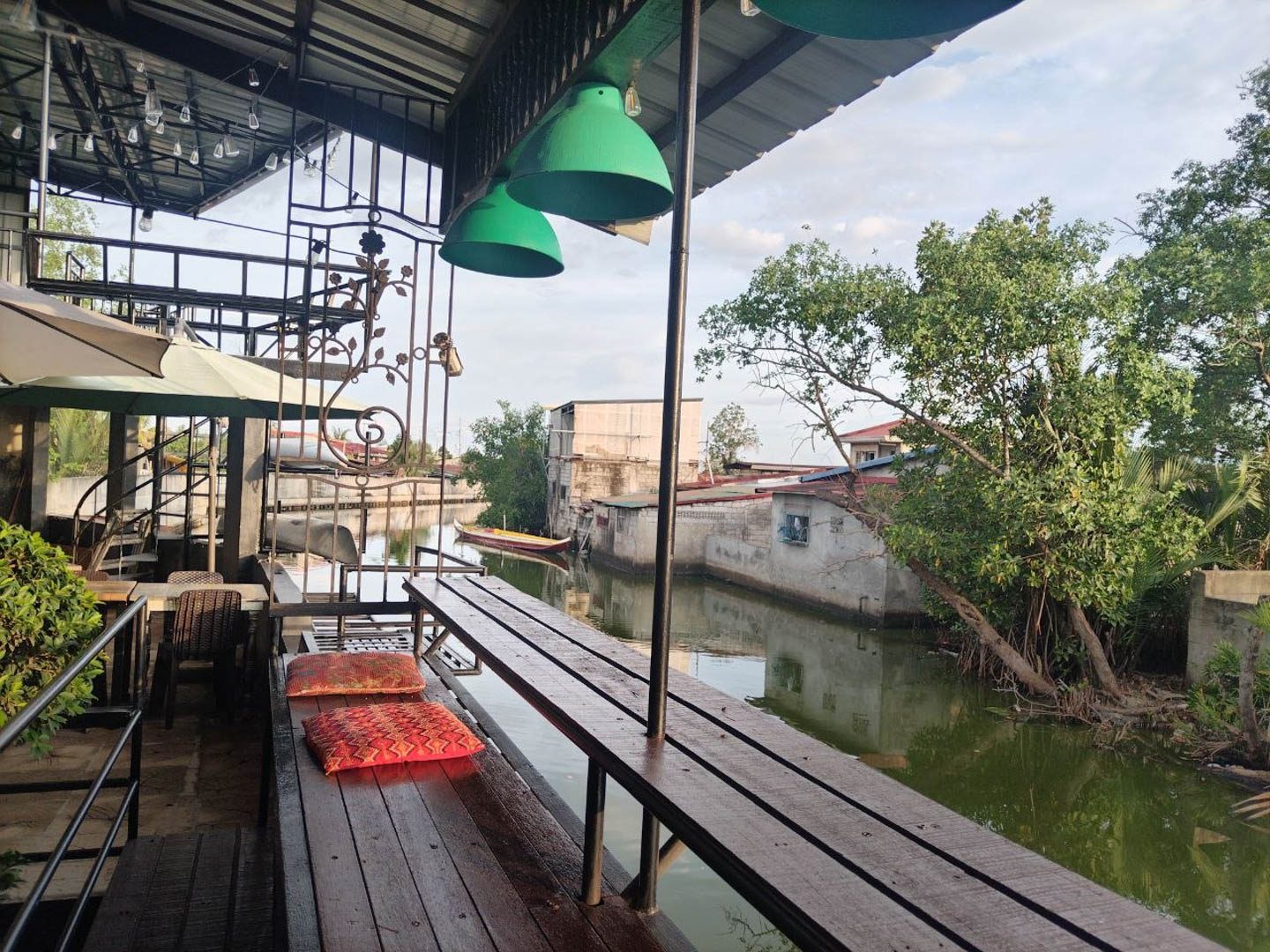
Nestled along the banks of the Bulakan River in Barangay Sta. Ana, Malayah Art Café is just an hour away from the hustle and bustle of Metro Manila, drawing patrons with its food and a rotating lineup of exhibitions that give both established and up-and-coming artists a place to spread their wings.
Visitors are greeted by paintings and sculptures, and mixed-media pieces. And no two visits are ever quite the same. Carpio often rearranges the gallery and rotates the artworks on display. The café also hosts exhibitions for emerging artists to give room for fresh perspectives.
“Lagi siyang may exhibit na iba, meron siyang boses para sa mga maliliit na makasining na pwede nilang ipakilala ang gawa nila dito para mapakita din nila kung ano ang natatanging talento nila,” he said. (There’s always a different exhibit here. It gives lesser-known artists a voice, a place where they can introduce their work and show what makes their talent unique.)
“Dito magsisimula ang rock star sa Malayah Art Café,” Carpio added, expressing hopes that his space can be where the next generation of artists first take flight. (The next rock star will begin here at Malayah Art Café.)
For Carpio, art has always been his way of responding to the world around him.
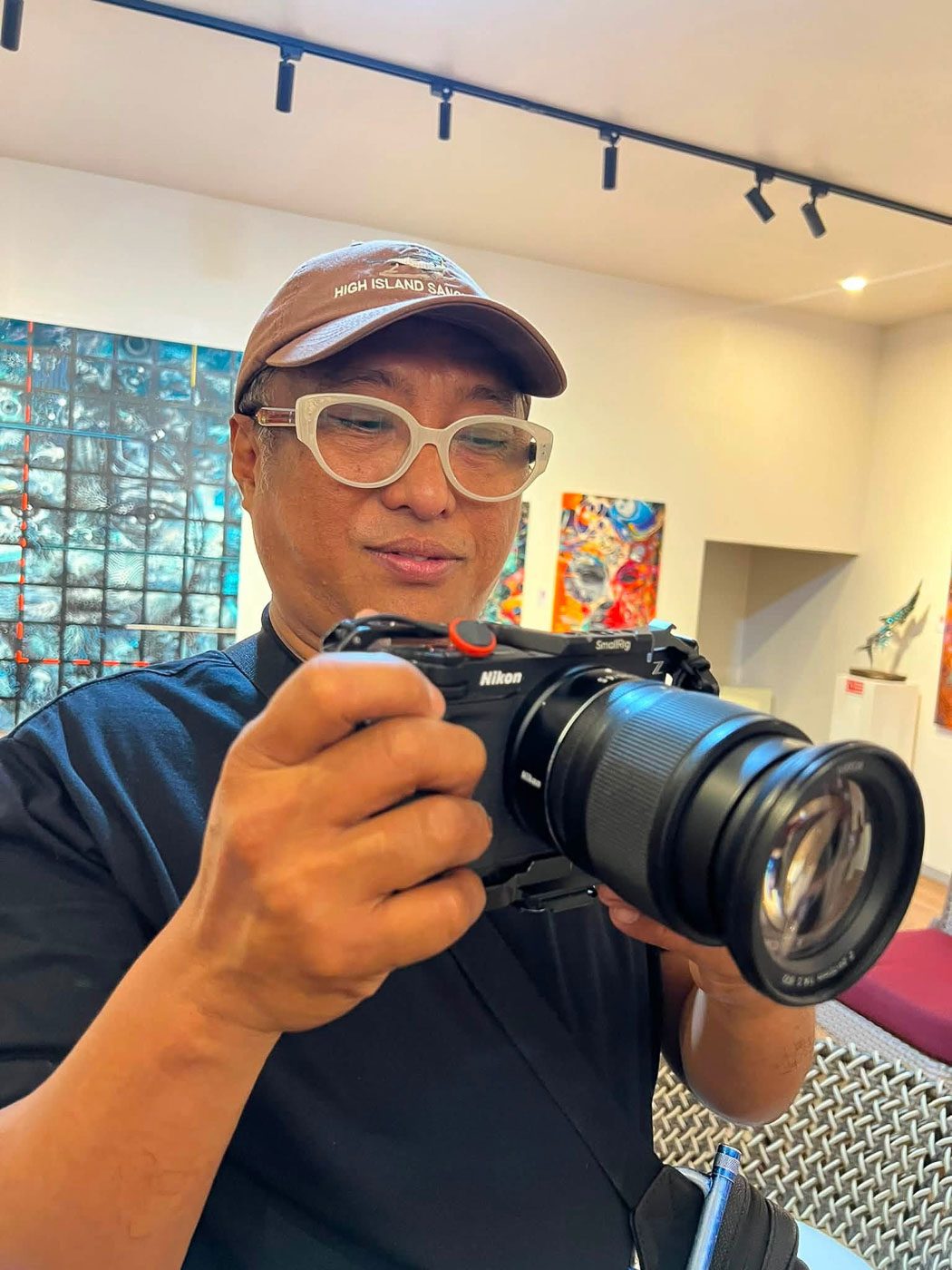 BEYOND ART. Jonet Carpio
“Ang sining kasi is the truth without violence, e. Hindi ka nanakit pero kaya mo siyang saktan sa pamamagitan ng sining,” he explained. “[Sa] Larangan ng sining, ‘di ka madedemanda, e. Kasi malaya ka.” (Art is the truth without violence. You don’t hurt people physically, but you can still move them through art. In art, you can’t be sued for speaking your mind because you’re free.)
Carpio hopes to launch later this year a community project that will offer free painting workshops for children. Their finished artworks will then be given to riverside households in exchange for a simple pledge: keep the river free of trash.
He said this initiative will help them develop a lasting sense of stewardship for the river that has long defined their community’s identity. “Ang lawak ng ilog, ang lawak ng tubig, ba’t hindi nila nagagamit? Halos tinatabunan na ng iba, nire-reclamation, sinisira, hindi nila nakikita,” he said, glancing toward the Bulakan River. (The river is so vast, the water is abundant. Why aren’t we making better use of it? Instead, parts of it are being filled in, reclaimed, and destroyed. People don’t see what we’re losing.)
By the water, for the water
Malayah was never meant to be just another café.
“Dito naman sa Malayah, kaming mga Team Malayah e nagsasama-sama bilang magkakapatid, hindi business. Hindi naman pera ang hinahanap namin dito, kundi adbokasiya,” he said. (Here at Malayah, our team comes together as family and not as business [partners]. It’s not the money we’re after, but the advocacy.)
Upstairs, visitors will find an exhibition of Carpio’s personal works. Often in mixed media, his pieces often display the same recurring subjects: women, birds, and the natural world. Malayah’s logo itself bears the silhouette of a tagak or heron, a familiar sight along Bulakan’s coastlines and wetlands.
 Reimagining Del Pilar. Mixed-media sculptures from a past exhibition at Malayah Art Café present different artistic takes on Bulakan’s revolutionary hero.
Carpio traced his fascination to years spent behind the camera as a wildlife photographer. He has served as a coordinator and contributor to the travel documentary show Born to Be Wild, and is a member of the Robert Kennedy Bird Conservancy.
“‘Yung sa mga artworks ko, more on environment [ang element] kasi kailangan nating protektahan ang kalikasan. ‘Yun ang main target ko dito sa Malayah — magbukas ng pinto para makita ng tao ang kahalagahan ng kalikasan,” said Carpio. (The main element in my artworks is the environment because we need to protect nature. That’s the main goal of Malayah — to open the door for people to see the importance of the environment.)
Only a few kilometers away, construction continues on the New Manila International Airport (NMIA), the 2,500-hectare airport city in the neighboring Barangay Taliptip that broke ground in 2020.
The development has transformed portions of Bulakan, displacing coastal communities and wiping away areas once covered by mangroves that served as the town’s protection from storm surges and flooding in the past.
“Wala naman akong masama diyan kasi economy ‘yan, e. Ang sa akin lang, nakikita ko lang, medyo hindi tama na sirain nila ‘yung kalikasan. Sobra, eh. Sobra ‘yung kaganidan, eh,” said Carpio, insisting that progress must also take into account its effects on the environment. (I have nothing against it because it’s for the economy. It’s just that, from what I see, it isn’t right for them to destroy nature. It’s excessive. The destruction is just too much.)
Near the café’s cashier hangs one of Carpio’s most striking paintings: a figure resembling San Miguel the Archangel, but stripped of its familiar symbolism. Bearing the likeness of a devil, the figure looms above airplanes while a man struggles beneath flood waters.
He said that he painted the piece in the middle of the flood, when their community experienced one of its worst inundations. Carpio pointed back to the coastal village of Taliptip. To him, even the town’s name has come to symbolize what has been lost amid the rapid transformation of Bulakan’s coastline.
“Nilagay nila [‘yung airport] sa Taliptip, alam mo ba meaning ng taliptip sa English? Barnacle,” he asked. “Ang barnacle, isang matinding kumakapit kahit sa hayop, kahit sa balyena, kahit sa pagong, hindi natatanggal ‘yan, e. Pero ang San Miguel, tinanggal niya ang Taliptip. Imagine? Ganoon kalakas ang pwersa ng may pera,” Jonet continued. (They put the airport in Taliptip. Do you know what taliptip means in English? Barnacle. A barnacle clings so tightly—to animals, to whales, even to turtles — that it’s almost impossible to remove. But San Miguel removed Taliptip. Imagine?.That’s how powerful money can be.
Protecting our homes
Yet Carpio insisted his paintings are not calls for despair. Carpio hopes they encourage people to speak up and take part in protecting the places they call home.
“Bilang mamamayan, hindi lang dapat isa ang nagrereklamo kung nasisira ang kalikasan. Dapat tayo ‘yung boses. Kasi sa ibang bansa makikita mo, bakit sila asensado? Kasi mareklamo sila. Dito, maayudahan ka lang, mataasan ka lang ng pwesto, wala na,” he said. (As citizens, it shouldn’t be just one person complaining when the environment is being destroyed. We should all be the voice. Look at other countries — why are they more progressive? Because their people speak up. Here, all it takes is an aid or a higher position, and people fall silent.)
The cafe also celebrates local cuisine. The pairs local staples such as their Bulakan special longganisa and calamares with spins on crowd favorites, including the dinakdakan and adobo flakes pizza. Most dishes are priced between ₱100 and ₱200.
Beneath its ever-changing walls rests a vision that has remained constant from the beginning: that art, like a bird finally taking flight, can leave a place — and the people who pass through it — a little freer than before. – Rappler.com
Mark David Silencio is an Information Technology student at Bulacan State University in Plaridel, Bulacan. An Aries Rufo Journalism Fellow for 2026, he is also the managing editor for Administration of Pacesetter.