 2 weeks ago
8
2 weeks ago
8

Upgrade to High-Speed Internet for only ₱1499/month!
Enjoy up to 100 Mbps fiber broadband, perfect for browsing, streaming, and gaming.
Visit Suniway.ph to learn
TOKYO — President Marcos is against a proposal to allow online voting in the Senate, saying there is no good reason to adopt the mechanism and warned that it could be used to let senators evade accountability while still participating in legislative proceedings.
In a media interview here yesterday, Marcos said the health and safety concerns during the COVID-19 pandemic that prompted senators to permit remote sessions are no longer present.
“The long-standing tradition of the Senate is that if you are not physically present on the floor when a vote is taken, then you cannot in fact vote,” Marcos, a former senator, said. “COVID gave us a different outlook because we were concerned about health and safety at that point. We do not have those concerns now about health and safety.”
Under Senate rules, the Senate president may convene and hold sessions through teleconference, video conference or other reliable electronic means due to “force majeure” or a national emergency that may prevent the physical presence of senators at the session hall. The provision was adopted during the pandemic.
“I do not see any particularly good reason for us to allow it now,” the President said.
The proposal gained attention after minority senators walked out of the plenary hall on May 26 to oppose what they described as an attempt by the majority bloc to rush deliberations on amendments that would allow broader virtual attendance and online voting.
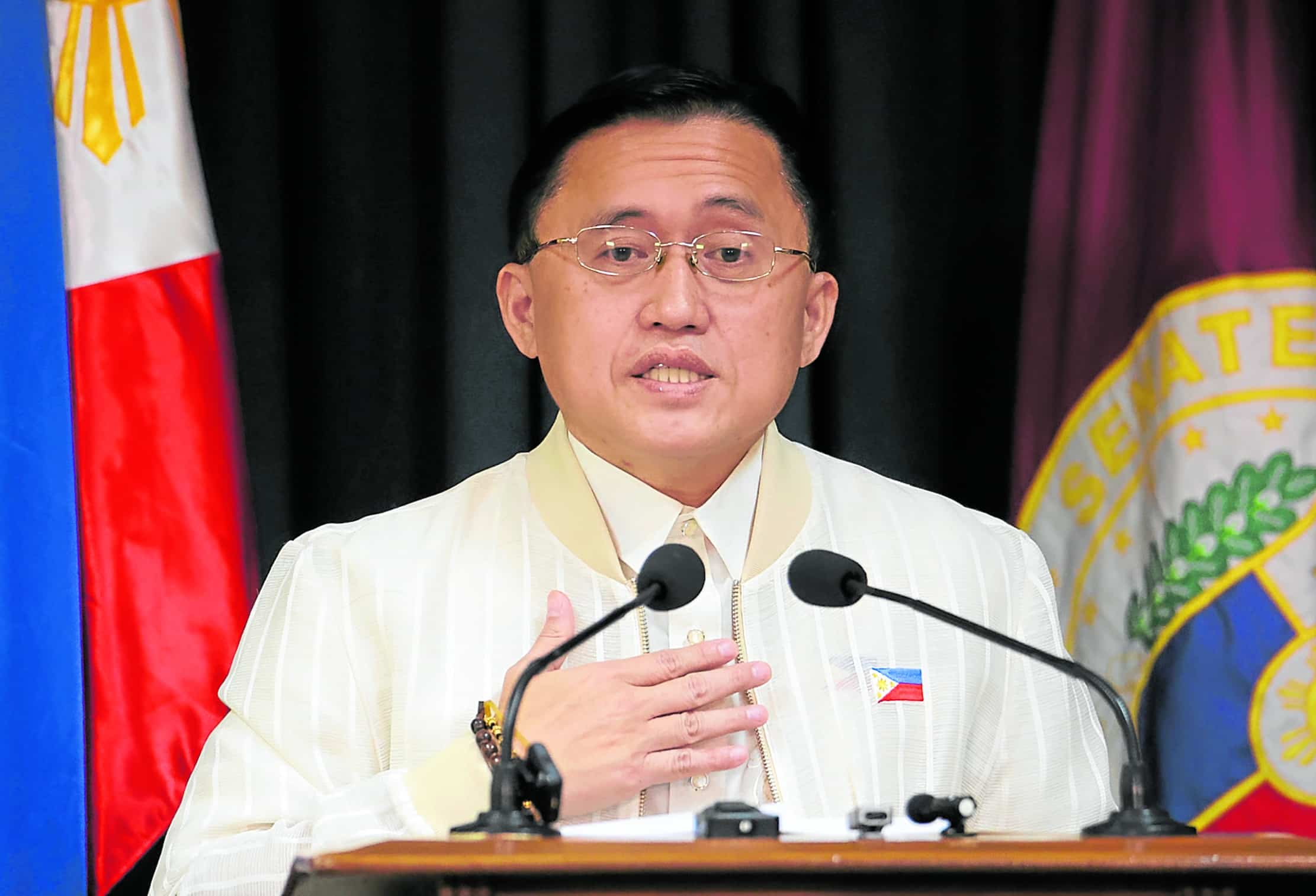
The amendment, pushed by allies of Sen. Bato dela Rosa, is widely seen as an effort to permit senators facing charges to cast votes while avoiding authorities.
Dela Rosa, a former Philippine National Police chief, is the subject of an arrest warrant issued by the International Criminal Court (ICC) for crimes against humanity linked to killings during the Duterte administration’s anti-drug campaign.
Marcos said Dela Rosa should not be allowed to vote if he is not physically present at the Senate.
“(Online voting) seems to only be applicable to Senator Bato, so Senator Bato can vote because he is in hiding,” the President said.
“Now, for someone who is actually a fugitive from justice, who is being tracked down by the police, who is being tracked down by Interpol and has an arrest warrant from the ICC, I don’t think he should vote until he appears in the Senate,” he added. “If he’s willing to take the risk like he did the last time, that’s another story. As long as he is there.”
Senate horror show
Marcos also lamented what he described as the deterioration of Senate proceedings and the increasing personal attacks among senators.
“I watched with horror that the Senate has become this,” Marcos said. “It has gone personal. The conversations have become shallow.”
Marcos also criticized what he described as the Senate’s protection of Dela Rosa.
“The Senate is now sheltering fugitives from justice. How did that happen? I don’t understand how a Senate is supposed to function if those are the kind of things that the Senate is embroiled in. I hope they figure it out soon. I really do,” he said.
Sen. Francis Pangilinan echoed the criticism, lamenting what he described as the use of the Senate to harbor fugitives.
An alliance of local and foreign business groups and civil society organizations also urged the Senate to stop moves to allow virtual participation.
“Virtual or remote participation may appear convenient, but when applied to quorum, it directly affects the legitimacy of Senate action,” the Justice Reform Initiative said in a statement yesterday.
In Los Baños, the University of the Philippines Los Baños Standing Committee on National Issues, Promotion and Protection of Academic Freedom and Human Rights likewise expressed alarm over recent developments in the Senate, particularly the alleged use of the chamber to shield or politically protect one of its members from accountability.
“While legal and political debates surrounding the ICC remain subject to public discussion, we are alarmed by developments that appeared to facilitate the evasion or avoidance of lawful processes, or that conveyed the impression that powerful public officials may be accorded special political protection. Such actions risk deepening public distrust in democratic institutions and reinforce fears that political privilege may override accountability and equal application of law,” the UPLB said.