 4 months ago
68
4 months ago
68

Upgrade to High-Speed Internet for only ₱1499/month!
Enjoy up to 100 Mbps fiber broadband, perfect for browsing, streaming, and gaming.
Visit Suniway.ph to learn
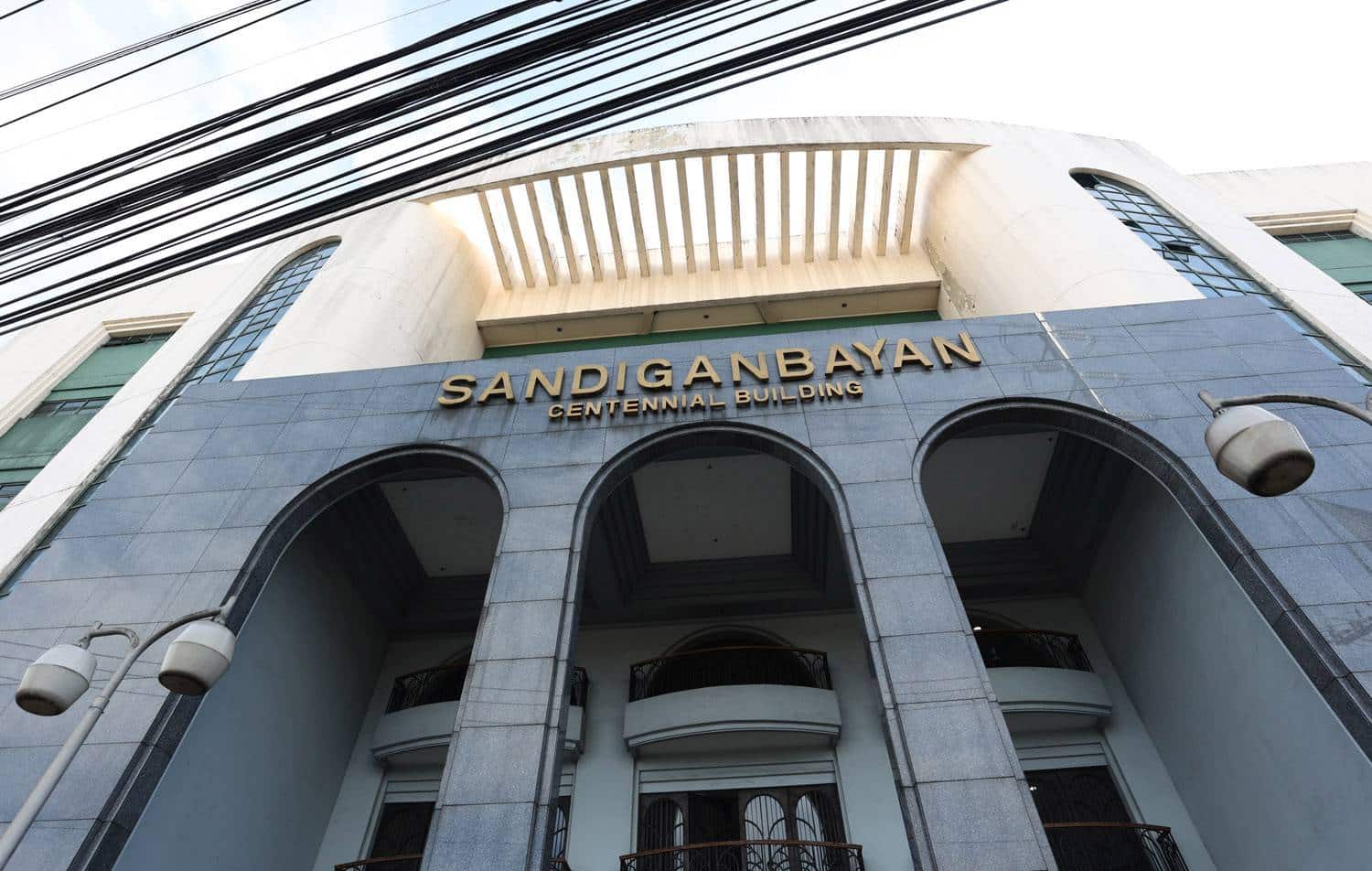
MANILA, Philippines — Ahead of a long presentation that went into detail on the key movements, personalities, and actions that led up to a brief exchange of gunfire between Senate security personnel and the National Bureau of Investigation, Interior Secretary Jonvic Remulla made clear right away what his point was going to be.
“For the record, all evidence points that there was no attack on the Senate. I would like to repeat, all evidence points that there was no attack on the Senate,” said Remulla in a press conference late Tuesday, May 19, hosted by Malacañang.
For good measure, Remulla also cast doubt on the actions of Mao Aplasca, the retired police general who is acting Senate sergeant-at-arms – why he apparently made it a point to gather the Senate’s Office of the Sergeant-at-Arms (OSAA) personnel, as well as Marines and police assigned to the Senate, in front of the media, and why Aplasca did not make it a point to clear the entire floor if an encounter was a possibility.
Remulla questioned Aplasca’s actions after the brief exchange of fire, when Senate security forces were already retreating.
“If you want to take note of the video, upon retreat there was no order to secure the Senate ‘cause normally in a heat of the moment like that, your first order would be secure the premises. However, he went straight out and then he went straight to the press and then he reported,” said Remulla, who himself had gone to the Senate after the gunshots on the second floor of the Senate building.
Aplasca is a Philippine Military Academy (PMA) classmate of Senator Ronald “Bato” dela Rosa, whose presence and prolonged stay in the Senate backdropped the May 13 gunfire tension inside the Senate building involving the OSAA and National Bureau of Investigation (NBI).
Some senators, led by no less than Dela Rosa allies newly-elected Senate President Alan Peter Cayetano and the President’s estranged sister Senator Imee Marcos, have asserted that it was an attack, even as initial police findings at the scene of the crime showed that almost all gunshots had come from four identified firearms shot from inside the Senate.
There are two versions of the incident – the executive branch, to which the NBI belongs, and the OSAA, that have presented timelines and claims that, at several points, contradict each other.
Yet after the collection of initial evidence and early analysis based on videos and the crime scene, President Ferdinand Marcos Jr. has offered, at least for now, only knowledge – sans specific instructions moving forward.
“He is in knowledge of these already but he has no instructions yet,” said Remulla, when asked if Marcos has made specific instructions.
Acting Justice Secretary Fredderick Vida said the NBI’s report about the incident has been turned over to a panel of prosecutors. The same will eventually happen to the PNP’s report, after it officially turns its findings over to the Department of Justice.
Vida was careful about making conclusions based on the police’s findings. “We’ve identified but I don’t want to preclude iyong panel natin ‘no pero medyo malawak ‘no (the panel, because its scope is quite vast),” he said.
Here’s what we know based on the PNP’s probe, which in turn draws from CCTV footage from the Senate and the Government Service Insurance System (GSIS), testimonies from personalities involved in the incident, and reports and videos from media who were on the second floor of the Senate building when gunshots rang out:
Why were NBI agents near the Senate?
Cayetano and even Aplasca’s basis for insisting on the “attack” narrative, or at least their belief that there was an attack, is that NBI agents were supposedly seen near the Senate late on May 13, or shortly after Dela Rosa went live on Facebook to announce supposed information that he would be arrested.
On May 12, or a day after Dela Rosa’s surprise appearance in the Senate and a dramatic chase across the Senate building’s stairs to make it to the plenary, GSIS security officials and the OSAA had “coordinated” on security in the GSIS compound.
Note that the Senate is within the GSIS compound – one part is considered Senate premises, while the other belongs to GSIS. The two sections are separated only by closed doors and a shared, but almost constantly locked, gate within the compound. The area where shots were fired inside the Senate building is close to the door that leads to an open-air passageway or bridge that almost immediately connects to the GSIS building.
By May 13, GSIS was on red alert status. Its building security identified nine weak points, or areas where someone could enter the GSIS building from the Senate building. By the afternoon of May 13, GSIS President and General Manager Wick Veloso officially asked the NBI to “fortify” the building’s security, said Philippine National Police chief General Jose Melencio Nartatez.
An initial three NBI agents arrived at the GSIS building, followed by several more. All in all, 29 agents from the NBI were present at the GSIS, a building that’s not just right beside but technically one and the same with the Senate building.
“Take note that none of the elements are in tactical gear, all of them were just in conference, none of them were in formation to attack the Senate – they were just checking out every floor that was in danger,” said Remulla, referring to the NBI.
Did OSAA know about the NBI?
Aplasca has claimed that no prior coordination — including the apparent efforts to fortify and secure doors that could lead from the Senate side of the building to the GSIS side — had been coordinated with the Senate.
Remulla and Nartatez rejected the claim, and said GSIS maintenance personnel had informed their Senate counterparts. “Hindi gulatan ito ha (This wasn’t a surprise) because conspiracy theories are abounding, but they were duly informed,” said Remulla.
Why ask NBI for help?
Veloso was apparently worried about the art housed inside the GSIS, said Remulla.
“The GM found it better to secure the entrances going in the GSIS because Senator Bato had called for a people power movement and had there been anarchy in the building the GSIS contains billions of pesos worth of artworks that are displayed in their walls. Had there been an overflow of people going to GSIS, the losses would have been incredible,” Remulla said.
No government official said this during the May 19 press conference, but the implication is that the GSIS building could also be used as an escape route if a certain senator wanted to leave the so-called Senate protective custody.
Remulla said the police were “stretched thin” in the aftermath of Dela Rosa’s appearance — which had also triggered protests outside the Senate complex, both from pro- and anti-Dela Rosa forces.
“PNP was already guarding the front of the building. We had approximately one thousand plus. In this case, [GSIS president Veloso] thought it more prudent that the NBI secure the area according to their capacity. But there is no distinction. We are both law enforcement officials,” said Remulla, when asked why Veloso had opted for NBI help in securing the GSIS.
Were Aplasca’s actions right?
Aplasca has said that, based on their assessment, the individuals seen on CCTV cameras posed a threat to the Senate. However, based on CCTV footage obtained by the police from the Senate itself, only one NBI agent was clearly visible in the area connecting the GSIS side to the Senate side of the building.
“Senate security had full view of the people who were on that floor. Take note that none of the elements are in tactical gear, all of them were just in conference, none of them were in formation to attack the Senate – they were just checking out every floor that was in danger,” said Remulla.
As the NBI agents were continuing to make rounds on the GSIS side, according to police, Aplasca then gathered OSAA, the PNP, and Marines. “So, in his order, you could see the Marines were cocking their guns, so it was lock and load, after which he proceeded to the hallway leading to the doorway where the NBI (agents) were previously reconnoitering,” said Remulla.
Again, the interior chief, who himself has been criticized for his role in the incident and the failure, so far, to capture Dela Rosa, cast doubts over Aplasca’s actions.
“In full view of the press, he gave the order of the lock and load and they asked them to follow. He allowed them to follow up to a certain point. In normal situations, if there is a perceived confrontation, you will clear the building of all personnel because of a possible stray fire. However, he allowed them to follow,” he said.
Media, on May 14, pressed Aplasca over why the floor wasn’t cleared if the retired general saw the NBI as a threat. He reasoned that the lockdown — which was preceded by a window for media to vacate the Senate building — was “already a form of forced evacuation.”
Aplasca has also said they were ready for a firefight even if they did not “anticipate” it would happen. But the Senate security chief, in the same May 14 interview, said that since the NBI agents outside were armed and because senators were “alarmed” over reports that chaos was going to ensure, the OSAA personnel too were alarmed.
“Hindi po kami pupunta doon na hindi kami nakahanda sa giyera (We would not go there if we were unprepared for war),” said Aplasca then.
That Aplasca fired the first shot is something he’s admitted, but only as a “warning shot.”
CCTV footage from the Senate showed that after Aplasca and his men have manuevered closer to where the NBI agents were, an OSAA member named Jemel Ledesma peeked through the window. Remulla assumed he said that only one NBI agent was in the vicinity.
Afterwards, Aplasca, as he recounted, asked the NBI agent to identify himself. According to the former police general, the NBI agent raised his weapon (although he did not point it towards the OSAA, Marines, and police), which to Aplasca meant that he was still a threat.
“The agent identified himself as NBI. Shortly thereafter, [Aplasca] fired three shots toward… shot three shots into the… not exactly the direction, but three shots towards the vicinity of the NBI agent… then the agent withdrew behind the air-conditioning dock units. And because he was being fired upon, he discharged a cover fire. Take note that the cover fire was because he was under the impression that he was under attack,” said Remulla.
Meanwhile, the NBI’s officer-in-charge at the scene ordered agents “do not engage.” Initial results from the PNP indicate that most shots were discharged from inside the Senate from four firearms. The NBI agent outside, on the GSIS side of the building, fired up to three shots.
Not all of the arms from the OSAA have been accounted for. Aplasca, noted the PNP, did not appear before the Criminal Investigation and Detection Group (CIDG) to turn over his firearm. Thus far, Remulla said, two OSAA personnel and the NBI agent have turned over the weapons they discharged.
The PNP has also yet to determine whether the firearms were OSAA members’ personal weapons or the Senate’s, as they have yet to submit their list of accredited firearms. – Rappler.com