 1 month ago
74
1 month ago
74

Upgrade to High-Speed Internet for only ₱1499/month!
Enjoy up to 100 Mbps fiber broadband, perfect for browsing, streaming, and gaming.
Visit Suniway.ph to learn
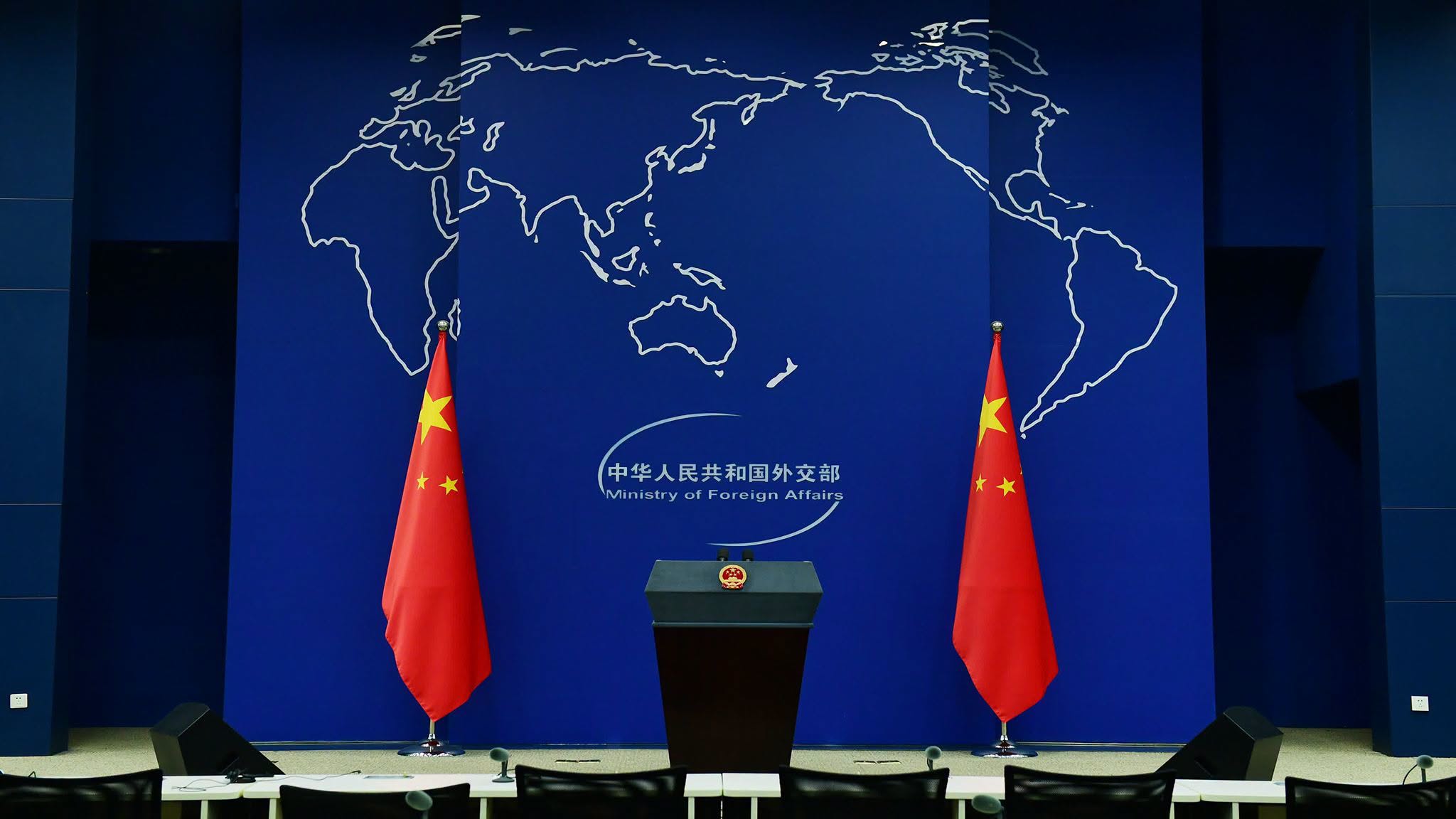
BEIJING MFA. China's Ministry of Foreign Affairs briefing room in an undated photo.
China Ministry of Foreign Affairs
China's Ministry of Foreign Affairs earlier said over 100 Filipino nationals were 'taken in accordance with the law' over alleged migration law violations
MANILA, Philippines – The Philippines on Thursday, August 13, reminded China of a 2013 agreement to notify consular posts within days of the arrest of its nationals as it “noted” the Chinese Ministry of Foreign Affairs (MFA)’s statement on the arrest of over 100 Filipino nationals.
“The Department is in close coordination with our Embassy in Beijing and our Consulates-General to verify the circumstances of the arrests, ascertain the exact number and status of those apprehended, ensure that due process is observed, and extend consular assistance as needed,” said the Department of Foreign Affairs (DFA) in a late Thursday statement.
No other details about the arrests were made available as of Thursday evening.
On August 10, responding to a question from state-run Global Times, MFA spokesperson Guo Jiakun said that “actions have been taken in accordance with the law against over 100 Philippine nationals for illegally working or living in China.”
“We call on Chinese authorities to safeguard the welfare of the arrested Filipinos and to promptly notify our Foreign Service Posts of their arrest and detention, consistent with the Vienna Convention on Consular Relations and the 2013 Philippines-China Consular Agreement,” added the DFA.
The 2013 agreement states that the host country must notify the other country’s consulate post within four days “of the fact and reasons for which the national has been detained, arrested, or deprived of freedom by any means,” whether or not the arrested person makes that request.
That means that if a Filipino national is arrested or detained in China, Chinese authorities ought to inform either the Philippine embassy in Beijing or any of its various consulates of the nature of that arrest or detention. Filipino authorities are expected to do the same if a Chinese national is arrested in the Philippines.
“The Philippines respects China’s sovereign right to enforce its immigration laws, as it does the right of every state to enforce its own laws on foreign nationals within its jurisdiction, in accordance with due process and established legal procedure,” added the DFA.
Ties between the two Asian countries have been generally tense in the last three years under President Ferdinand Marcos Jr., especially over clashes and disagreements in the West Philippine Sea, a part of the South China Sea that includes the Philippine exclusive economic zone.
Those tensions have only grown in recent months following the arrest of Chinese nationals suspected to be spying in the Philippines, Beijing’s decision to sanction Marcos’ defense chief Gilberto Teodoro Jr., a racist video on Filipinos released by a state-run publication, and strong rhetoric from China’s embassy in the Philippines, to name a few. Those are on top of clashes and confrontations in the South China Sea.
The Global Times, in asking Guo for confirmation of the arrests, framed their question by asking if it was “China’s response to the Philippines’ frequent detention of Chinese nationals.”
Guo did not answer the latter part of the Global Times‘ question, but said, “immigration staff acted in a standard and civil manner and ensured the protection of the rights and interests of the foreign nationals concerned.”
In a separate statement, Teodoro condemned the arrest of the Filipinos, labeling it as “plain and simple extortion and blackmail.” He also defended an earlier Philippine operation that resulted in the arrest of Chinese nationals.
“The law enforcement efforts against the Chinese nationals that are referred to in a recent report were done on the basis of search warrants issued by the proper courts. The individuals arrested by the authorities were the principals of these illegal enterprises. Chinese authorities stress the issue of the work visas and passports of these individuals while refusing to address the illegal activities that they perpetuated. This is an admission by them that indeed the acts of these individuals were illegal under Philippine law,” he said.
The Filipino defense chief, who is barred from entering China, Hong Kong, and Macau, rejected the idea that Chinese nationals were targeted based merely on their citizenship.
“Filipinos in China have neither the intent nor the capacity to commit violations of Chinese law, much less [on] the scale perpetuated by Chinese nationals here. The fact that the Chinese government is actively covering up for these individuals is the best evidence of their complicity in the nefarious acts of these people,” added Teodoro. – Rappler.com