.png) 6 months ago
94
6 months ago
94

Upgrade to High-Speed Internet for only ₱1499/month!
Enjoy up to 100 Mbps fiber broadband, perfect for browsing, streaming, and gaming.
Visit Suniway.ph to learn
According to the fourth quarter 2025 Tugon ng Masa survey of OCTA Research released Monday, Feb. 9, over half or 55 percent of Filipinos trust the government’s ability to address the country’s problems, while 20 percent of those who responded to the survey expressed distrust.
However, the survey indicated that a sizable 25 percent of undecided Filipinos suggest that trust may not be firmly consolidated, indicating that institutional confidence is performance-based and potentially responsive to changing economic, political or governance conditions.
The trust rating, OCTA clarified, reflects perceived institutional effectiveness but does not reflect uniform enthusiasm across contexts.
What it showed was that there are regional variations — such that in the National Capital Region and Balance Luzon — there is lower trust at 49 percent. The Visayas recorded the highest level of trust at 69 percent.
Across socioeconomic classes, trust remains relatively consistent and at majority levels ranging from 53 to 56 percent. But the survey results also showed higher skepticism among Class ABC respondents at 27 percent, suggesting that respondents with greater economic security and information access may apply more exacting standards when assessing institutional performance.
The sizable proportion of undecided respondents across all classes further indicates that public confidence is not fixed and remains fluid, OCTA explained, which also indicates that trust is not yet firmly consolidated.
It also indicates, OCTA said, that trust in the national government may be grounded less in emotional attachment and more in ongoing assessments of institutional capacity and delivery.
While there is more trust in the government and its institutions — such as the military and the police — the survey results indicated that a majority, or 61 percent, of those surveyed do not believe in elected officials in Congress and local government, and only a minority of 31 percent believe in elected officials in Congress and local government.
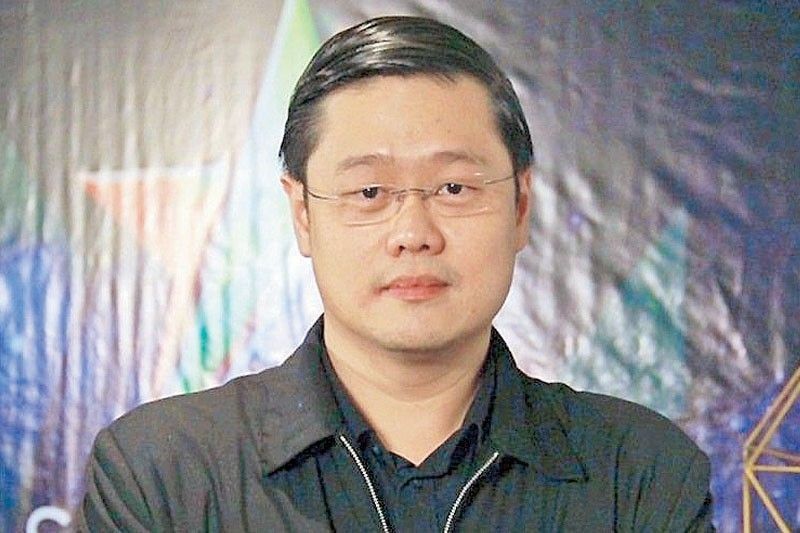
In a briefing given by OCTA research fellow Dr. Guido David to members of the Monday Circle, it was interesting to hear him say that Filipinos “believe that the local government does not deliver on what their constituents want. So I think that’s key. And it’s not really a criticism, but it’s really just a reminder, especially to our local government — not just to the governor, mayor, maybe to the congressman, maybe the barangay captain — that we have to listen to the needs of the public and to recalibrate, if ever, the approach for the local government.”
While OCTA did not ask respondents specifically about their complaints regarding local governments, “we can surmise that maybe some of their needs have not been addressed. Maybe it’s connected to flood control projects because we know that flood control projects are more of a local issue… they’re implemented locally. Different areas have different needs. Some areas — maybe like in Region 3 — are more affected by flooding.”
A surprise finding of the survey, Dr. David continued, is “that we’ve been seeing, when we compare it, that there’s lower trust in our top government officials. So one of our recent findings was that the trust ratings of the President and the Vice President are not as high as they once were.”
Likewise, Dr. David elaborated, lower trust ratings were seen “among some Cabinet members. But again, there is still trust that democracy will work. So those are some of the key findings.”
Unfortunately, in response to my question on whether the low trust rating is affecting investor sentiment, he affirmed, “Partly, yes. I think there’s more of a wait-and-see approach. I think they want to see things stabilize first.”
Dr. David expressed the view that investors are ready to invest: “They want to come out. But in my opinion, I think they do want to see results. Maybe they want to see something come out of these investigations… That’s just my personal view… Maybe that there are more people held accountable.”
Pressed further on how long before investors will gain more trust in the Philippine government, the OCTA research fellow replied, “It might not sound optimistic, but that could be the case. We could be waiting until 2028 — until there’s renewed confidence. But I’m not saying that’s the trajectory.”
A few other interesting insights shared by Dr. David were that among the senators, the lowest trust rating was with Sen. Jinggoy Estrada and the second lowest was Sen. Joel Villanueva.
On the other hand, Dr. David said, “I think Sen. Bam Aquino benefited from this. I’m saying this because when we compare his senatorial results to 2019, the difference is significant. And there may have been a shift in how people perceive personalities. So I think he may have benefited.”
From the Duterte side, he expressed the view that they “may not have benefited” and that Vice President Sara Duterte’s trust rating is still within the 50- to 60-percent range.
Sen. Bong Go, he continued, “still enjoys higher trust and approval ratings,” even as he clarified that his statement on the trust rating of Sen. Go was not based on the survey.
The high regard for Senator Go, Dr. David said, may be due to the Senator’s Malasakit program.
“This is not in the survey, but when I talk to people on the ground, that’s what they tell me. They perceive Senator Go as being in a different sphere — his rating is consistent across all class ratings, so ABCDE.”
Sen. Bong Go’s trust rating, Dr. David said, remains in the 80-percent range.