.png) 1 day ago
2
1 day ago
2

Upgrade to High-Speed Internet for only ₱1499/month!
Enjoy up to 100 Mbps fiber broadband, perfect for browsing, streaming, and gaming.
Visit Suniway.ph to learn
Adrian Kenneth Halili - The Philippine Star
June 1, 2026 | 12:00am
MANILA, Philippines — El Niño is coming, and it is only going to get worse, as the country reels from surging fuel prices and higher energy costs.
Analysts warned that this year’s El Niño may strike the Philippines harder than the last, as the country faces a national energy crisis, higher fuel costs and a potential slump in farm production.
Jefferson Chua, campaigner for Greenpeace Philippines, said the latest forecast shows that this year’s El Niño may hit the country worse than in 2024.
“The incoming effects will disrupt our food production systems, driving prices up while keeping supply dangerously low. Electricity rates will likewise go up as power plants struggle to cope with the conditions,” Chua told The STAR.
This comes as fuel costs surge and potential power outages loom, magnifying the strain of an El Niño expected to strike harder than before.
He added that current political instabilities, economic slowdown and global shocks combine to worsen the impact of the incoming weather event.
“The incoming El Nino will complicate and further embed the already impactful cost of living crisis we are currently having,” Chua said.
He stressed that powerful El Niño episodes have no longer become rare occurrences, with shorter gaps magnifying its impacts to the country.
“The cycles of El Nino and La Nina occur every few years, with strong spikes happening between longer durations. For strong El Nino events, they happen with a frequency of 10 to 15 years,” he said, noting that rising global temperatures could cause future El Niño events to worsen.
A strong El Niño is expected to occur by the second half of the year, with forecasts showing a 79-percent chance the weather event could emerge from June to August and persist until early 2027, according to the latest alert by the state weather bureau PAGASA.
Prolonged dry spells, drought and severe heat waves throughout various parts of the country are expected to occur, despite earlier announcements that the monsoon season has begun.
For his part, Philippine Institute for Development Studies (PIDS) senior research fellow Roehlano Briones said a drop in domestic farm production is unavoidable.
“A drop in output is unavoidable, farmers and government agencies are certainly making preparations. We cannot completely avoid drop in output, but we can try to minimize it,” Briones told The STAR.
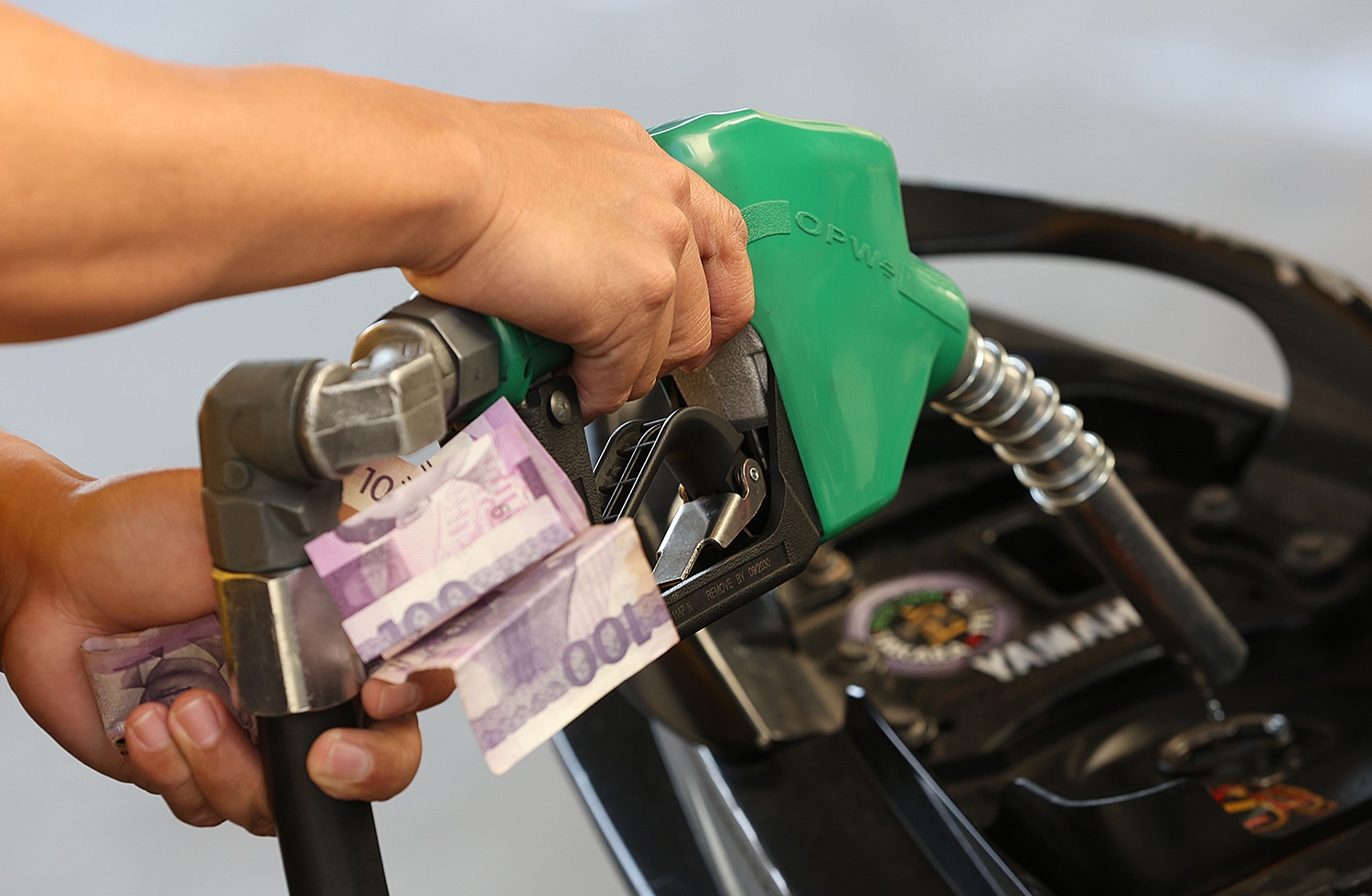
Briones also warned that elevated petroleum prices are making it costlier for farmers to run irrigation pumps, as most of which operate on fuel.
“A lot of our systems use pump irrigation. That will be a lot more complicated and a lot more expensive, if the crude oil is still high because a lot of these are dependent on fuel,” Briones said.
Chua noted that the country’s food production will be hit hard by the incoming El Niño event, not only in terms of yield but also in terms of labor productivity.
“Agriculture is one of the primary economic drivers of the country, and once this is disrupted the cascading impacts will be felt across the different sectors of society,” he added.
Briones said the Department of Agriculture (DA) needs to improve the application of its Adaptation and Mitigation Initiative in Agriculture (AMIA), the agency’s flagship program aimed at building climate-resilient farming and fishing communities.
“They need to upscale their implementation of AMIA so that more can be supported with science-based forecasting and proper agribusiness assistance for the farmers who are looking to try to adapt to climate change and diversify their livelihood sources,” he added.
Overall farm production fell by 2.2 percent in 2024, mainly led by the 4.2 percent decline in crop output, according to the Philippine Statistics Authority.
Agriculture Secretary Francisco Tiu Laurel Jr. had earlier said that local rice production may drop by 3.5 percent or 700,000 MT this year due to the strong El Niño.
Rice production is projected to reach 19.87 million MT this year, according to the DA. The latest production target is lower than the agency’s initial 20.3 million MT goal earlier in the year.
Tiu Laurel also ordered the reconvening of its El Niño team to implement the agency’s policies to respond and mitigate the impact of the incoming weather phenomenon.
The country last faced El Nino in late-2023 until mid-2024, causing significant damage to local agricultural production, an estimated P57.78 billion in farm losses were reported.
Chua also noted that vulnerable communities will face the brunt of El Niño’s impacts to the country, stressing that some may take years to recover.