 1 hour ago
6
1 hour ago
6

Upgrade to High-Speed Internet for only ₱1499/month!
Enjoy up to 100 Mbps fiber broadband, perfect for browsing, streaming, and gaming.
Visit Suniway.ph to learn
BONGAO, Philippines – Marilyn Jimlan was standing beside what looked less like a food display and more like an edible house.
Crabs, prawns, mantis shrimp, rice cakes, eggs, seafood, and native delicacies covered its tiers. Bills were tucked among the food. Darkened chickens sat high on the structure, while pastries hung from its sides. Around us, dozens of similarly elaborate creations filled the hall in Bongao on September 27.
Jimlan, 58, the municipal registrar of Bongao, had helped prepare one of the entries for the Maligay and Dulang displays, part of the Kamahardikaan sin Tawi-Tawi celebrations marking the province’s founding anniversary.
She has been cooking for most of her life.
“I started really cooking when I was about 14,” she said, speaking mostly in Filipino. Before that, she had already spent years watching and helping in the kitchen, learning the way many family recipes survive in the Philippines, through mothers, elders, repetition, and taste.
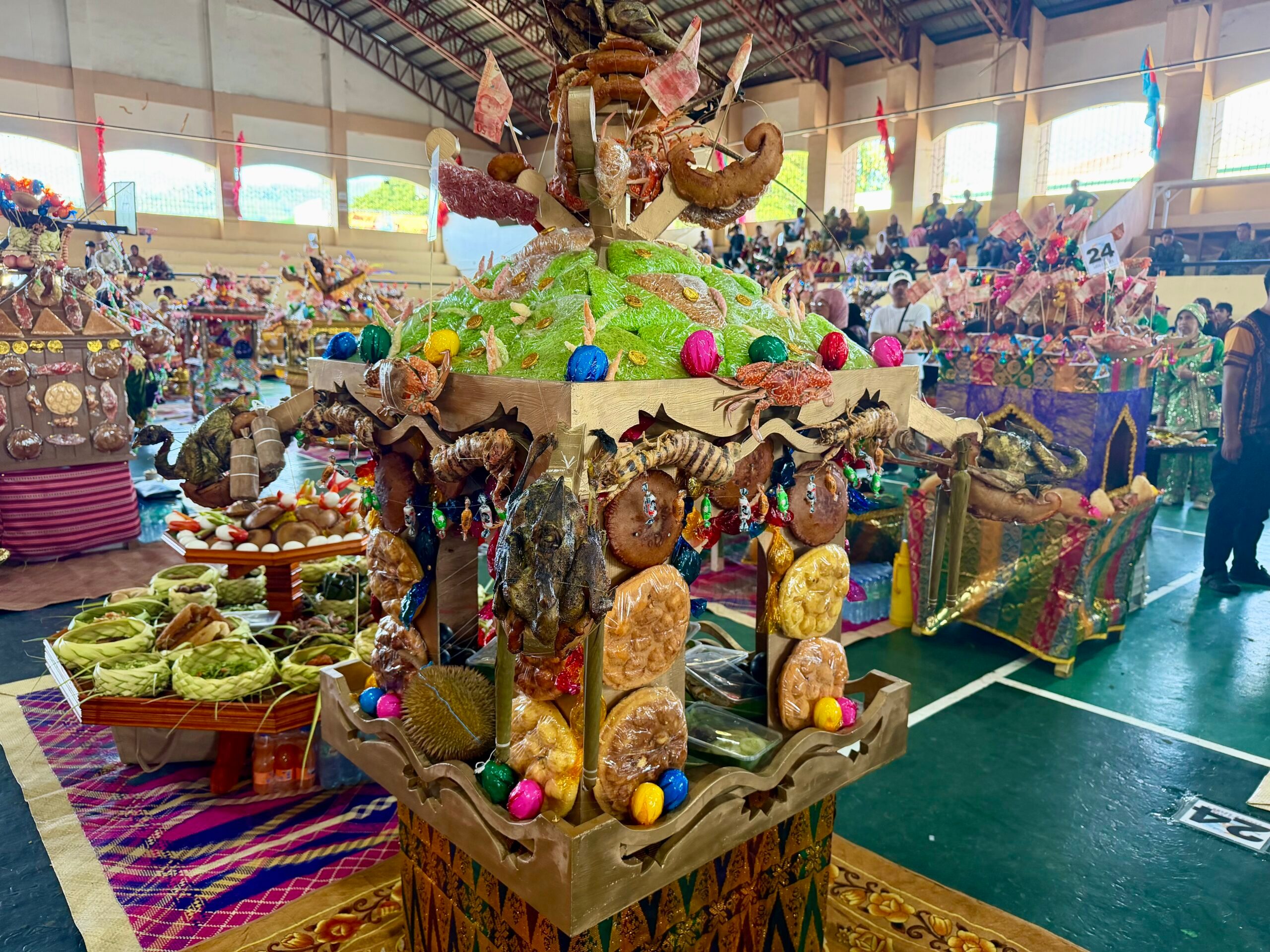 A house-shaped food display rises with seafood, native delicacies, and other local produce, turning Tawi-Tawi’s culinary traditions into edible art. All photos by Mia Magdalena Fokno/Rappler
Jimlan eventually taught her own children to cook. That detail explained much of what I was looking at. The festival was not simply about displaying what Tawi-Tawi could produce. It was also about knowledge passed from one generation to another, then placed proudly on a table for everyone to see.
At the center of the tradition are two things that can be confusing to someone seeing them for the first time.
The dulang is the feast platter, traditionally a large serving tray around which food is arranged and shared during gatherings, celebrations, religious occasions, weddings, and the welcoming of guests.
The maligay is the house-like structure built to hold and display food. Decorated with local delicacies and whatever imagination its makers can bring to it, the maligay turns the feast into architecture.
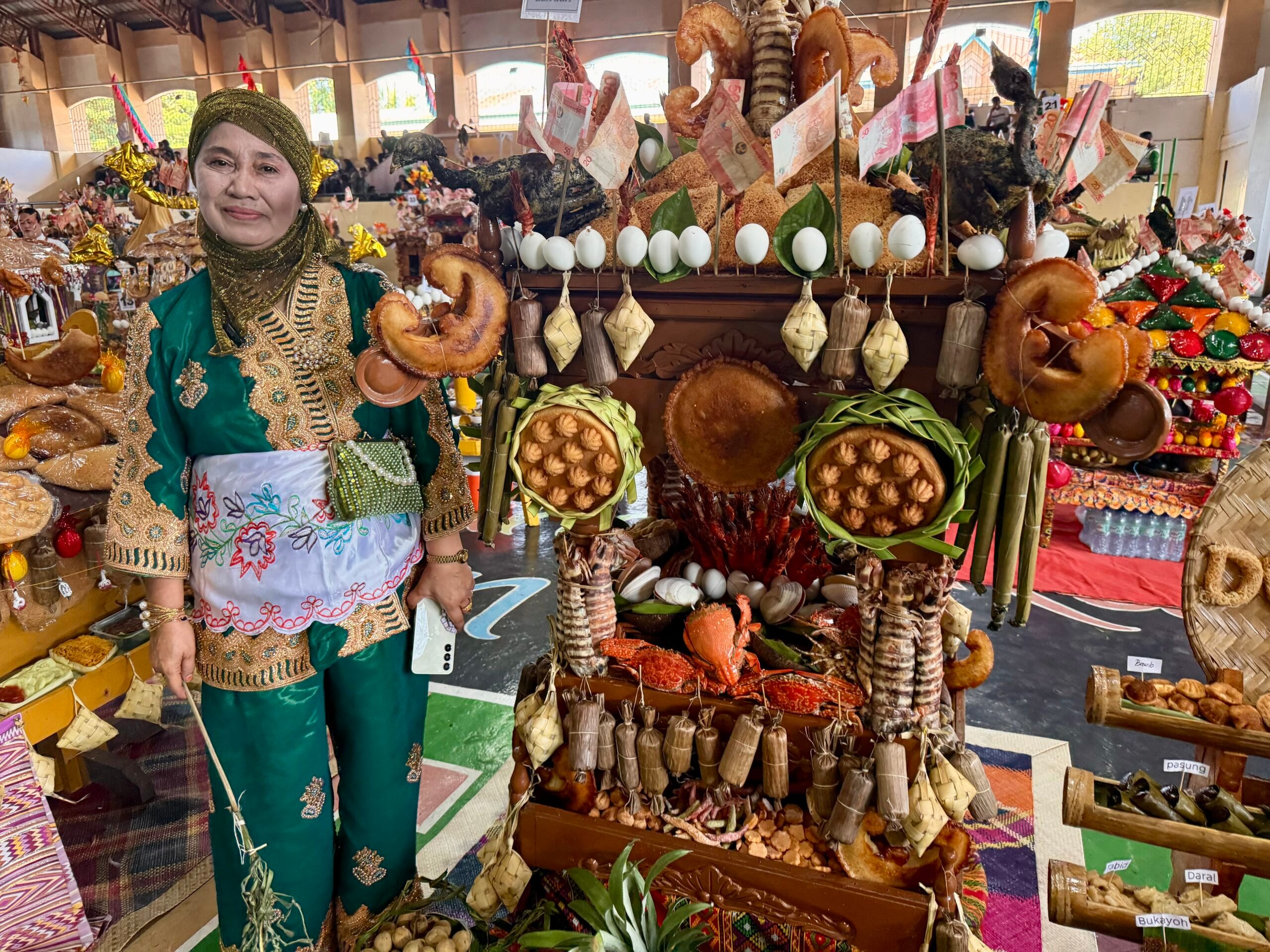 Bongao municipal registrar Marilyn Jimlan explains the dishes and ingredients in a festival spread, many of them recipes and food traditions passed down through families.
During the festival, the distinction becomes obvious. One is the spread. The other rises from it.
Some maligay were almost architectural in scale, built with bamboo, trays, baskets, food, and ornamentation. There were crabs with brilliant orange shells, rock lobsters, mantis shrimp, clams, sea urchins, fish, fruits, root crops, eggs, and sweets.
Panyalam, a deep-fried rice cake, and other rice-based delicacies appeared again and again. Some displays carried cash bills, another expression of prosperity and generosity.
Several were crowned with blackened chickens. The dark color comes from the preparation associated with piyanggang, a Tausug chicken dish flavored with coconut that has been charred before being ground with spices.
Jimlan moved easily through the display, naming food and explaining preparations. She spoke about rice, native chicken, seafood, sweets, and coconut. Cooking, to her, did not sound like a special skill she had decided to acquire. It sounded like part of growing up.
That may be why the displays felt different from the food competitions I had seen elsewhere. Yes, there was artistry, and yes, there was judging. But the food was never meant to remain untouched after the photographs were taken. It would be eaten.
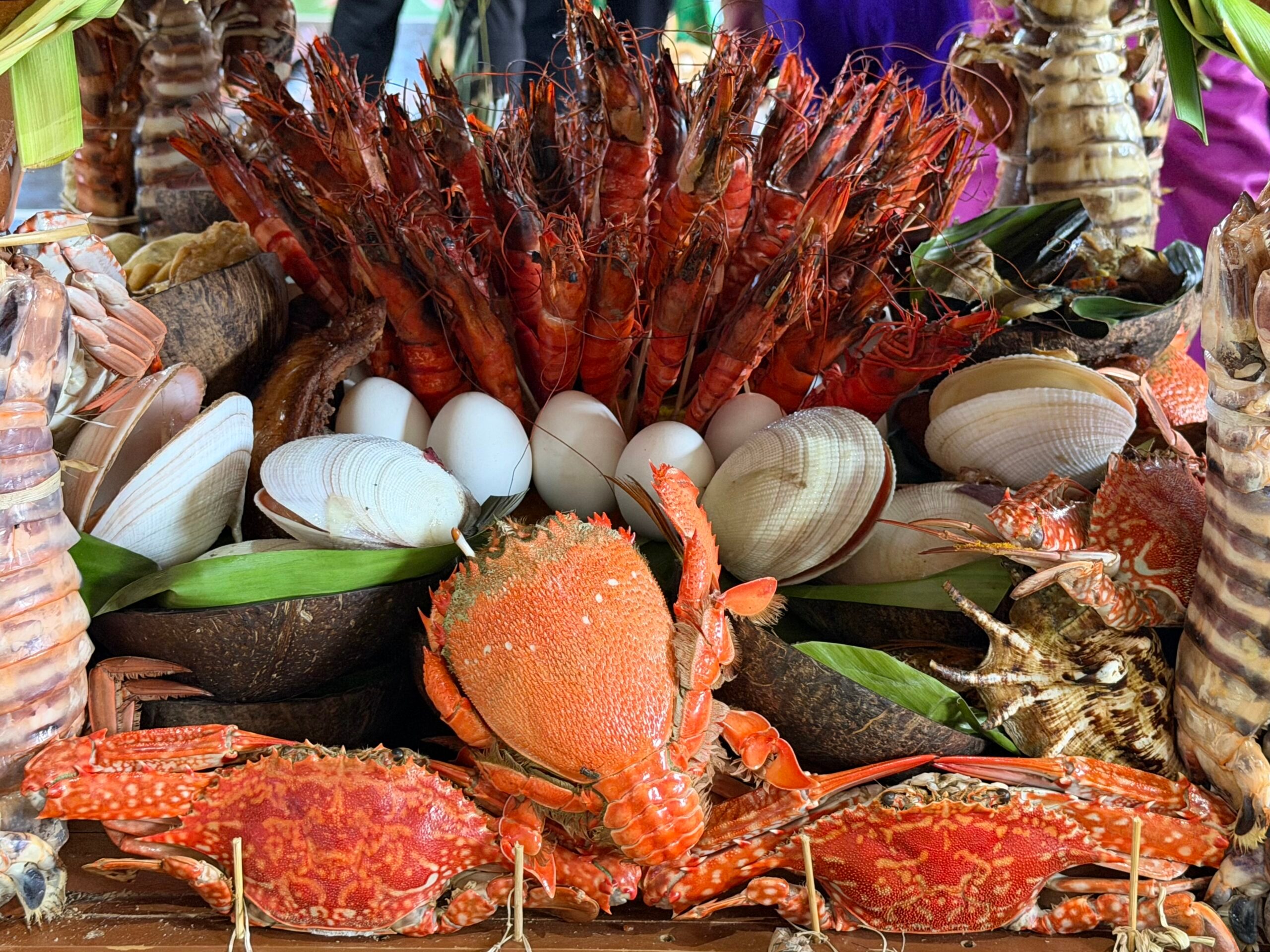 Prawns, crabs, shellfish, eggs, and other ingredients crowd one of the elaborate displays at the Maligay and Dulang Festival in Bongao.
Once the judging was finished, people gathered around the displays. Food that had taken hours to cook and arrange was opened, passed around, and shared. The exhibition disappeared the way a feast is supposed to disappear, one helping at a time.
Jimlan made sure I did not leave empty-handed either. She gave me crab, bread, and okó-okó, the Sama-Bajau delicacy of rice cooked inside a sea urchin shell.
There was no ceremony to it. She simply packed food for me. Very Filipino. Very Mindanao. You visit, therefore you must eat. And chances are, you are not leaving empty-handed.
That gesture captured what the enormous maligay and dulang could easily obscure with their spectacle. Behind every arrangement were people who cleaned the seafood, cooked the rice, fried the pastries, prepared the chicken, tied the decorations, and decided where each piece should go.
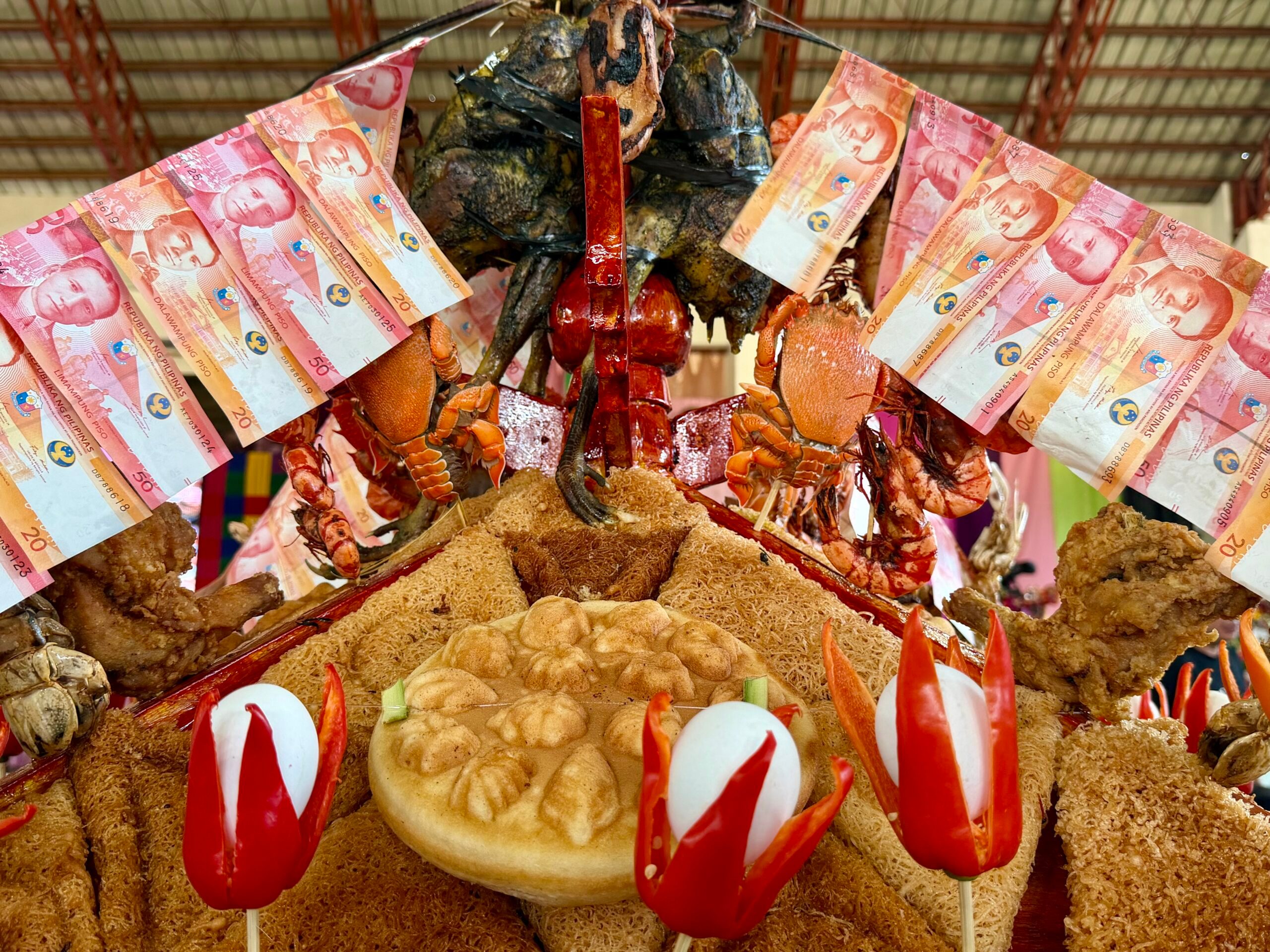 Piyanggang chicken and Philippine peso bills crown a maligay display, where food, artistry, and symbols of abundance come together during Tawi-Tawi’s provincial anniversary festivities.
The province’s geography explains much of what appears on the table. Tawi-Tawi is an archipelago, and life here is intimately tied to the sea. Seafood was not an accent in these displays. It was everywhere.
But food tells more than geography. It carries family history, trade, religion, and the relationships among the Sama, Sama Dilaut, Tausug, Jama Mapun, and other communities that have shaped Tawi-Tawi.
By then, I had spent days seeing the province through its festivals, dances, music, islands, and people. The Maligay and Dulang displays were the last major event I attended before leaving. Perhaps, that was why it stayed with me.
There are easier ways to explain culture. You can read its history, photograph its landmarks, watch its dances, and listen to its music. But sit beside its food, ask someone who cooked it where she learned, and watch that food passed from hand to hand, and something else becomes clear.
Culture is also what people decide is worth preparing again.
Marilyn Jimlan began cooking seriously at about 14. Decades later, she still cooks, and her children know how because she made sure the knowledge continued.
Around her stood houses made of food and great platters waiting to be shared. By the end, much of the feast was gone. Which, I realized, was exactly the point. – Rappler.com