.png) 7 months ago
94
7 months ago
94

Upgrade to High-Speed Internet for only ₱1499/month!
Enjoy up to 100 Mbps fiber broadband, perfect for browsing, streaming, and gaming.
Visit Suniway.ph to learn
Keisha Ta-Asan - The Philippine Star
January 20, 2026 | 12:00am
In a report, GlobalSource Partners country analyst and former central bank deputy governor Diwa Guinigundo said recent efforts by the Marcos administration to engage the private sector were necessary but insufficient.
STAR / File
MANILA, Philippines — Think tank GlobalSource Partners cautioned that governance weaknesses, rather than regulatory delays alone, remain the primary factor weighing on investor confidence in the Philippines, even as the government rolled out what it called “big, bold reforms” to calm business jitters.
In a report, GlobalSource Partners country analyst and former central bank deputy governor Diwa Guinigundo said recent efforts by the Marcos administration to engage the private sector were necessary but insufficient.
He argued that deeper issues such as weak transparency, selective enforcement and execution of public projects as well as uncertain accountability continue to unsettle investors.
“These governance deficits erode trust more severely than administrative delays. When corruption is perceived to be entrenched, public resources are diverted away from research and development, innovation and infrastructure — investments that are essential for long-term competitiveness,” he said.
“Failure to invest well condemns the country to slower growth, weaker condemns the country to slower growth, weaker productivity, lower efficiency and declining regional relevance,” Guinigundo added.
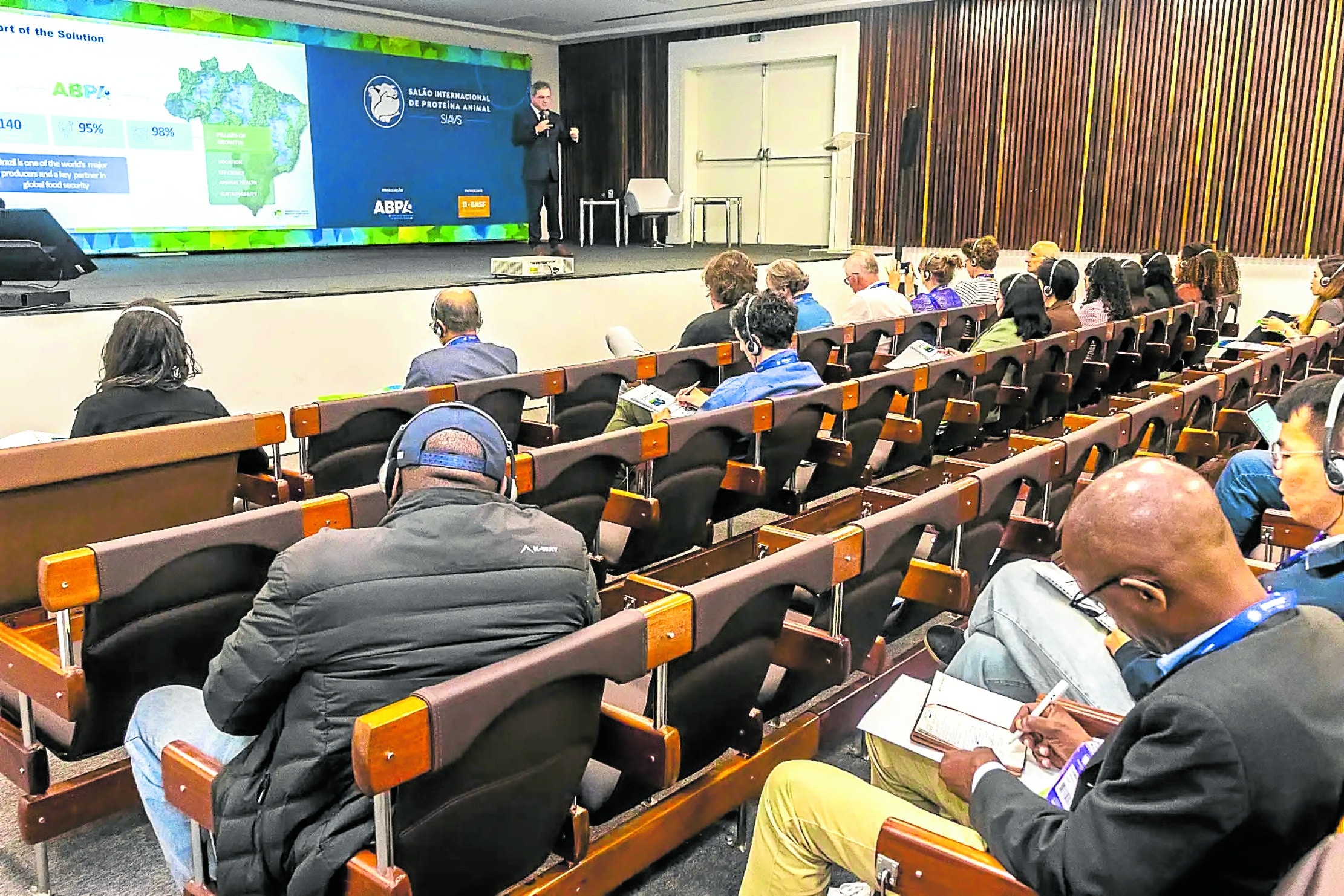
The assessment followed a briefing convened by the country’s economic managers with nearly 300 top business leaders last week, amid declining confidence in the business community reflected in opinion polls after the flood control scandals.
The gathering sought to reassure investors of the government’s resolve to strengthen governance and pursue sustainable development.
Several economic agencies outlined reform commitments during the economic briefing. The Departments of Tourism, Agriculture and Agrarian Reform pledged initiatives to modernize tourism and agriculture.
The Department of Trade and Industry, the Board of Investments and the Department of Information and Communications Technology, for their part, committed to measures aimed at attracting high impact investments and accelerating digital transformation.
Regulatory agencies also promised to ease doing business. The Securities and Exchange Commission, Food and Drug Administration, Philippine Competition Commission and the Department of Environment and Natural Resources said they would streamline processes and reduce regulatory bottlenecks, a long standing complaint of investors.
Guinigundo said this outreach to the private sector was an appropriate response to weakening confidence and acknowledged that the high cost of doing business in the Philippines, partly driven by regulatory inefficiencies, remains a structural constraint. Streamlining procedures and reducing red tape are welcome and overdue.
However, he said that policy declarations, while necessary, would not by themselves restore confidence. What is needed is demonstrable delivery on core governance reforms, including impartial enforcement of justice and the rule of law, a clear repudiation of impunity and credible accountability for public officials regardless of rank or political affiliation.
Fiscal sustainability, reflected in a lower fiscal deficit and a more disciplined approach to public borrowing, was also cited as critical.