 6 months ago
90
6 months ago
90

Upgrade to High-Speed Internet for only ₱1499/month!
Enjoy up to 100 Mbps fiber broadband, perfect for browsing, streaming, and gaming.
Visit Suniway.ph to learn
First of two parts
The Philippines did not just experience a debt crisis in 1983. It built one.
Not simply through how much it borrowed—but through how it borrowed. And that distinction matters again today.
In the 1970s, the Philippines still had access to long-term development financing from institutions like the World Bank and Asian Development Bank. These loans were extended over decades, priced more predictably, and tied to infrastructure and industrial development.
But by the late 1970s, that window began to narrow. At the same time, global banks—flush with petrodollars—were aggressively lending to emerging markets. These loans were faster, less restrictive, and easier to deploy.
The Philippines shifted accordingly.
Borrowing increasingly took the form of short-term commercial loans and supplier credits, often tied to imported projects and negotiated with far less oversight. Many of these loans carried floating interest rates, exposing the country to global monetary shifts.
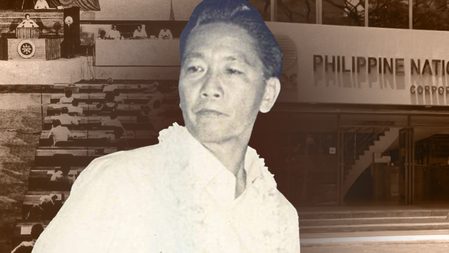
Ferdinand Marcos Sr.’s borrowing pattern differed from larger Latin American economies in crucial ways. Instead of relying on large, long-term syndicated loans, much of the Philippines’ debt came through supplier credits and trade financing—often tied to imported projects and politically favored contractors. These structures were faster to arrange and easier to conceal, but far less stable. The loans were also shorter-term and highly fragmented, making them difficult to restructure when conditions deteriorated. Compounding this, much of the borrowing occurred at the worst point in the global cycle, just as US interest rates were surging. By 1983, the math broke.
This was not just a financial shift. It reflected a political system that favored speed, discretion, and centralized control. But it also embedded a structural weakness: dependence on constant refinancing in a volatile global environment.
That weakness became visible in 1979, when US interest rates surged to historic highs—peaking above 18% under Federal Reserve Chairman Paul Volcker.
Because much of Philippine debt was short-term and floating, interest costs rose almost immediately. At the same time, loans began to mature in clusters.
For several years, banks had routinely rolled over these loans, creating the illusion that short-term debt could function like long-term financing. But by 1983, confidence deteriorated. Political instability deepened. Credit tightened. Rollover stopped.
What followed was not a gradual adjustment, but a liquidity crisis. By the mid-1980s, debt service was consuming over a quarter of government expenditures, squeezing out the rest of the budget and weakening the state’s ability to function.
📊 Debt Structure and Fiscal Stress (1980s Snapshot)
| Indicator | Approximate Level |
| US interest rates (Volcker peak) | >18% |
| PH debt type | Short-term, floating-rate |
| Debt service burden | >25% of gov’t spending |
| Result | Liquidity crisis + fiscal collapse |
In the late 1980s, many countries were given a second chance through the Brady Plan, which allowed them to restructure debt and reset their economies. Mexico and Brazil used it to restore market access and return to growth.
The Philippines entered that process from a weaker position. Its debt was fragmented, shorter in maturity, and already partially restructured. That limited its leverage.
The country avoided outright default. But it did not achieve the kind of clean reset seen elsewhere. The system that produced the crisis was never fully dismantled.
Subsequent administrations learned from this experience.
Under Benigno Aquino III, debt-to-GDP fell from roughly the low-50% range to around 40%. Borrowing became longer-term, more predictable, and more disciplined.
Under Rodrigo Duterte, borrowing increased, particularly during the pandemic. But much of that financing—especially from external sources—was long-tenor and concessional, in a global environment of near-zero interest rates.
In both periods, the structure of debt was more stable than in the early 1980s.
Today, the concern is no longer simply how much the Philippines is borrowing, but how—and when—it is borrowing.
The country is raising funds in a higher interest rate environment, with a growing share of market-based external bonds that typically mature within five to ten years. At the same time, fiscal deficits remain elevated at around 5 to 6% of GDP, even outside crisis conditions. Debt-to-GDP has hovered in the low-60% range—manageable on its own, but more sensitive when paired with higher borrowing costs and refinancing needs.
None of these factors alone signals crisis. But together, they begin to form a familiar pattern.
Debt crises rarely begin with a single shock. At the height of the 1983 crisis, the central bank was forced to rely on overnight borrowing just to maintain liquidity—a sign of how quickly financial stress can escalate. They emerge when financial fragility meets uncertainty. Markets respond not just to numbers, but to confidence—in fiscal discipline, in institutions, and in policy direction. When confidence weakens, borrowing costs rise further, reinforcing the very pressures that undermine it.
This is how debt shifts from a tool into a trap.
The global environment today offers less room for rescue than it did in the 1980s. Debt is more fragmented, creditors more diverse, and markets faster and less forgiving. There is no coordinated mechanism like the Brady Plan waiting in the background.
When the Philippines retired its final Brady bonds in 2007, it benefited from a rare alignment of global conditions. That alignment no longer exists.
Today’s global environment is not identical to the 1970s—but the underlying mechanics are not entirely unfamiliar.
Then, oil shocks generated excess liquidity that flowed into emerging markets, encouraging rapid borrowing under fragile structures. Those same shocks also contributed to the inflation that ultimately triggered a sharp rise in global interest rates.
Today, energy markets are once again volatile. Geopolitical tensions—from the Middle East to Ukraine—continue to shape oil prices and global inflation. While this has not produced the same wave of easy credit, it has created a different kind of pressure: persistently higher interest rates and tighter financial conditions.
The sequence is not identical. But the interaction is similar: external shocks shape global financing conditions, while domestic debt structures determine how vulnerable countries are to them.
The lesson of the 1980s is not simply that debt can be dangerous. It is that debt structure determines resilience.
The Philippines was fortunate to clean up its Brady bonds during a rare window of favorable global conditions between 2006 and 2007.
That window is now closed. – Rappler.com
Sources: Philippine Bureau of the Treasury (National Government Debt Statistics); Development Budget Coordination Committee (DBCC) Fiscal Program; International Monetary Fund (IMF) country reports and sovereign debt data; World Bank World Development Indicators; historical documentation on the Brady Plan (U.S. Treasury, 1989).
Dr. Jaemin Park is an Adjunct Professor at the University of the Philippines College of Public Health and works across Southeast Asia on healthcare financing, medical innovation, and system reform.
![[OPINION] When corruption is systemic, so is illness](https://www.rappler.com/tachyon/2025/10/TL-SYSTEMIC-CORRUPTION-AND-ILLNESS-OCT-21-2025.jpg?fit=449%2C449)