.png) 4 months ago
34
4 months ago
34

Upgrade to High-Speed Internet for only ₱1499/month!
Enjoy up to 100 Mbps fiber broadband, perfect for browsing, streaming, and gaming.
Visit Suniway.ph to learn
MANILA, Philippines — A measure is being eyed in Congress mandating the creation of a free, consolidated, and AI-searchable national database of Philippine statutes and jurisprudence.
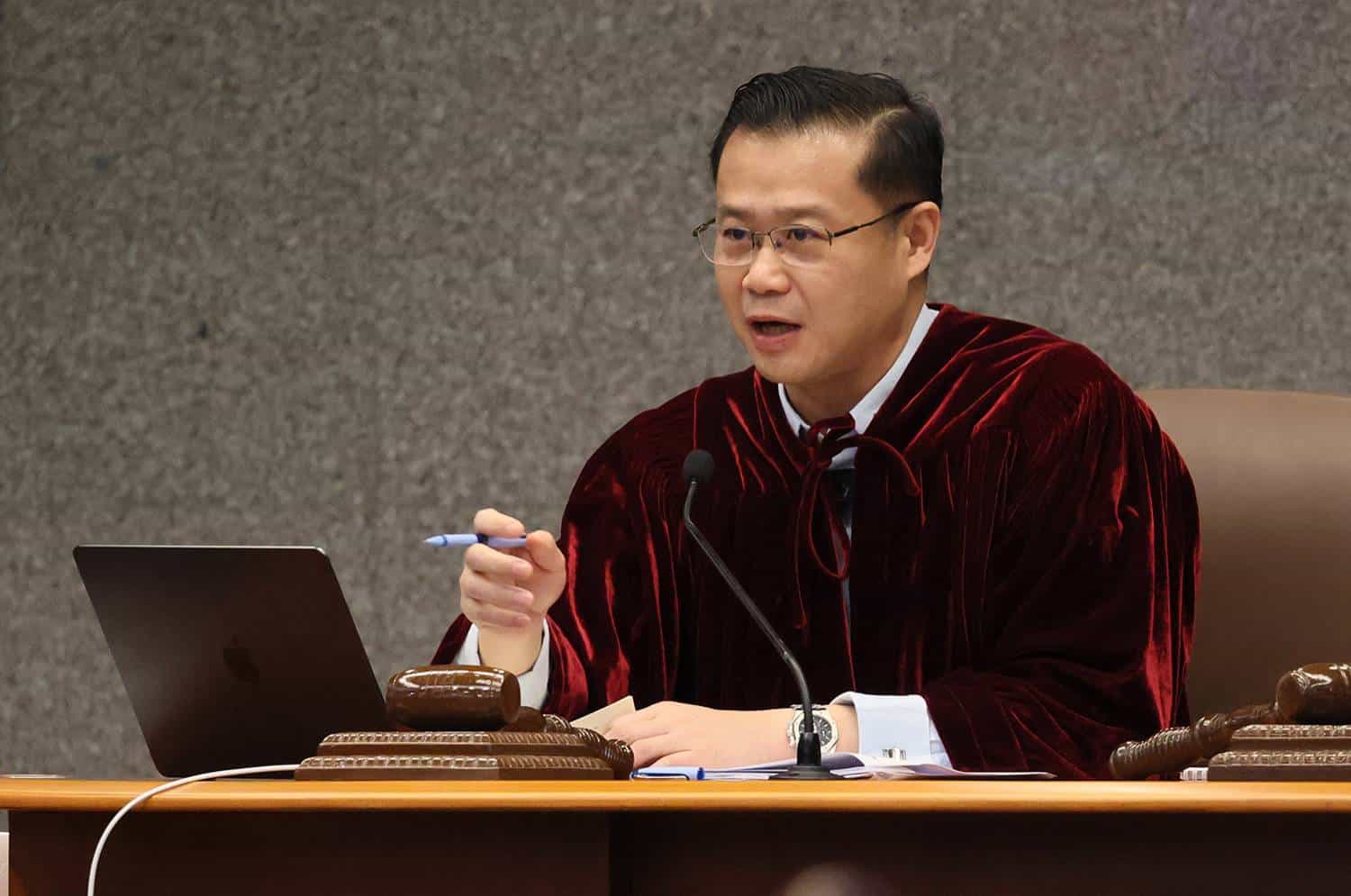
Rep. Javier Miguel Benitez (3rd District, Negros Occidental) stressed the need for such a digital public infrastructure for the rule of law itself.
This, as he called out a “quiet injustice in the Philippine legal system”, where every Filipino is bound by laws most cannot easily access — or worst, cannot find
"We have ended up with two tiers of law in one Republic. One for those who can pay to understand it, and one for everyone else," he said.
The text of Philippine statutes is technically free, the lawmaker acknowledged, available through the Official Gazette and the Supreme Court E-Library. However, the version that actually works — one that is consolidated, current and searchable — sits behind commercial subscriptions out of reach for ordinary citizens.
"A Makati firm pays without a second thought. A farmer in Victorias will never see it," he told the House chamber Monday.
Benitez anchored the inequity in Article 3 of the Civil Code, the bedrock rule that "ignorance of the law excuses no one." If the State can punish citizens for not knowing the law, he argued, then the State has to make the law knowable. He cited the Supreme Court's landmark ruling in Tañada v. Tuvera, which held that publication of laws is indispensable in every case.
The lawmaker cited several figures to underscore the gap. According to the World Justice Project, only one in five Filipinos who encounter a legal problem can access any form of legal help. The Public Attorney's Office handles more than 850,000 cases a year with roughly 2,400 lawyers. In the 2025 Rule of Law Index, the Philippines ranked 97th out of 143 countries, and 13th out of 15 in its region.
"A right you cannot find is not really a right at all," Benitez added.

Rep. Javier Miguel Benitez (3rd District, Negros Occidental) stressed the need for such a digital public infrastructure for the rule of law itself.
Pre-empting objections that the project is too costly or too complex, Benitez pointed to working models abroad, from the European Union's free legal database of more than three million documents in 24 languages, to India's consolidated India Code, Australia's university-run AustLII, Kenya's open law portal, and Cornell's Legal Information Institute, which serves 30 million users a year.
He also cited the $287-million World Bank facility secured by the Philippine government in 2024 to widen the country's digital backbone.
"A national legal database is not a new burden. It is one more room in a house we are already building," he said.
Benitez argued the Philippines could leapfrog rather than catch up. Independent testing, he noted, has found that even purpose-built legal AI tools fabricate answers more than one time in six, a problem he said shrinks dramatically once the AI is anchored to a verified, consolidated database of real Philippine law.
To private legal publishers, Benitez said the measure takes nothing from them, as the plain text of the law was never theirs to sell. Commercial firms, he said, remain free to compete on commentary, analysis, and tools built on top of the law.
He ended by invoking Section 7 of the Bill of Rights on the people's right to information, and the 1899 Malolos Constitution's declaration that sovereignty resides exclusively in the people. (Contributed story)