 9 months ago
152
9 months ago
152

Upgrade to High-Speed Internet for only ₱1499/month!
Enjoy up to 100 Mbps fiber broadband, perfect for browsing, streaming, and gaming.
Visit Suniway.ph to learn
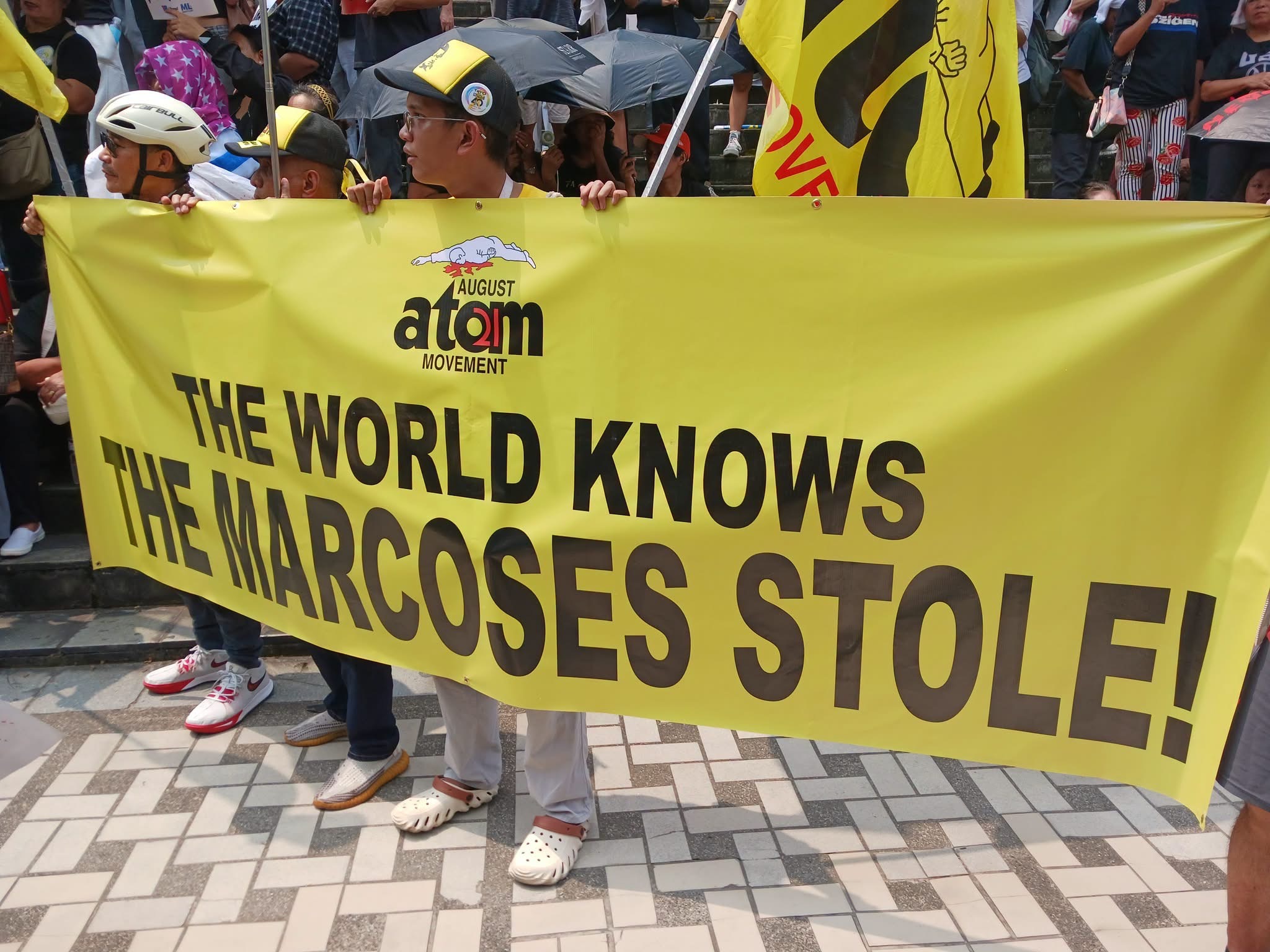
MANILA, Philippines — Despite ordering an investigation into corruption-tainted flood control projects, President Bongbong Marcos Jr. continues to face an erosion of public support. A new survey shows his performance ratings plunging to levels last seen during the Arroyo administration.
When Marcos announced the investigation in his mid-term address, public opinion research firm WR Numero recorded an uptick in his performance rating — rising to 35% in August from 29% in April.
But three months later, the political fallout had widened. Several of Marcos’ close allies, his cousin and former House Speaker Martin Romualdez, former Executive Secretary Lucas Bersamin and resigned lawmaker Elizaldy Co, were heavily implicated in the scandal.
Accusations also began to reach Marcos himself. As the controversy grew, public dissatisfaction rose further and satisfaction dropped to a new low of 21%. This is a sharp drop from December 2024, when more than three in five Filipinos were satisfied with his performance. Today, that number has fallen to just one in five.
"He managed to take back control of his political narrative, but apparently, he failed to sustain that advantage," said Julio Teehankee, a political scientist and De La Salle University professor.
Is Marcos his own enemy?
At a press conference on Wednesday, December 3, Teehankee said Marcos tends to gain an advantage over the Duterte faction but later loses it — as if "they’re their own worst enemy."
This became evident in February, when a supermajority of House members impeached Vice President Sara Duterte, primarily over her alleged misuse of confidential funds and ghost beneficiaries.
Marcos left it to the Senate to start the trial, but the upper chamber delayed it for half a year and eventually archived the impeachment articles. The Supreme Court later ruled the impeachment unconstitutional.
Meanwhile, Duterte has remained "above water," with what Teehankee called a "resilient" performance rating. One of the steepest drops in 2025 came after her impeachment in February, when satisfaction fell to 41%.
Since then, her ratings have held steady above 40%, with the latest at 43%. Teehankee said this gives her a "comfortable gap" over Marcos, who is only losing political capital with his own attempts backfiring.
"She can withstand anything that this administration will throw at her," he added, pointing out how the Duterte brand is "very much potent" and that she is the primary beneficiary.
A confused Filipino population
WR Numero President and CEO Cleve Arguelles said the survey reflects ongoing public confusion over who is responsible for the corruption issues. He added that in Philippine politics, it is typical for the public to "look to the president for all accountability," whether or not they are directly implicated.
"That loss of confidence in government, in government institutions, they directly translate to how they assess the president as well," he said.
The survey showed that the largest share of respondents, 39%, identify as unaffiliated or unsure of where their support lies, and the figure has only grown since August. This, Teehankee said, is the "middle force" that is crucial as the 2028 national elections approach.
Self-identified pro-Duterte supporters, meanwhile, made up 34%, while pro-Marcos respondents accounted for 15%, and more liberal-leaning opposition supporters totaled 12%.
"The reason why we are in this situation, which I call [a] political stalemate, because the middle forces or the majority of independent and unsure are waiting for the right moment to reveal their preference," he added.
As political scientist and WR Numero founder Robin Garcia puts it, "the movement is not homogeneous." Political factions are mainly engaged in mutual blame, with corruption probes showing Filipinos divided over who should take the most responsibility.
The survey revealed that opinions among the public vary. Some believe contractors like the Discayas should be held most accountable, pro-Duterte supporters point to Marcos, while independents and pro-Marcos respondents blame officials of national agencies such as the Department of Public Works and Highways.
"There is no one actor or person to blame. But until we reach that point, the intensity will not be as much as the other countries. ... The Dutertes are trying to paint it upon the Marcos administration and vice versa," Garcia said, noting how the anti-corruption protests demonstrate the different factions and the disjointed calls on who should resign.
What should Marcos do then?
So is all hope lost for the Marcos admin?
Well, according to Arguelles, the president may no longer be able to regain his political capital in the final three years of his term. He said the president’s focus now should be on "doing what’s right," including pursuing the drug war’s co-perpetrators through the International Criminal Court and the vice president’s impeachment should the House take it up again in 2026.
Teehankee said Marcos has to take this chance to enforce reforms if he even wants to complete his term and "end with a legacy."
"It's an appeal to his legacy rather than an appeal to rescue his popularity at the present," Arguelles said.