 1 hour ago
7
1 hour ago
7

Upgrade to High-Speed Internet for only ₱1499/month!
Enjoy up to 100 Mbps fiber broadband, perfect for browsing, streaming, and gaming.
Visit Suniway.ph to learn
Already have Rappler+?
to listen to groundbreaking journalism.
This is AI generated summarization, which may have errors. For context, always refer to the full article.
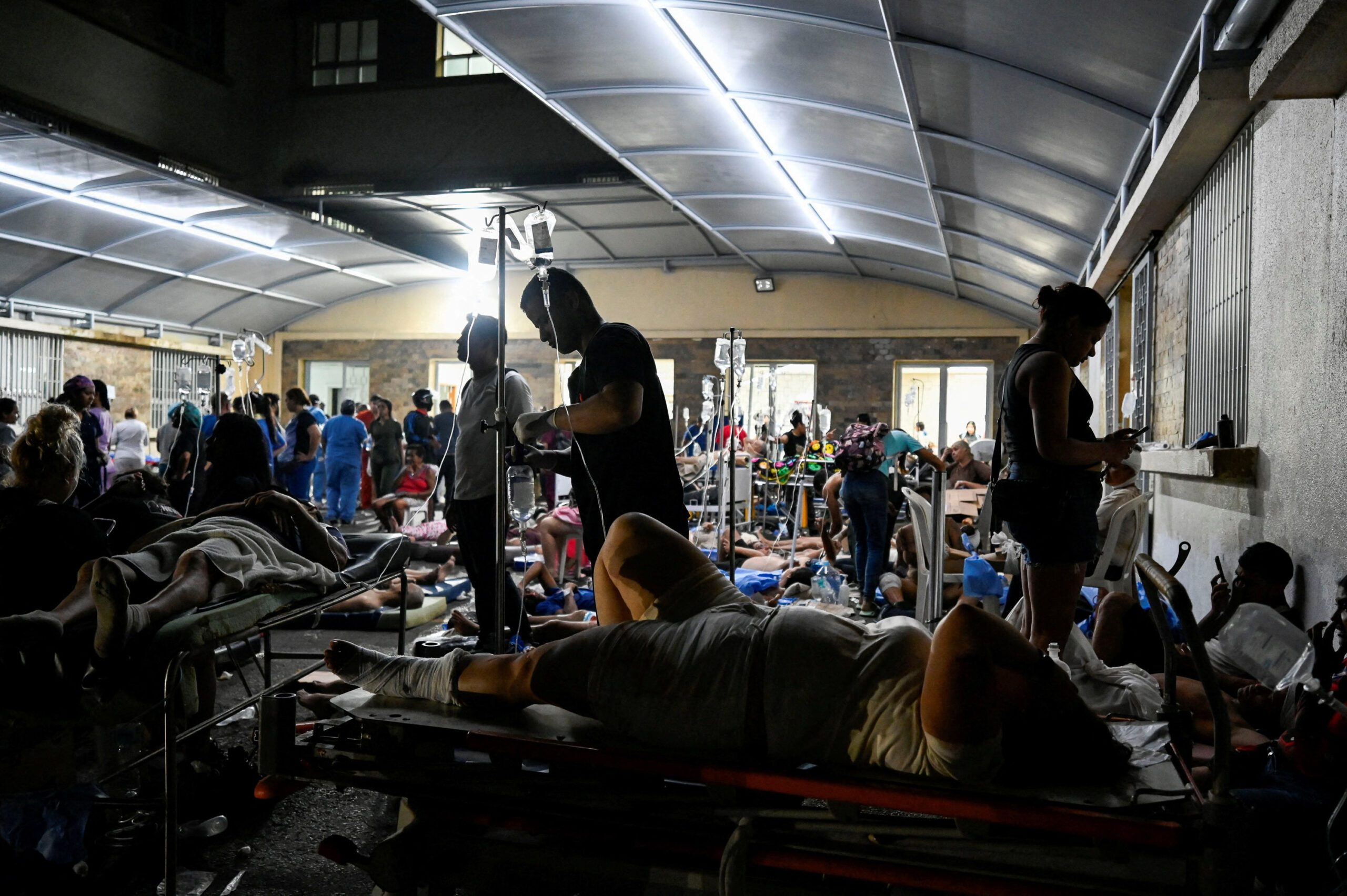
AFTERMATH. People receive treatment in a field hospital in the aftermath of earthquakes, in La Guaira, Venezuela, on June 24, 2026.
Maxwell Briceno/Reuters
The biggest health risks include interruptions to regular medical care, crowded shelters and lack of access to clean water
CARACAS, Venezuela – The death toll from Venezuela’s twin earthquakes has risen to 3,889, according to figures released by top lawmaker Jorge Rodriguez on Thursday, July 9.
The latest tally puts the number of injured in the June 24 quakes at 16,740, and the number of homeless at 17,907.
The biggest health risks include interruptions to regular medical care, crowded shelters and lack of access to clean water, the head of the Pan American Health Organization said.
The entity is working with Venezuela’s health ministry to trace potential outbreaks of respiratory or digestive illnesses, especially in shelters set up for those who lost their homes, officials from PAHO, the Americas branch of the World Health Organization, added in a call with journalists.
“In the coming weeks, the greatest health risks may stem not only from injuries caused by the earthquakes, but also from disruptions to health services, overcrowded conditions, deficiencies in water and sanitation and reduced access to vaccination and routine healthcare,” PAHO director Jarbas Barbosa said.
He emphasized that vaccine access is a priority, and noted that Venezuela’s coverage indicators were low even before the quakes. People now living in more than 80 temporary shelters are especially at risk for outbreaks.
PAHO is working with the government to incorporate field hospitals and shelters into an early warning system, focusing on diarrheal diseases, respiratory infections, febrile syndromes and vaccine-preventable illness.
Deteriorated system
Venezuela’s health system has deteriorated significantly after years of economic crisis, contributing to a lack of care available immediately after the quake, said Ciro Ugarte, PAHO’s director for health emergencies.
The migration of healthcare professionals in recent years – part of broader waves of people leaving the country – also left Venezuela in a difficult position.
“The shortage of essential services in the immediate aftermath was critical, and facilities that had not been intended for trauma care or emergency patient treatment had to be adapted for that purpose throughout Venezuela,” Ugarte said.
Care has improved with international assistance, personnel from other regions and field hospitals, he said.
Acting President Delcy Rodriguez has vehemently defended the government’s handling of the quakes amid criticism that civilians have led many of the rescue and recovery operations, with the help of professional rescue teams from around the world, firefighters and army volunteers.
Three hundred victims in La Guaira, the hardest-hit state, were buried without being identified, but Venezuela’s forensic service is keeping records to allow for matches at a later time, said Armando De Negri, PAHO’s acting director in Venezuela.
“The exact location where they are buried is recorded, and material currently being collected – such as teeth, bones and fingernails, which provide stable genetic material – is preserved and archived,” he said. “All are in coffins, all have been handled properly.” – Rappler.com
How does this make you feel?
Loading