.png) 5 months ago
70
5 months ago
70

Upgrade to High-Speed Internet for only ₱1499/month!
Enjoy up to 100 Mbps fiber broadband, perfect for browsing, streaming, and gaming.
Visit Suniway.ph to learn
Keisha Ta-Asan - The Philippine Star
December 20, 2025 | 12:00am
Under a new circular approved by the Monetary Board on Oct. 16, the BSP revised Section 101-Q of the Manual of Regulations for Non-Bank Financial Institutions (MORNBFI), expanding and clarifying who qualifies as a financial intermediary for purposes of quasi-banking regulation.
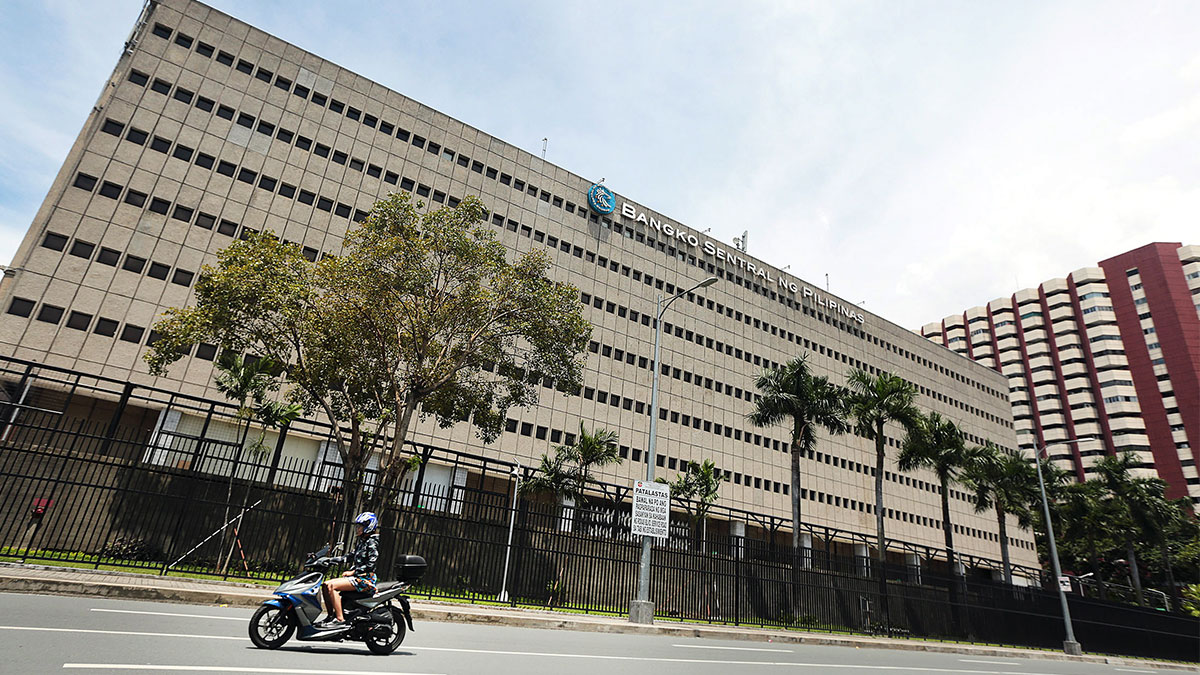
STAR / File
MANILA, Philippines — The Bangko Sentral ng Pilipinas (BSP) has amended key provisions governing the definition of financial intermediaries as well as the rules on the issuance of bonds and borrowings by banks and quasi-banks, in a move that clarifies lender coverage and aligns regulatory treatment across institutions.
Under a new circular approved by the Monetary Board on Oct. 16, the BSP revised Section 101-Q of the Manual of Regulations for Non-Bank Financial Institutions (MORNBFI), expanding and clarifying who qualifies as a financial intermediary for purposes of quasi-banking regulation.
The amendments also update Section 246 of the Manual of Regulations for Banks (MORB) and the corresponding Section 205-Q of the MORNBFI on the issuance of bonds, commercial papers and other debt securities.
The BSP said the revised Section 101-Q now provides a more explicit definition of financial intermediaries, focusing on the actual functions performed rather than solely on formal registration or licensing.
“Financial intermediaries shall mean juridical entities whose principal functions include the lending, investing or placement of funds or evidences of indebtedness or equity deposited with them, acquired by them or otherwise coursed through them either for their own account or for the account of others,” the amended rule stated.
The circular further clarified that a financial intermediary “performs on a regular and recurring basis” functions such as receiving funds through deposits or the issuance of debt or equity securities and making these funds available to other persons or entities.
The BSP also explicitly included entities licensed or supervised by the Bangko Sentral or other regulators, government financial institutions and international financial institutions performing banking, credit or investment functions.
The amendments to Section 246 of the MORB and Section 205-Q of the MORNBFI harmonize the rules for banks and quasi-banks issuing bonds, commercial papers and other debt securities.
Under the revised rules, banks with quasi-banking authority may issue debt securities “without prior Bangko Sentral approval,” provided they meet prudential criteria and comply with the Securities Regulation Code and Securities and Exchange Commission (SEC) rules.
For banks without quasi-banking authority, issuance remains limited to private offerings or equivalent negotiated issuances, subject to prudential and SEC requirements.
The circular also strengthened post-issuance reporting, requiring banks to notify the BSP within five banking days from board approval and to submit details on the issuance, board authorization and a three-year funding plan.
Parallel provisions were adopted for quasi-banks under Section 205-Q, with references adjusted accordingly.
The BSP clarified that bonds, commercial papers and other debt securities issued to banks, quasi-banks and other financial intermediaries must comply with the updated issuance rules under Section 246 and 205-Q.
A transitory provision was added to address lender count issues arising from the revised definition.
“Borrowings from lenders who are no longer considered as financial intermediaries based on the revised definition after the effectivity of this circular shall continue to be excluded from the lender count until borrowings from them are paid or renewed,” the BSP said.
The circular takes effect 15 calendar days after publication in the Official Gazette or a newspaper of general circulation.