
 3 months ago
49
3 months ago
49

Upgrade to High-Speed Internet for only ₱1499/month!
Enjoy up to 100 Mbps fiber broadband, perfect for browsing, streaming, and gaming.
Visit Suniway.ph to learn
Already have Rappler+?
to listen to groundbreaking journalism.
This is AI generated summarization, which may have errors. For context, always refer to the full article.
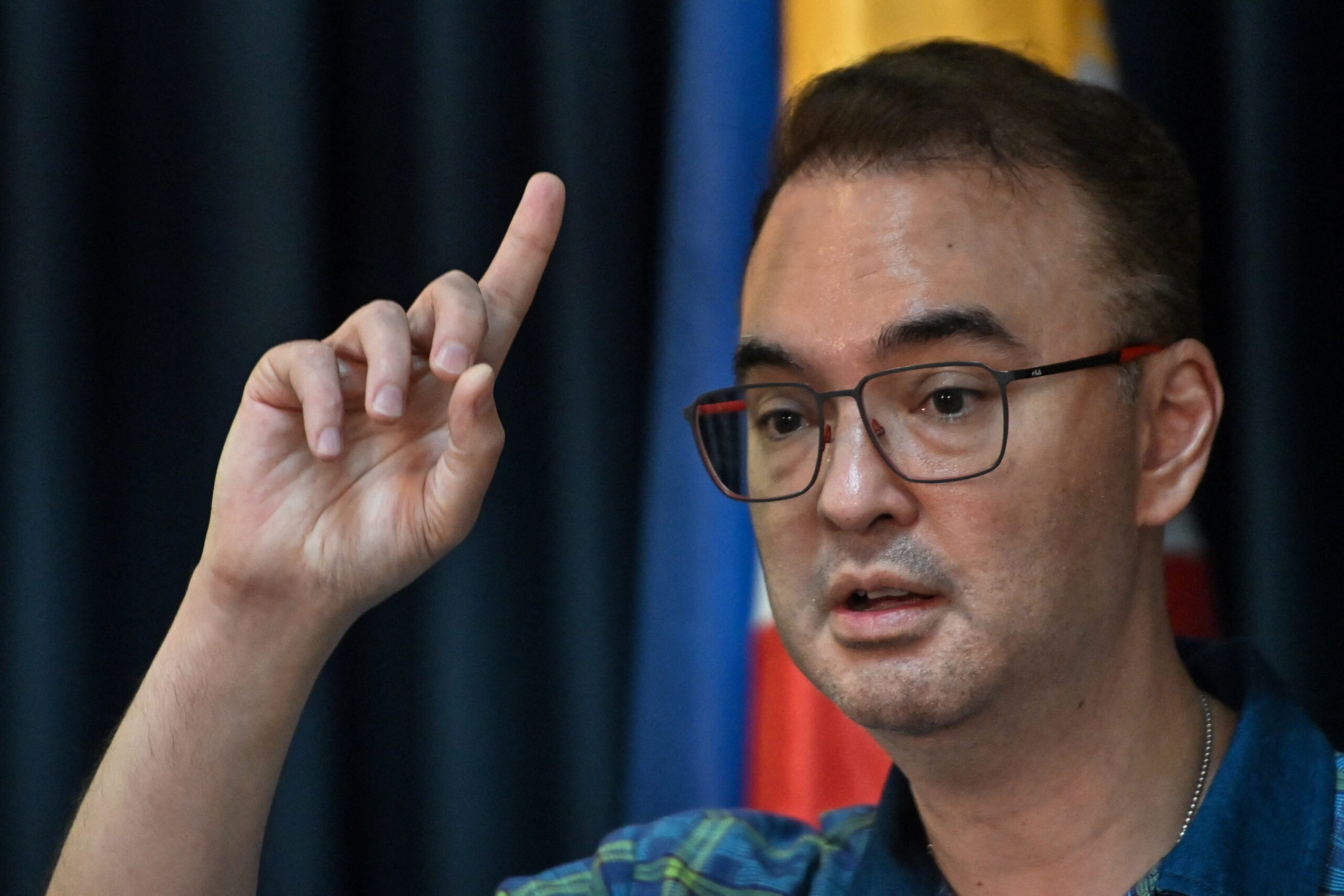
ALAN CAYETANO. Senator Alan Peter Cayetano gestures during a press conference concerning Senator Ronald 'Bato' dela Rosa, who is wanted by the International Criminal Court (ICC) and who has reportedly fled, a day after gunfire rang out at the Senate, on May 14, 2026.
Noel Celis/Reuters
MANILA, Philippines — Senator Alan Peter Cayetano and his senator-allies are seeking the Supreme Court’s (SC) intervention to recognize him as still the Senate president.
Cayetano filed a petition for certiorari and prohibition, with a request for a status quo ante order (SQAO). A certiorari is filed to ask for a review of another body’s decision, while a SQAO can preserve the “last” and “uncontested state of things.”
Along with Cayetano, the following are named as petitioners:
- Senator Loren Legarda
- Senator Pia Cayetano
- Senator Jinggoy Estrada (detained due to plunder and graft cases related to flood control)
- Senator Bong Go
- Senator Rodante Marcoleta
- Senator Imee Marcos
- Senator Robinhood Padilla
- Senator Camille Villar
- Jose Luis Montales (former Senate secretary)
Noticeably, senators Joel Villanueva and Mark Villar were the only Senate minority members who are not signatories. International Criminal Court suspect Senator Bato dela Rosa, meanwhile, is still in hiding.
In their petition, the Cayetano bloc wants the High Court to issue an SQAO and order the members of the new majority led by Acting Senate President Sherwin Gatchalian to stop performing the duties they assumed from June 3, or when the quorum of 12 happened.
During the June 3 session, Gatchalian was elected as Senate president pro tempore and thus, acting Senate president, while his allies assumed committee chairpersonships. Senator Migz Zubiri was elected chair of the committee on rules and automatically became the majority leader.
Cayetano also wants the Gatchalian bloc to refrain from implementing measures approved or passed on the said date. They also want Senate officers and personnel to reassume their role prior to the June 3 proceedings.
This request includes Cayetano as Senate president, Legarda as Senate president pro-tempore, and Jose Luis Montales as Senate secretary. The Senate secretary elected on June 3 is Renato Bantug Jr.
The Cayetano bloc reiterated in their petition that Cayetano is till the Senate president.
“There is no debate here. The Constitution requires that majority should be reckoned from all members. For the Senate, it is twenty-four (24). There are twenty-four (24) elected Senators. Majority, therefore, is thirteen (13). This is not just a quorum number, this is a threshold vote that must be attained to elect a Senate President. This provision of the 1987 Constitution also makes the invocation of Avelino v. Cuenco unavailing, especially as to the Senate Presidency,” the petition read.
After being paralyzed due to the then-majority’s decision to skip sessions and avoid reaching a quorum, the Senate reached its required number to function on June 3, when Senator Chiz Escudero appeared at the session.
Since the Senate reached a quorum or the minimum number of senators present to do official business, the senators then moved to declare all positions vacant and elected Gatchalian as Senate president pro tempore (in essence, acting Senate president), and the new chairpersons of some committees. Cayetano was also removed as Senate president in this session.
The senators’ basis is the 1949 Supreme Court (SC) case of Avelino v. Cuenco, where the SC held that the quorum 12, during a Senate session on February 21, 1949, was legal. The SC said that at the time, 12 was enough to reach a quorum because the available senators then were only 23, not 24.
The High Court, in its ruling, explained that the wording “majority of each House” in the Constitution to reach a quorum does not mean “all” the members. So by computing the required number to reach a quorum, the Senate looks into the number of available members, not all of its members.

The Integrated Bar of the Philippines itself and several deans of law schools recognized the June 3 session as valid by following the Avelino doctrine. – Rappler.com
How does this make you feel?
Loading