 57 minutes ago
2

Upgrade to High-Speed Internet for only ₱1499/month!
Enjoy up to 100 Mbps fiber broadband, perfect for browsing, streaming, and gaming.
Visit Suniway.ph to learn
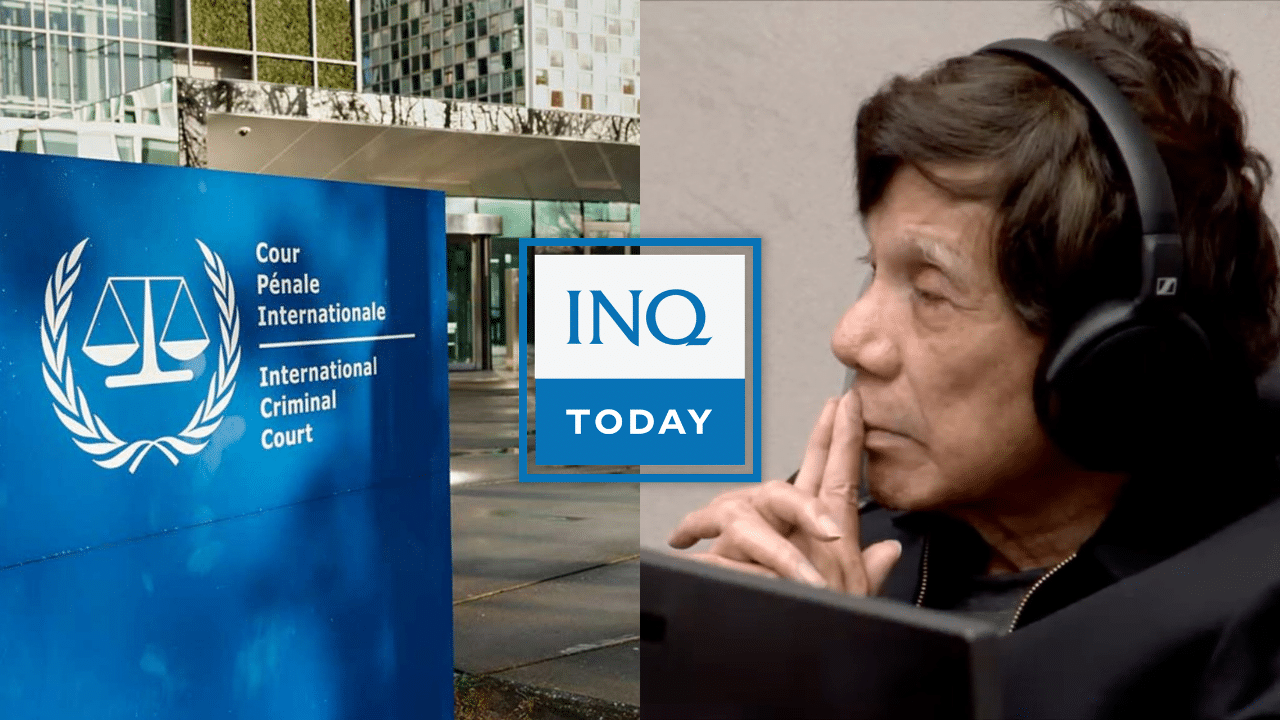
MANILA, Philippines — Former President Rodrigo Duterte did not set out to attack the civilian population of the Philippines when he waged a deadly campaign against illegal drugs, his lawyers argued in a filing previewing their defense ahead of the opening of his trial at the International Criminal Court next week.
In a 77-page pre-trial brief made public on Wednesday, November 25, Duterte’s defense team, led by Peter Haynes, laid out its grounds for seeking his acquittal. Chief among them is the argument that the killings he is accused of do not meet the legal threshold for crimes against humanity, that he cannot be linked to the acts charged, and that the case was built with the help of his political rivals on tainted witness testimony.
“No sensible analysis of Mr Duterte’s policy initiatives and achievements in government could possibly conclude that he was attacking ‘the civilian population in the Philippines,’” the defense wrote.
Duterte's lawyers argue his record as Davao City mayor and as president, including his signing of laws on universal healthcare and free tuition at state universities, don't support the conclusion that he conducted a widespread attack on civilians.
“That record is irreconcilable with a policy to attack the civilian population it was designed to protect,” the filing said.
The brief, first submitted confidentially on November 20 and released with redactions, sets out in outline the facts and law the defense disputes with the prosecution and the general nature of Duterte’s defense.
The lawyers said they would not invoke grounds that exclude criminal responsibility under the Rome Statute, such as self-defense or mental incapacity.
They will argue instead that the crimes alleged are not crimes against humanity and that, even if they were, Duterte is not individually responsible for them.
The ICC Trial Chamber III opens the trial on Monday, November 30, at 10 a.m. in The Hague, or 5 p.m. in Manila. The judges will first make sure Duterte understands the charges and ask whether he pleads guilty or not guilty, before hearing statements from prosecutors and lawyers for the victims.
The chamber has allowed Haynes to give a brief outline of the defense at the start without giving up his right to a full opening statement later.
Duterte has been ordered to attend the trial in person every day.
‘Not a crimes against humanity case’
Much of the defense filing argues that the case faces “obvious obstacles to any conviction” even before any evidence is heard.
The defense argues the prosecution cannot prove the elements that separate crimes against humanity from ordinary murder: a widespread or systematic attack on a civilian population, carried out under a state or organizational policy.
Suspected criminals cannot count as a “civilian population” under the Rome Statute, the defense said, because they share no collective identity.
The defense argues the prosecution had instead named the entire population of the Philippines as the target, a far broader group than in any earlier ICC case.
Using an illustrative figure of 10,000 victims, the lawyers said the toll would amount to 0.01 percent of a population of about 100 million.
“It is difficult to infer that a policy was in place to attack a civilian population when over 99.9% of that population was not attacked,” they wrote, while conceding that the question is “not a numbers game.”
The brief also challenged how the prosecution counts the dead.
It said prosecutors rely on figures from different sources and periods, including 3,967 deaths in police operations and 16,355 other drug-related homicides between July 2016 and November 2017, together “suggesting a total of 20,322 killings,” without saying which of those deaths belong to the alleged attack.
Notably, the defense argues the 85 murders and two attempted murders Duterte is charged of were selected rather than randomly sampled, and so cannot show the scale of any wider attack.
It's also the defense's argument that the "Davao Death Squad" was a mere label used in the media with “no agreed meaning and no members who used it."
The defense also argued against the prosecution's argument that the group expanded into a "national network."
Such allegation of a network "was created for the purposes of this case, and is one which does not appear in the evidence."
"The Prosecution’s case theory is that overnight, a shadowy group of gangsters and low-level police officers was transformed into a national multi-disciplinary structure involving every organ of the States’ security and policing organs. This is far-fetched," the filing read.
Rhetoric ‘in its cultural context’
On the link between Duterte and the killings, the lawyers said his speeches, on which prosecutors rely heavily, must be “re-situated in its cultural context.”
They acknowledged that his profanity and threats were “notorious” and may sound “objectively shocking” to listeners outside Davao.
But they asked the court to consider whether phrases such as “Papatayin kita” (I will kill you) are used in Visayan speech without any intent to murder, citing studies of bugalbugal, a Cebuano tradition of teasing and irreverent humor, and academic work on what one paper called “paternalistic cussing.”
Official transcripts, the defense said, record audiences laughing at his threats.
The lawyers accused prosecutors of “selective quotation,” pointing to an August 17, 2016 speech in which Duterte told police: “Do not kill if you are not in danger of losing your life.”
They also disputed the prosecution’s reading of “neutralisation,” the term used in the national police memorandum that launched the widespread anti-drug campaign in July 2016.
The word appeared in police and military manuals before Duterte took office and meant the lawful incapacitation of a suspect, the defense said.
‘This case was built’
A section of the filing, heavily blacked out in the public version, dedicates several arguments to how the case against Duterte itself was put together.
The defense said the first complaints to the ICC in 2017 came from Duterte’s political opponents, including lawyer Jude Sabio and then-senators Antonio Trillanes IV and Leila de Lima, and alleged that witnesses were offered inducements, threatened or told what to say.
In one instance, the defense claims, a prosecution investigator heard from a witness that someone had encouraged the witness to say something untrue, “and it did nothing.”
Self-confessed killers testifying for the prosecution are “now free and protected,” the lawyers said, adding that no forensic evidence has been produced of the mass graves described by the three insiders whose accounts underpin the Davao charge.
The filing also tied the case’s momentum to the collapse of the alliance between President Ferdinand Marcos Jr. and Duterte’s daughter, Vice President Sara Duterte.
The ICC however has rejected claims that it is acting for political ends.
After the vice president called the court a “lapdog” of Marcos and Trillanes in late July, spokesperson Oriane Maillet said the ICC “carries out its mandate independently and impartially, in accordance with its founding treaty, the Rome Statute.”
Duterte's health
The brief again raised Duterte’s health, saying his cognitive impairment leaves his ability to help in his own defense “virtually non-existent” and that a court-appointed expert observed that everything discussed with him at one meeting is forgotten by the next.
However, the ICC Trial Chamber III ruled on September 28 that he is fit to stand trial.
Prosecutors, who have been given 150 hours to present their evidence, will begin calling witnesses once opening statements are delivered.
The first block of hearings runs until December 18, and the trial resumes on January 11.